A level of hubris: The Odyssey / Reagan Youth
Zack Budryk on The Odyssey and Lauren Napier on Reagan Youth
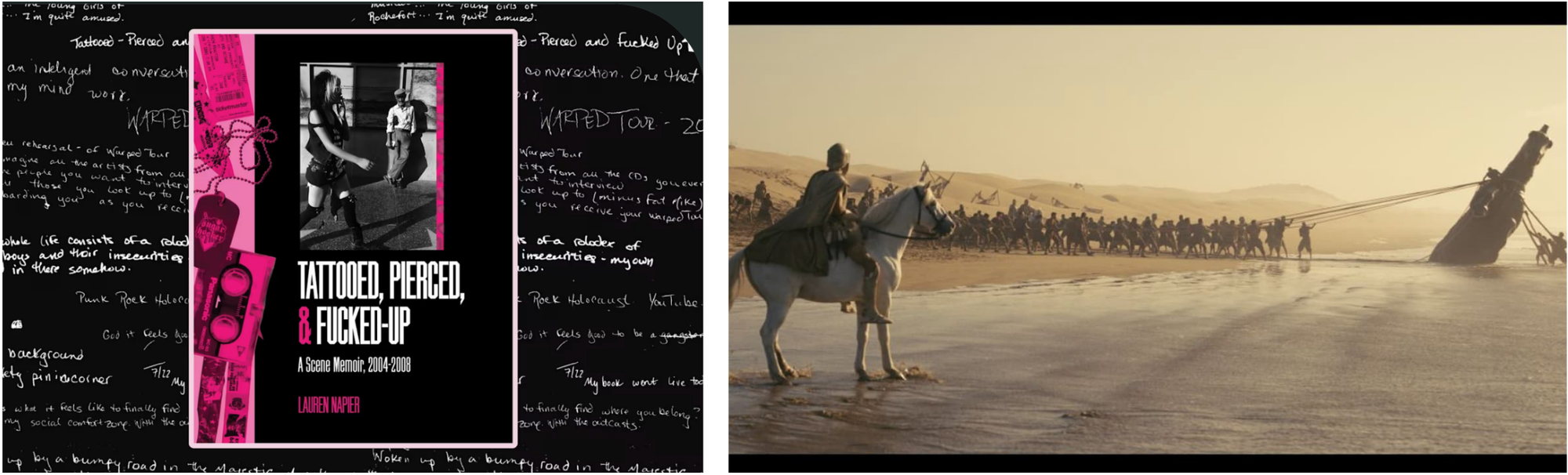
We've got a good as hell two-parter today. I'm stoked to share an excerpt from the forthcoming Tattooed, Pierced, & Fucked-Up: A Scene Memoir 2004–2008 by Lauren Napier which you can read here or down below.
 Luke O’Neil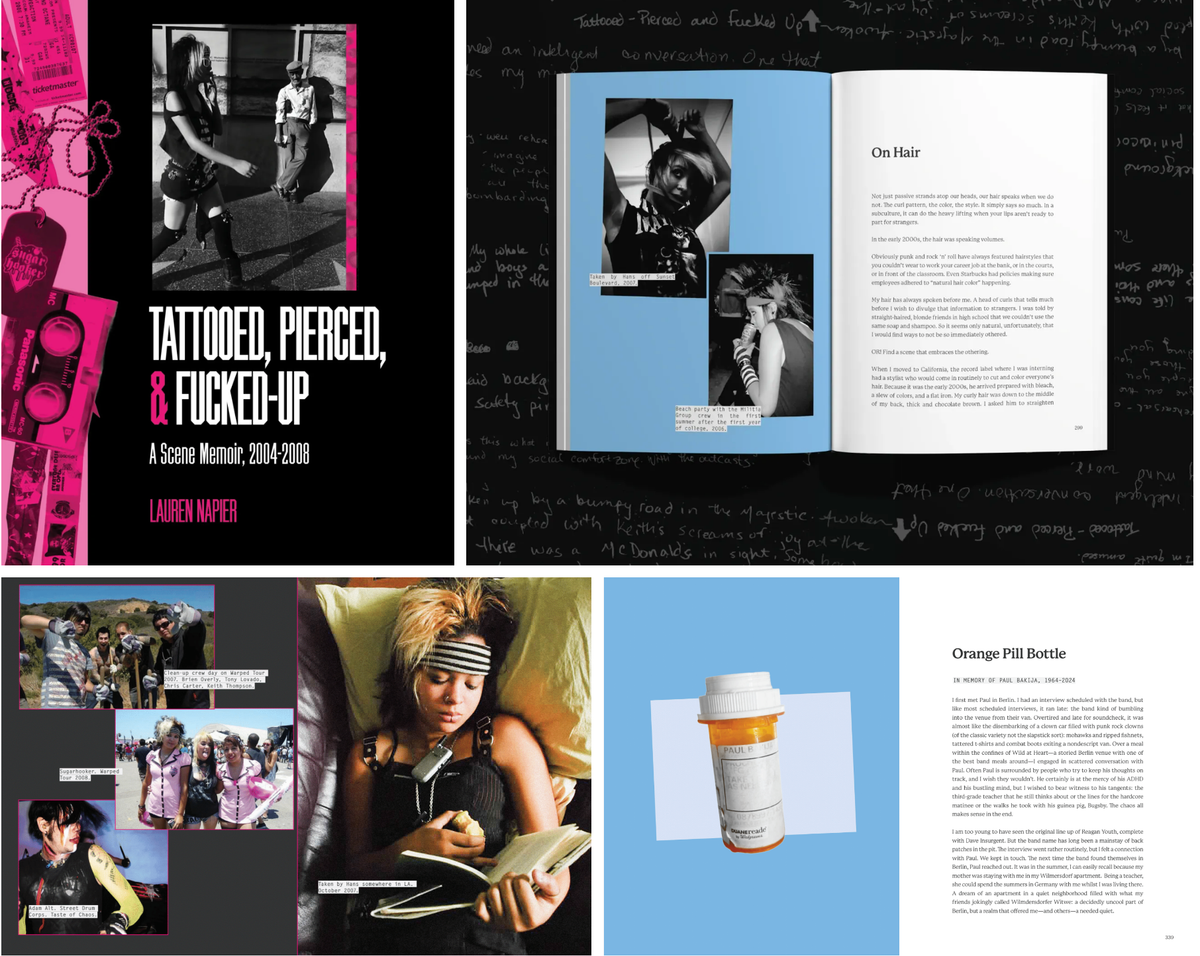
In this chapter she writes about her friendship with Paul Bakija of Reagan Youth.
Paul continues to be present, even when he is not, whether through the Gibson or my own songs with lyrics he inspired, or in a prescription pill bottle of his I toted around, not knowing it would be the cause of international upset. The same evening he gifted me the Gibson, he put a bit of marijuana into a pill bottle he had lying around: the room was riddled with guitars, Reagan Youth merch, and pill bottles.
But first up a really extraordinarily good one by Zack Budryk on Christopher Nolan's The Odyssey, Oppenheimer, Trump's war on Iran, the ravaging of the American people by ICE and breaking the rules (and the world). It can also be found here.
He most recently wrote for Hell World about grief and how it changes over time.
 Luke O’Neil
"One of these inexpressible phenomena tied to loss...is the way the person you’ve lost is fixed in amber for all time the way they were when they died, but the ghost in their place is changing every second of every day."
The good news is there are no rules. But the bad news is
by Zack Budryk
The best way to surprise someone with a story is to make it a story we think we already know. Homer’s epic poem the Odyssey is a story that, like Odysseus himself, has persisted for years in conditions not conducive to survival, from its origins in oral tradition to a universality in the modern world that allows it to be re-interpreted by everyone from singing chain-gang escapees to a Jack Russell terrier.
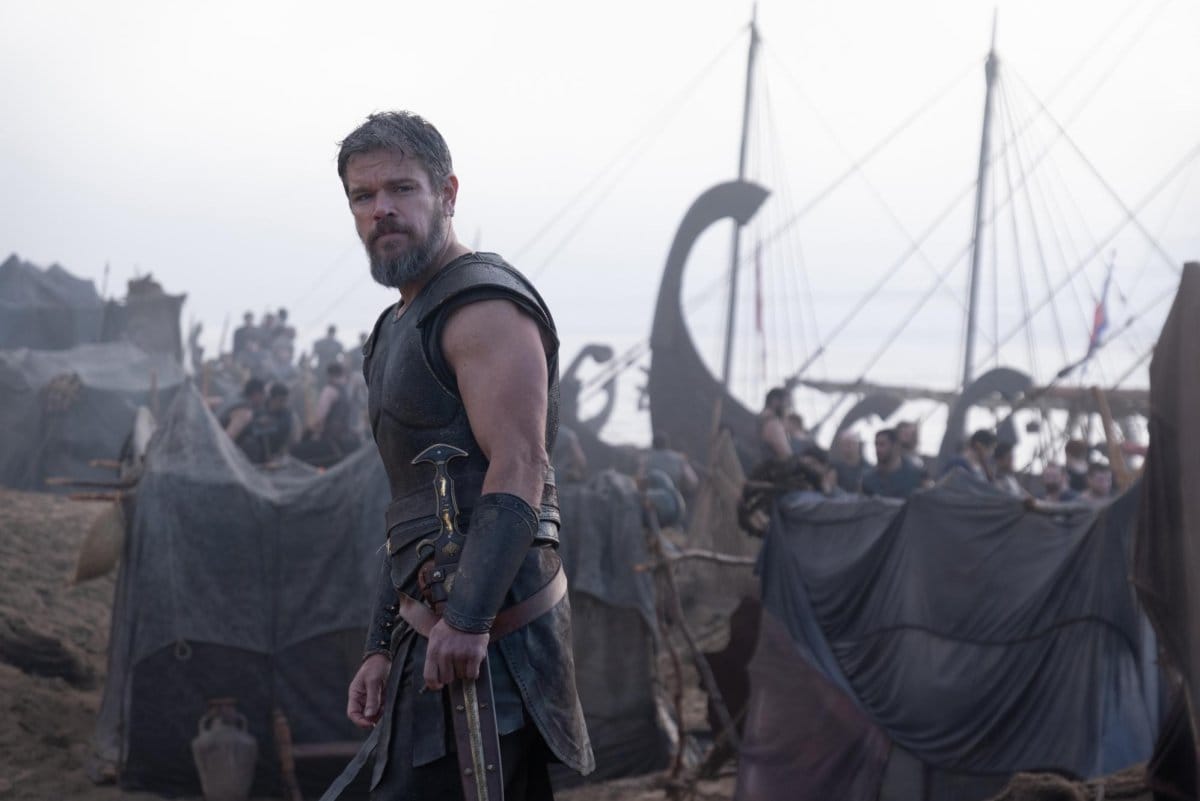
Oscar-winning director Christopher Nolan’s blockbuster take on the epic hews largely to the same plot beats as the poem and other adaptations, from Odysseus (Matt Damon) and his crew’s numerous deadly island hops to his wife Penelope’s (Anne Hathaway) unstable regency over Ithaca as dozens of local scumbags pressure her to accept her husband’s death and choose a rebound. The Greek gods and goddesses that figure so prominently in the poem are largely unseen except for Athena (Zendaya), but it’s clear this is a world where they hold sway and intervene, in contrast to 2004’s Troy, which excised supernatural elements from the Iliad altogether.
Where Nolan departs from the Homeric tradition is in his treatment of the Trojan War and Odysseus’s perspective on it. While both poems present it as a noble and prestigious pursuit, the highest glory available to a mortal man, Damon’s Odysseus is riddled with PTSD and guilt, convinced that the famous “trick to break the walls of Troy” represented an unforgivable violation of “Zeus’s law,” the sacred obligations of guest and host. He’s equally haunted by the death of Sinon (Elliot Page), the young Greek soldier who led the Trojans to that legendary wooden horse.
It’s tedious to spend too much time acknowledging the far-right chuds who brayed that Nolan had made a classic “woke” by casting actors like Page and Lupita N’yongo, who appears briefly as Helen of Troy. But Nolan really does clearly apply his own 21st century ethics to the film, in a way that makes it transcend the story we already know and feel both timely and of a piece with his other work.
In addition to Odysseus’s remorse, the movie adds a recurring theme of Penelope’s anxiety about raids on her kingless island from “sea people” rumored to be reaving their way through the Mediterranean. It’s not until she reunites with her husband and he describes the sack of Troy that she realizes they’re not foreign tribes, but returning Greek soldiers, continuing those same violations of Zeus’s law that Odysseus began at Troy. But Odysseus’s journey has also been a vision of what a world without that law looks like–from the Cyclops that chows down on Odysseus’s men when they assume they’ll be welcomed as its guests, to the witch Circe (Samantha Morton), who turns his crew into pigs in a nightmarish sequence but then tells Odysseus how she assumes any men coming her way are rapists and bandits with logic that’s hard to dispute.
In Kim, Rudyard Kipling’s 1901 novel of British India during the proto-cold war between the British and Russian empires, the title character’s mentor, a Tibetan lama, warns him “Thou hast loosed an Act upon the world, and as a stone thrown into a pool so spread the consequences thou canst not tell how far.” These rules of behavior, Nolan seems to say, don’t just protect those who would be harmed or exploited without them, they protect entire societies, including those who might appear to benefit from their violation in the short term.
King Agamemnon of Mycenae (Bennie Safdie, totally obscured by a massive suit of black armor that makes him look like the depiction of the god Ares in Wonder Woman comics) offers this same lesson on a more intimate, interpersonal scale. Appearing to Odysseus in the underworld, he warns Odysseus of his own fate upon returning home: his wife, and Helen’s sister Clytemnestra (also N’yongo), in collaboration with her lover, murdered him in revenge for sacrificing their young daughter Iphigenia for a fair wind before the war.
At first Agamemnon’s warning just makes him look like even more of a sociopath. Careful, he seems to tell a man who is his complete opposite ethically as a husband and father. Sometimes your wives just be murdering you for no reason. But in a broader way, he and Odysseus are in the same boat. They didn’t violate taboos in a vacuum, they disrupted them in a way that makes them vulnerable to similar violations from others. It may have gotten them what they wanted, but it started a cycle that ensured the home they left wasn’t the one they came back to. (And, as the film alludes, those ripples will affect Clytemnestra herself, when her son Orestes kills her to avenge Agamemnon, part of the bloody family tragedy called the Oresteia).
The film ends like the poem, with Odysseus returning home and killing Penelope’s monstrous suitors, but reckons with something Homer never does: the suitors are protected by Zeus’s law as well, with sacred hospitality preventing Penelope and her son Telemachus (Tom Holland) from taking action against them over the years. Odysseus ultimately decides the only response to another transgression of this kind can be self-imposed exile, abdicating his throne and returning to the sea, this time with Penelope at his side.
Dread of this same sort of cosmic blowback permeates Nolan’s previous film, the biopic Oppenheimer. After the use of nuclear weapons against Japan ends World War II, the eponymous physicist (Cillian Murphy) is surrounded by other scientists and military and government officials who are bemused and frustrated by his seeming fear of his own discovery, ultimately leading to him falling under suspicion during the Red Scare.
At first, the implication is that Oppenheimer is driven by his justified guilt over the Japanese civilian lives lost to the bomb. But it becomes clear that Oppenheimer is in fact driven by dread, his utter terror at the idea that, like Odysseus, what he thought was his victory came at the cost of the breaking of the world. As that much-memed line from Edward Teller (Safdie again) goes, the Manhattan Project only secured peace “until someone builds a bigger bomb.” In its final scene, we flash back to a 1947 conversation between Oppenheimer and Albert Einstein (Tom Conti). Oppenheimer reminds Einstein of a conversation, back when the bomb was only theoretical, where “we thought we might start a chain reaction that would destroy the entire world.”
“I believe we did,” Oppenheimer whispers.
We are living in a world made and ruled by men untroubled by such fears or restraints. Our government terrorizes immigrants–people both ancient and Christian tradition instruct us to receive with hospitality–and makes hype video edits of the violence. The richest man who ever lived, one of the people angriest about Nolan’s casting, once snapped that the US will “coup whoever we want” in pursuit of mineral resources.
Half a world away, the Trump regime is engaged in an open-ended war with the Iranian government, one that is in power and at odds with the US as a direct result of the blowback from our earlier meddling. Perhaps we can coup whoever we want, or at least whoever we can get away with, but once again, the dismantling of the old order is a two-way street. Like Odysseus and Agamemnon, the US tore up a pact, in our case Donald Trump’s exit from the 2015 Joint Comprehensive Plan of Action with Iran, and now we are told the war is vital to prevent Iran From Ever Getting a Nuclear Weapon, the very thing we released them from their obligation to avoid. The good news is, there are no rules, but the bad news, the terrible news, is that there are no rules.
As these things tend to go, what happens across the ocean comes home too. Early this year, a cadre of ICE goons in Willmar, Minnesota infamously ate at a local Mexican restaurant before detaining members of the staff, smugly availing themselves of sacred hospitality like Penelope’s suitors only to pull the rug out and reveal their victims had no such rights they were bound to respect. This week, Tom Homan, the corrupt, Judge Holden-esque goon currently serving as the face of ICE terror, whined that “hateful rhetoric” against ICE agents could lead to their deaths, eliding that that rhetoric came in response to the already-existing bloodshed from the two men agents killed in a single week. Or as a funnier but equally ethically challenged cop once put it, the law is powerless to help you, not to punish you. It’s a level of hubris that even the ancient Greeks wouldn’t dream of, to think that you can break the world and make it continue to work for your interests and only your interests. The Greeks at least could count on this level of entitlement to result in direct intervention from the Pantheon; we have the integrity of midterm elections to rely on. Athena preserve us.
Zack Budryk is a DC-area journalist and writer. His reporting and commentary have appeared in The Hill, The Washington Post, Teen Vogue and The Nation and his fiction has been published in Rock and a Hard Place Magazine.
He's written for Hell World on Amy Madigan and the politics of the Oscars ceremony, The Testament of Ann Lee, Venezuela and the gangster capitalism of Trumpism, The Knives Out film Wake Up Dead Man, and what it means to be a man, the impulse to take action during times like these and vigilante justice.
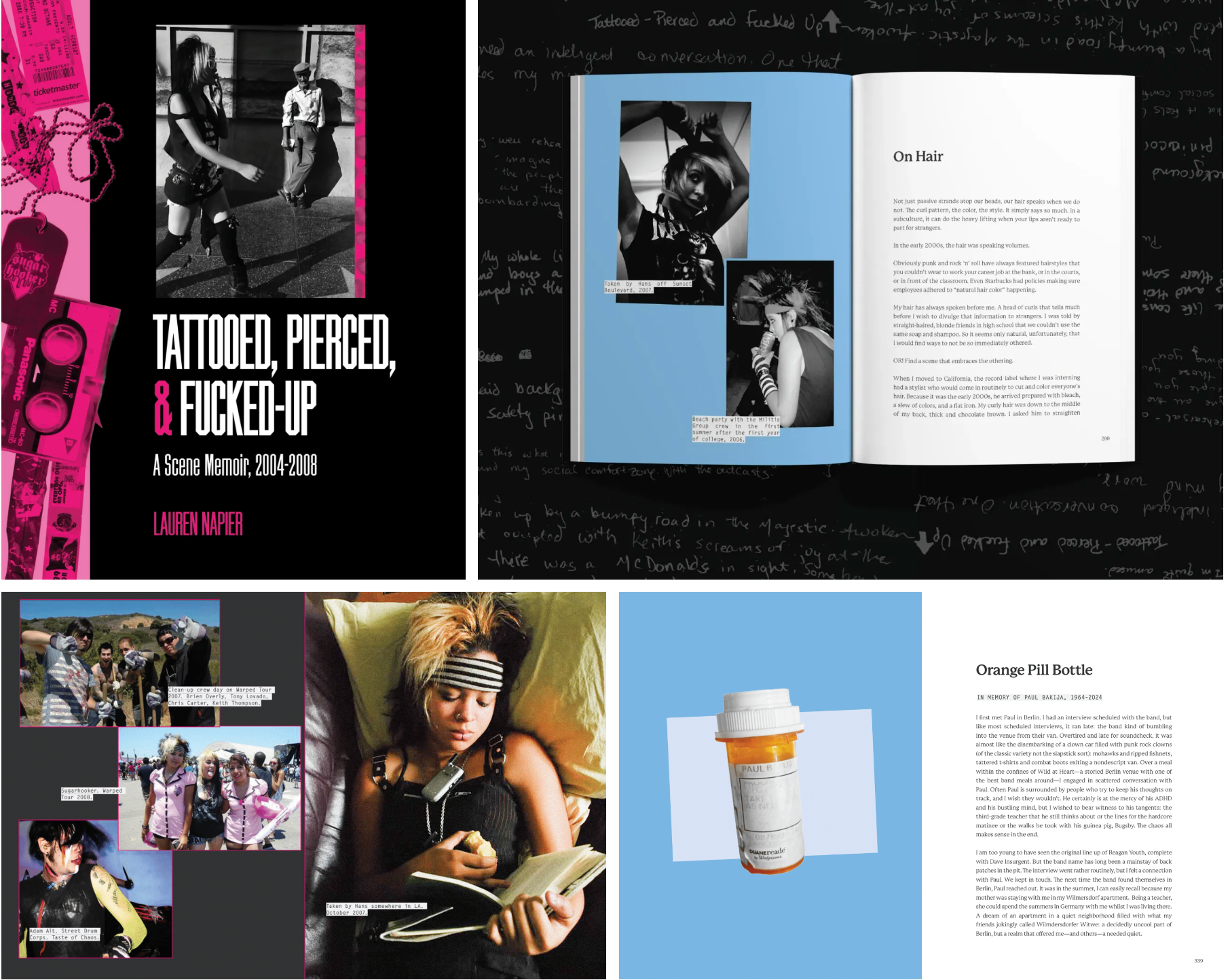
I have a terrible memory. We talked about this recently. And what memories I do have of my youth are often memories of a photo of an event rather than the thing itself. The problem for me is that for the bulk of my twenties there was little or no social media. People had digital cameras yes and we took hundreds of photos of everything and nothing at all but those too have been lost to time. File cards collecting dust in a box somewhere by now if anywhere. Some people on the other hand are good at saving everything. Lauren Napier for example. She not only wrote down and took pictures of her time spent in the punk and emo scene of the 2000s – a world I spent most of my own time in as well – she held onto them. Her forthcoming Tattooed, Pierced, & Fucked-Up: A Scene Memoir 2004–2008 – the first title from our friends at Dirt Books (pre-order it here) – collects all of that together in a collage of sorts amidst essays and interviews old and new with the older version of Napier commenting on the thoughts of her younger self throughout. It's also a really uniquely designed and lovely-looking book. I'm happy to share an excerpt today about her friendship with Paul Bakija of the iconic 1980s (and later reformed in the 2000s) punk band Reagan Youth.
Dirt Books describes it like so.
Writer, musician, and visual artist, Lauren Napier spent her youth in underground venues and festival crowds, ascending from fan to music journalist to band manager in the shaky early decade of the New Millennium.
20 years later, in the face of explosive nostalgia marketing and an unrecognizable music industry, Napier’s TATTOOED, PIERCED, & FUCKED-UP collects interviews, photos, diary entries, ticket stubs, call sheets, and other personal ephemera from her life in Los Angeles, Berlin, and the proverbial road.
Alongside green room access to the era-defining Vans Warped Tour and early interviews with bands like My Chemical Romance, Sugarcult, and the re-formed Reagan Youth, Napier expresses her passion for the artists who never make it big—and raises questions about what it means to be part of a subculture at risk of extinction.
If you like Reagan Youth you'll probably also appreciate this recent piece on Crass.
 Luke O’Neil
In other book news of late you can read an excerpt of All My Dead Cats and Other Losses by s.e. smith here.
 Luke O’Neil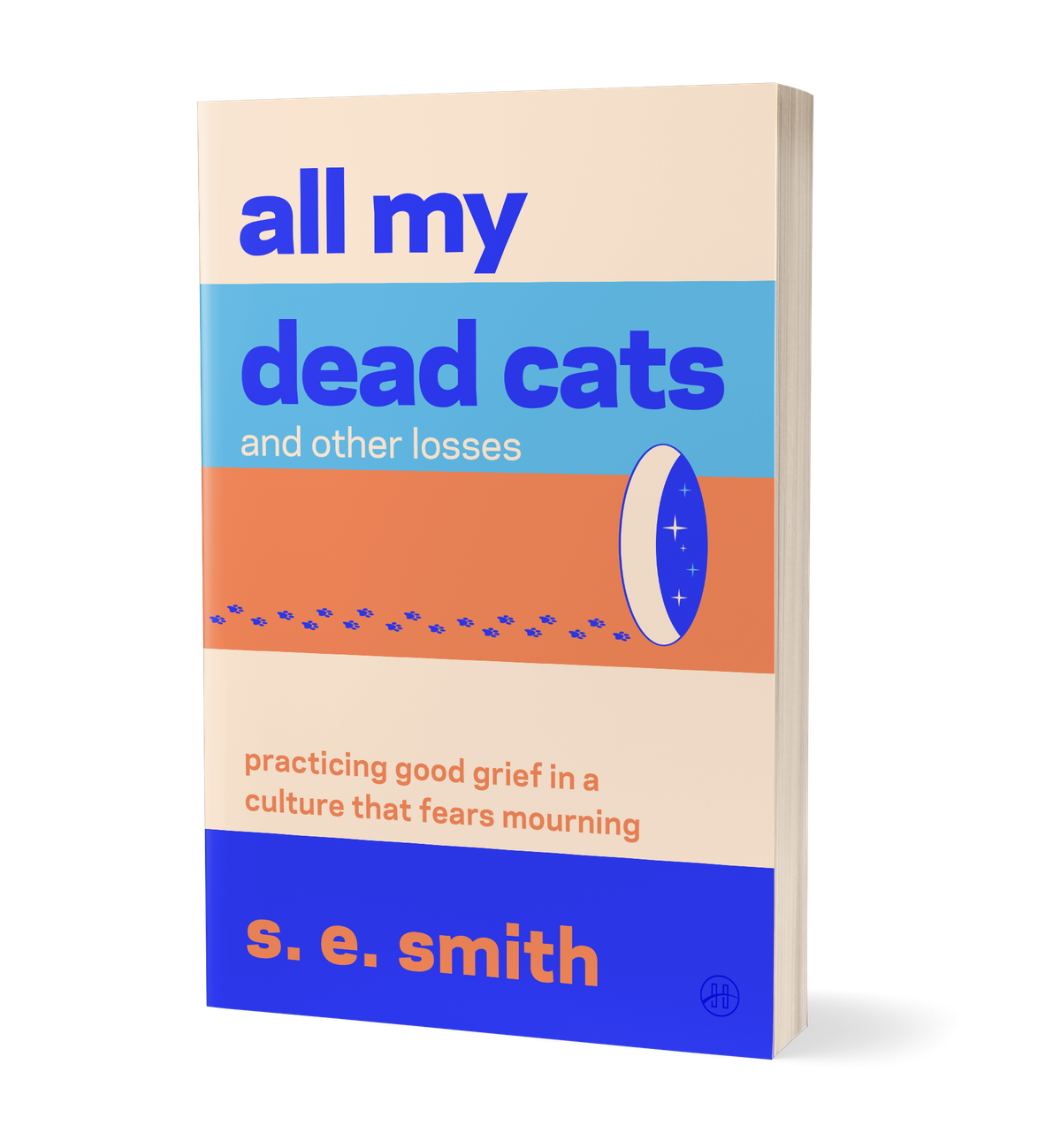
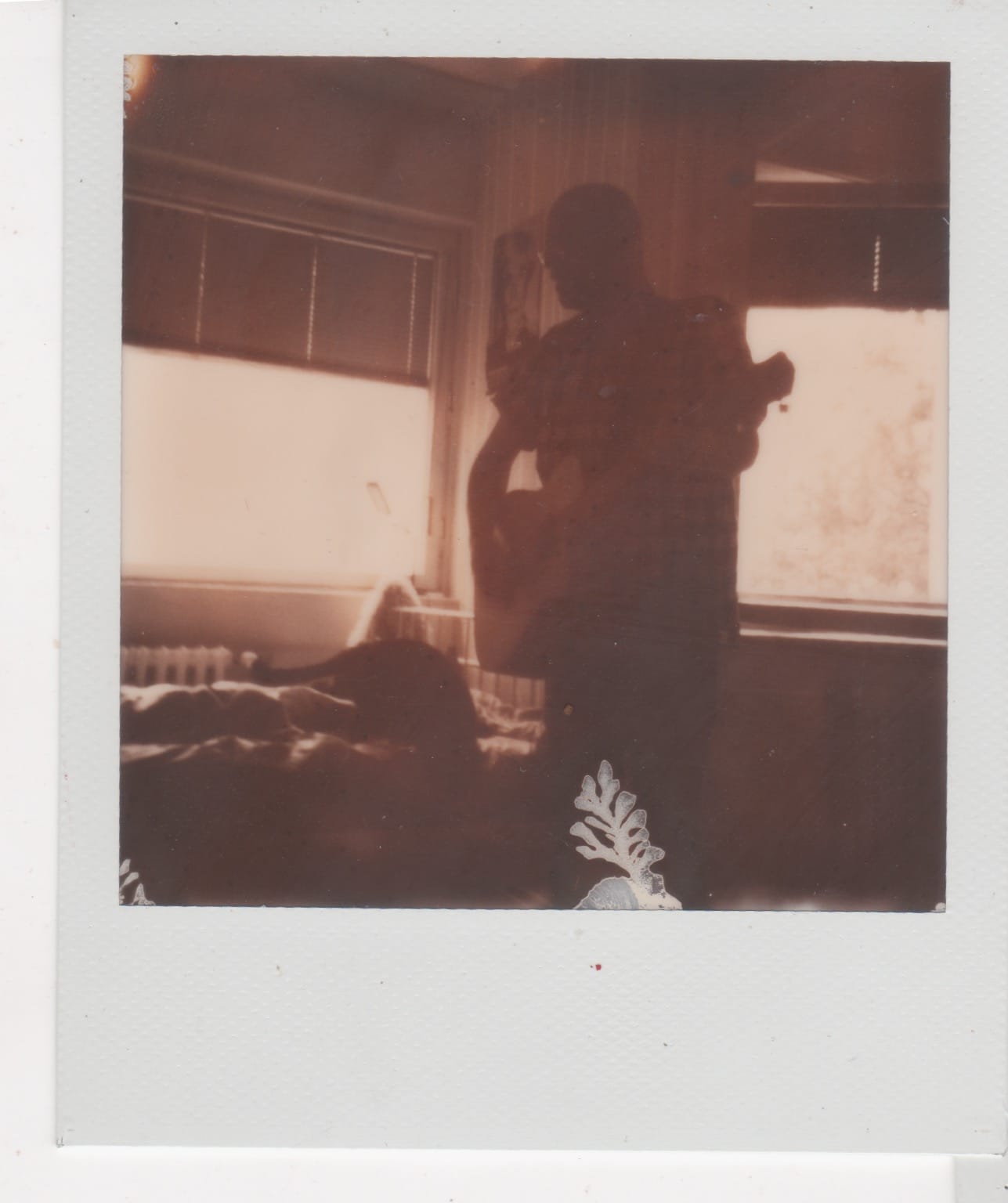
Orange pill bottle
In memory of Paul Bakija, 1964–2024
by Lauren Napier
I first met Paul in Berlin. I had an interview scheduled with the band, but like most scheduled interviews, it ran late: the band kind of bumbling into the venue from their van. Overtired and late for soundcheck, it was almost like the disembarking of a clown car filled with punk rock clowns (of the classic variety not the slapstick sort): mohawks and ripped fishnets, tattered t-shirts and combat boots exiting a nondescript van. Over a meal within the confines of Wild at Heart—a storied Berlin venue with one of the best band meals around—I engaged in scattered conversation with Paul. Often Paul is surrounded by people who try to keep his thoughts on track, and I wish they wouldn’t. He certainly is at the mercy of his ADHD and his bustling mind, but I wished to bear witness to his tangents: the third-grade teacher that he still thinks about or the lines for the hardcore matinee or the walks he took with his guinea pig, Bugsby. The chaos all makes sense in the end.
I am too young to have seen the original line up of Reagan Youth, complete with Dave Insurgent. But the band name has long been a mainstay of back patches in the pit. The interview went rather routinely, but I felt a connection with Paul. We kept in touch. The next time the band found themselves in Berlin, Paul reached out. It was in the summer, I can easily recall because my mother was staying with me in my Wilmersdorf apartment. Being a teacher, she could spend the summers in Germany with me whilst I was living there. A dream of an apartment in a quiet neighborhood filled with what my friends jokingly called Wilmdersdorfer Witwe: a decidedly uncool part of Berlin, but a realm that offered me—and others—a needed quiet.
Paul asked, very simply, if he could hang out. I took the inquiry at face value, ran the idea by my mother, and we went to meet him for coffee. Somehow the evening wandered, past show curfew and after the meandering goodbyes, and I realized that Paul intended to come home with us. After a quick aside, mother and I decided we could pull one of my mattresses onto the floor and he could sleep on the floor; mom and I could share the bed. It was just a studio apartment—room for a girl and her cat, not a girl, her mom, a punk, and a cat.
Touring takes a toll and, even if you enjoy your touring companions, you need a break from the chaotic caravan every once in a while. You grasp at the possibilities: a chance at doing laundry and sleeping in a room all to yourself; a moment to take a bath and breathe; an offer of a home cooked meal and bit of normalcy; or simply speaking to someone else besides your bandmates for more than five minutes. It is not that you want that all the time—the road cures most of what ails—but any routine welcomes respite.
He kept us up late talking and regaling us with tales of his family history and touring life. Even after a show, Paul was never really tired: some punk Energizer battery existed within him that kept him talking right into the arms of slumber. My cat, SAMO, curled up next to him and was content with his presence. When the sun shone through my picture window, his fingers were strumming my acoustic guitar: awake and ready for the day. Not quite a morning person myself and, like mother like daughter, I took my eager guest on a walk through Wilmersdorf—giving my mother a reprieve and Paul an outlet. Past the local cheese shop and bakery and past the two churches in the vicinity and to the bustling street of Kurfürstendamm and back again. Years later, he could still recall what we ate—a chocolate croissant—and the conversations we had with the locals: details not lost to time.
During Covid, when life slowed down and I indulged in a train trip from Seattle to New York City, I was able to visit Paul and take ambling walks through Tompkins Square Park and St. Mark’s. Just wandering and talking. We’d end up back on the stoop smoking a spliff or in his apartment with the windows open, perched in separate corners. In the midst of sharing chord progressions and Paul attempting to convince me I needed to add a Würm tune to my set, he started pulling guitars from seemingly nowhere. From the recesses of the Ave D apartment, Gibsons and Firebirds appeared, each with a story about its origins. A fire engine red semi-hollowbody found its way into my lap, its hue mirroring the electric guitar that I had in college—the guitar that started my musical protest. This one even came complete with a hammer and sickle sticker. Paul insisted I take it home with me. I protested. It seemed beyond extravagant, and instruments are precious. This one in particular was riddled with labels from his prescription pill bottles upon the back. Hospital bracelets. And other intimate details about struggles that he often remained stoic against.
“Take it now, so I can see the smile on your face, or I’ll just will it to you.” he insisted.
It was then I realized the hidden gravity of his health situation. His sentence was in earnest and I accepted the guitar and his request as such. It gave us both the memory rather than the fulfilling of a posthumous, contractual obligation. I was originally supposed to take the subway from Alphabet City to the Bronx. After realizing the weight and value of what I would be carrying back to the Bronx, a ride was quickly arranged. It’s still a guitar that stays at home more often than it sees the road: I’m nervous to take it into the world, into the elements. That Gibson writes different songs, too, channeling something ethereal and beyond myself. Not only are instruments precious, they all have different personalities, singular stories to tell.
“Your face lit up when you held that one, the Firebird not so much,” he texted me later.
Paul continues to be present, even when he is not, whether through the Gibson or my own songs with lyrics he inspired, or in a prescription pill bottle of his I toted around, not knowing it would be the cause of international upset. The same evening he gifted me the Gibson, he put a bit of marijuana into a pill bottle he had lying around: the room was riddled with guitars, Reagan Youth merch, and pill bottles. Just enough for later; I never have felt comfortable traveling with such—legality notwithstanding. Long after the weed was gone, the bottle found a home at the bottom of my bag: usually out of sight and out of mind, but the moments it would surface would bring a smile to my face as I read the name of my friend. I have always been fond of mementos.
One moment, returning to America from Canada after playing some shows with [my partner Vic Ruggiero] as the Witch and the Burro, that pill bottle resurfaced. Vic and I must look terribly suspicious as we go through government checkpoints: the feathers we collect decorating the dashboard, rocks from rockhounding and fresh produce under the seats, his floppy stingy brim hat, my fishnets, our guitars? I am never quite sure what sets them off, but we get pulled aside nine times out of ten. We were pulled into secondary and asked to leave the van and sit in the waiting room: a tiny grey, uninspiring square complete with a man who seemed to have been waiting in the same plastic chair for weeks.
“Paul Baki-jah.” A man in uniform says as he comes through the door behind the desk.
I don’t recognize the name through the mispronunciation.
“Paul Bakey-jah!” he says louder. And rattles a pill bottle. The percussive sound gets my attention and I look up. He has an orange bottle in one hand and my recognizable wallet in the other.
“Oh, I guess that’s mine.” I answer, unsure.
“What’s in here? Do you know what’s in here? Why do you have this?” he rattles off questions.
Putting pieces together, I realize that it’s Paul’s prescription bottle and that the man has been going through my bags. Quickly shaking feelings of being violated and instinctively ruffled feathers, I answer him, “I don’t know what’s in there.
“Are you Paul?”“No.”
“Why do you have his bottle?”“He’s my friend.”
“Why do you have his bottle?”“He’s not well and I keep it as a memento?” I answer honestly.
“You have marijuana with you?”It was then I realized that there may have been some stems and seeds left behind in the bottle: remnants. Nothing of any note. Maybe two or three stems and a seed. The man in uniform shakes the drug detritus into his hand and shoves it into my face: “Is this yours?”“If it was in the bottle then, yes? but I don’t have any other marijuana on me.”Aside from being anxiety producing, nothing was produced from the search of the van because there was nothing there. He put the seed and stems back into the pill bottle and let us go after another hour or so. It became this joke to rattle the pill bottle and recall the look on the officer’s face. It still lives in the bottom of my bag. The seeds and stem are gone and Paul’s name is fading from the label, but the smile that it inspires is still just as present when it shows its transparent orange self.
Tattooed, Pierced, & Fucked-Up: A Scene Memoir 2004–2008 is available for pre-order now.
Read a few pieces of mine over at Dirt here.
 Luke O’Neil
And speaking of saving or throwing away all your old shit check this one out too.
 Luke O’Neil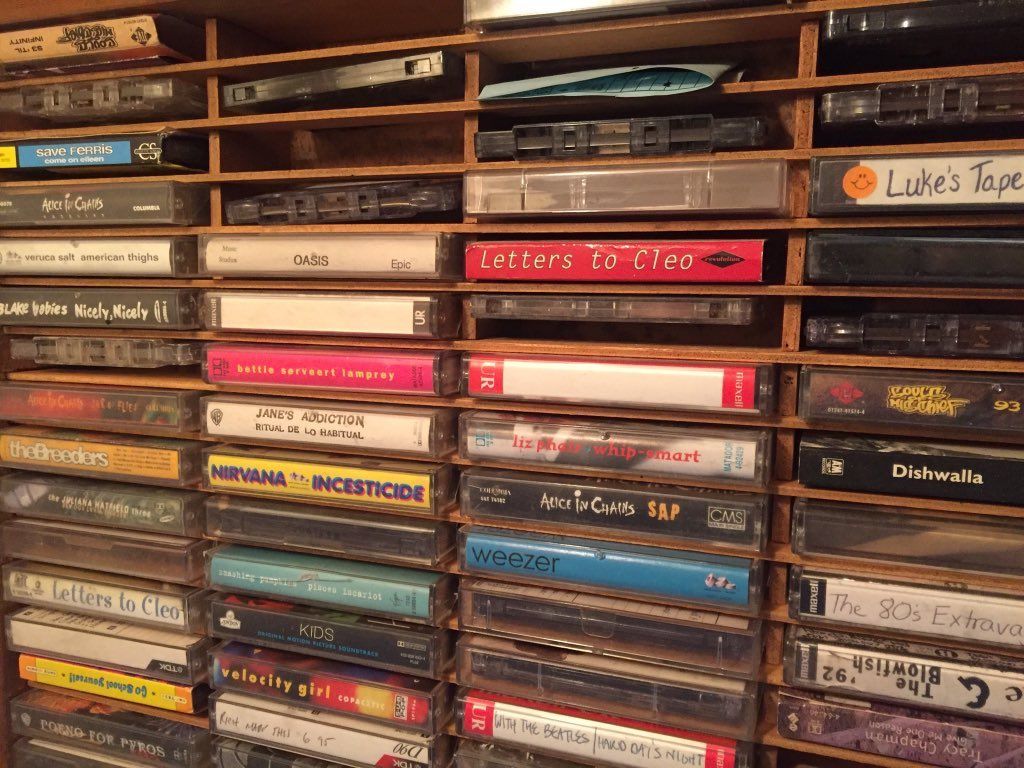
Related reading on hospitality.
 Luke O’Neil
Clearly there's no shortage of horrors to choose from of late but for some reason this one in particular has really chilled me to the fucking bone. Last week a group of pigs had lunch at a Mexican restaurant called El Tapatio in Willmar, Minnesota. "Staff at the restaurant were frightened," an eye witness told the Star Tribune. You can surely imagine that they were. You can picture exactly how it must have felt in there. Four fucking Nazis with their shit-eating grins squeezing their fat asses into a booth at a family-owned Mexican place poisoning the entire room with their smug impunity. Desecrating a place of community. There's one like it where you live too. In almost every town in the country. We love Mexican food here so much.
They forced these people to prepare their food and to serve them all the while knowing that they were going to ruin their lives after. With full bellies. The threat hanging in the air. Of course they did ruin them. They arrested a dishwasher and the two owners a few hours later after the restaurant closed.
Can you imagine being made to wash the dishes used to feed the men who are waiting to kidnap you or worse? Cooking and plating their meals? I wonder if they put the same care they usually do into it or if their shaking hands made the work suffer?
Needless to say there have been countless cultural mores and vengeful myths about this very thing throughout human history.
"This is the kind of shit that would make you completely outside the bounds of any ancient society, the gods bestow generational curses for violating hospitality," the historian Patrick Wyman posted.
May they reap someday they sow.
Just another one of the increasingly many days I wish that the gods were real. The vengeful ones anyway.
GOODBYE!
 Bandcamp New & Notable Feb 2, 2023