The world resists me and I resist the world
Zack Budryk on East of Eden, Carrie and Furious

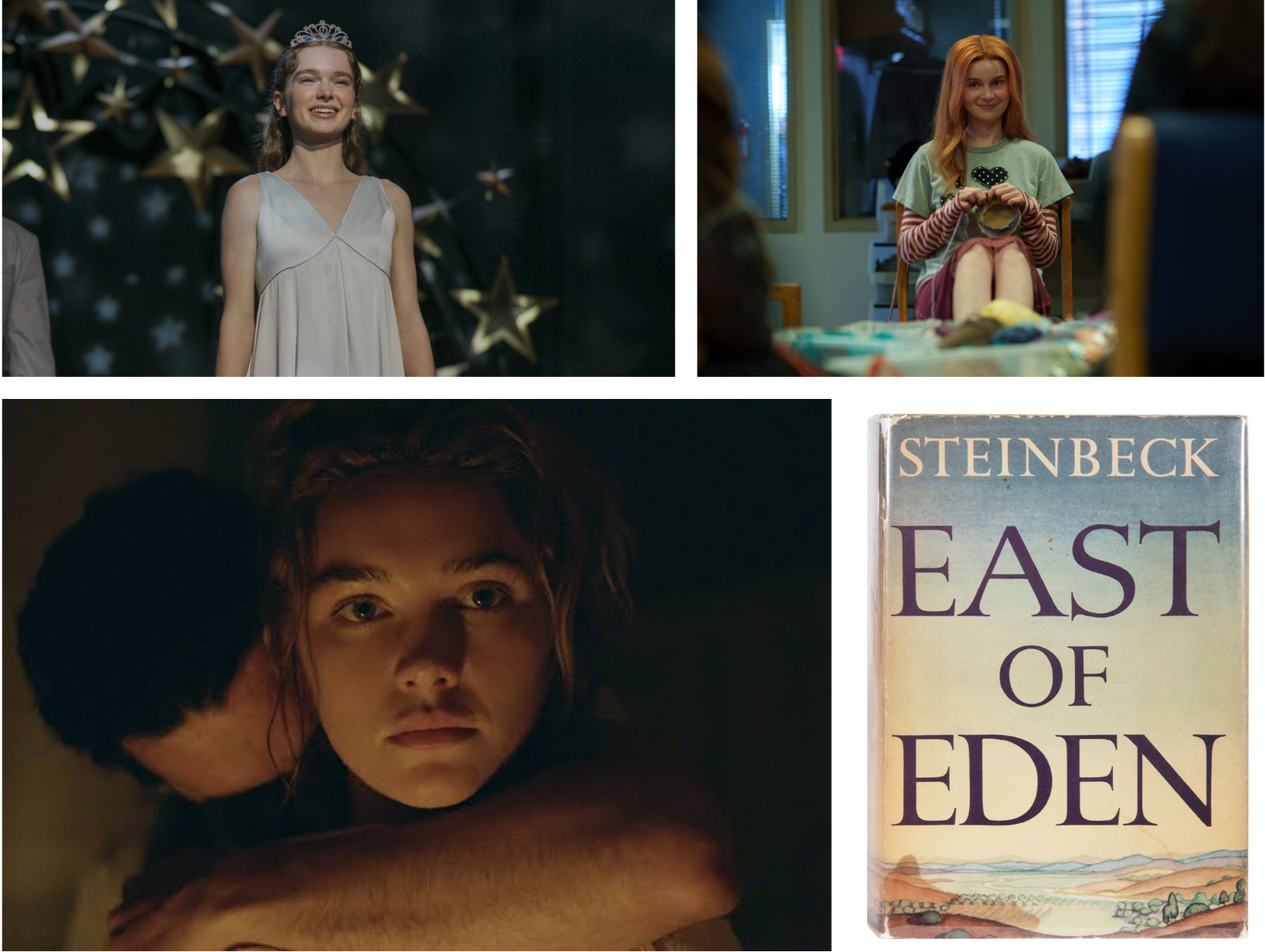
Welcome to Hell World the internet's premiere television criticism blog. We have for you today a great piece on the recent adaptations of East of Eden and Carrie by Zack Budryk.
These two "recent examinations of classic novels set similarly daunting tasks for themselves," he writes, "trying to find the humanity in a couple of the least morally ambiguous villains in pop culture."
This will be sent out in the next edition of the newsletter. You'll need to be a paid subscriber to read it in full. Here's a very big discount on one year of Hell World.
Don't miss this other recent essay by Sean T. Collins on the recent The Terror: Devil in Silver, as well a discussion with the series' showrunner Chris Cantwell.
 Luke O'Neil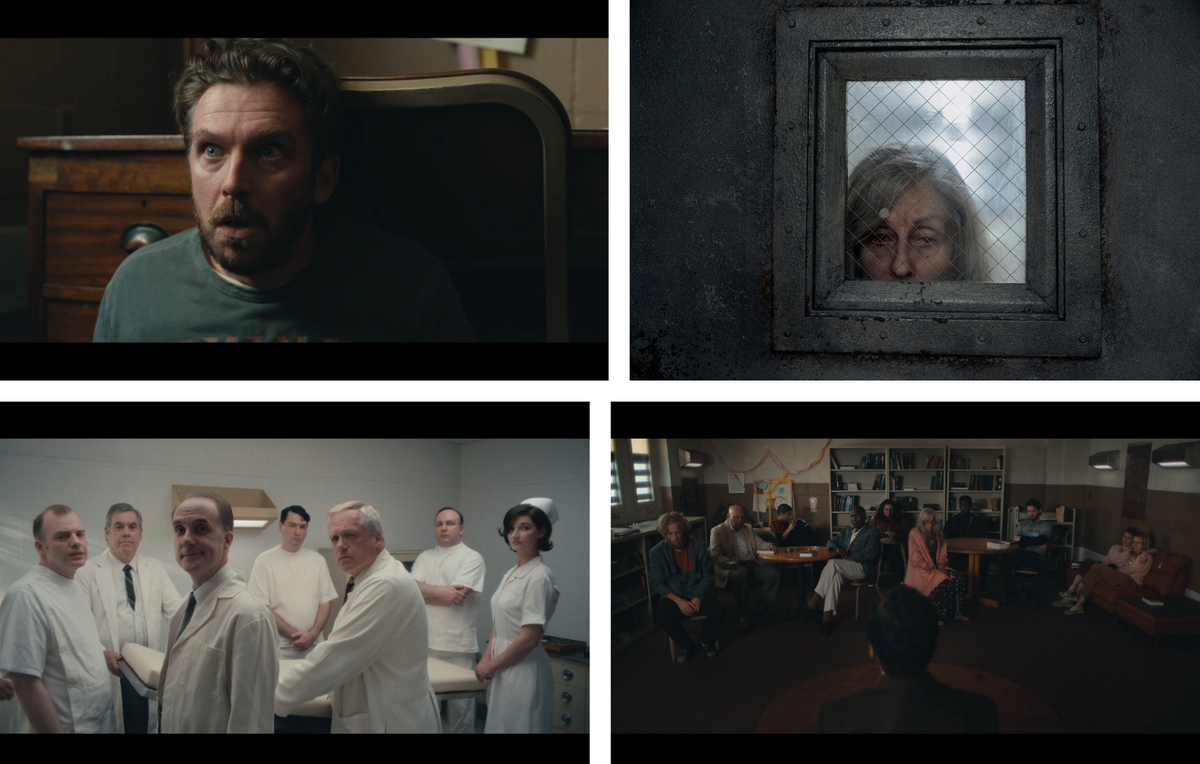
Villains
by Zack Budryk
We’ve been trying to understand evil from evil’s perspective almost since we acknowledged the concept. To simply leave it unexamined, to declare that evil is wholly a choice, can be comforting to those who want to draw a clear distinction between it and themselves as the Good Guys, but to only react to evil, to simply penalize it rather than seek a deeper understanding of whence it comes and how to prevent it, is to constantly play catch up.
In the 1970s, FBI agent John Douglas sought to understand what motivates some of the most aberrant behavior seen in our species. Douglas’s brainchild, the bureau’s Behavioral Sciences Unit, pioneered criminal profiling based in part on interviews with some of the nation’s most notorious incarcerated murderers, from serial- and spree-killers like David Berkowitz and Richard Speck to Martin Luther King Jr. assassin James Earl Ray. The scientific validity of much of the profiling field has come under scrutiny, but it still represents a concession by even federal law enforcement that certain behavior can’t simply be incarcerated into submission.
In fiction, putting ourselves in the shoes of monsters has sometimes seemed like a challenge to see how much complexity a good writer can draw out of the most seemingly one-dimensional examples. A cackling witch whose most iconic line threatens a little dog led to Gregory Maguire’s bestselling book Wicked, adapted as a Broadway musical and movie that both became cultural phenomena. In his 1971 novel Grendel, John Gardner examined the nature of the cannibalistic monster of the ancient heroic poem Beowulf and how being cursed as a monster is a self-fulfilling prophecy. “The world resists me and I resist the world,” Gardner’s Grendel summarizes. And of course one of the most celebrated poems in the English language, John Milton’s Paradise Lost, asks us to consider things through the eyes of the devil himself.
Two recent examinations of classic novels set similarly daunting tasks for themselves, trying to find the humanity in a couple of the least morally ambiguous villains in pop culture. In John Steinbeck’s 1952 family epic East of Eden, Steinbeck introduces the character of Cathy Ames as a “monster born in this world to human parents.” She’s a beautiful girl with a sociopath’s superficial charm who drives a man to suicide and kills both her parents in a house fire. Further into the book, she goes on to nonfatally shoot Adam Trask, her husband and the mother of her sons, and insinuate herself as a surrogate daughter to a brothel madam before slowly poisoning her and usurping her position. As the new madam, she recenters the house around sadomasochism, the better to blackmail the powerful men who patronize it. These secret desires of the respectable pillars of the community, she argues to Adam, prove her depravity is actually the baseline for humanity.