To think that you can break the world
Zack Budryk on Christopher Nolan's The Odyssey

Look I know I say this a lot but this is a really really good one. Zack Budryk writes today on Christopher Nolan's The Odyssey, Oppenheimer, Trump's war on Iran, the ravaging of the American people by ICE, and breaking the rules and the world.
He most recently wrote for Hell World about grief and how it changes over time.
 Luke O’Neil
"One of these inexpressible phenomena tied to loss...is the way the person you’ve lost is fixed in amber for all time the way they were when they died, but the ghost in their place is changing every second of every day."
Also new today in Hell World is an excerpt from Lauren Napier's forthcoming book Tattooed, Pierced, & Fucked-Up: A Scene Memoir 2004–2008.
 Luke O’Neil
Pay for this shit please I swear to the gods you are violating hospitality if you do not.
The good news is there are no rules. But the bad news is
by Zack Budryk
The best way to surprise someone with a story is to make it a story we think we already know. Homer’s epic poem the Odyssey is a story that, like Odysseus himself, has persisted for years in conditions not conducive to survival, from its origins in oral tradition to a universality in the modern world that allows it to be re-interpreted by everyone from singing chain-gang escapees to a Jack Russell terrier.
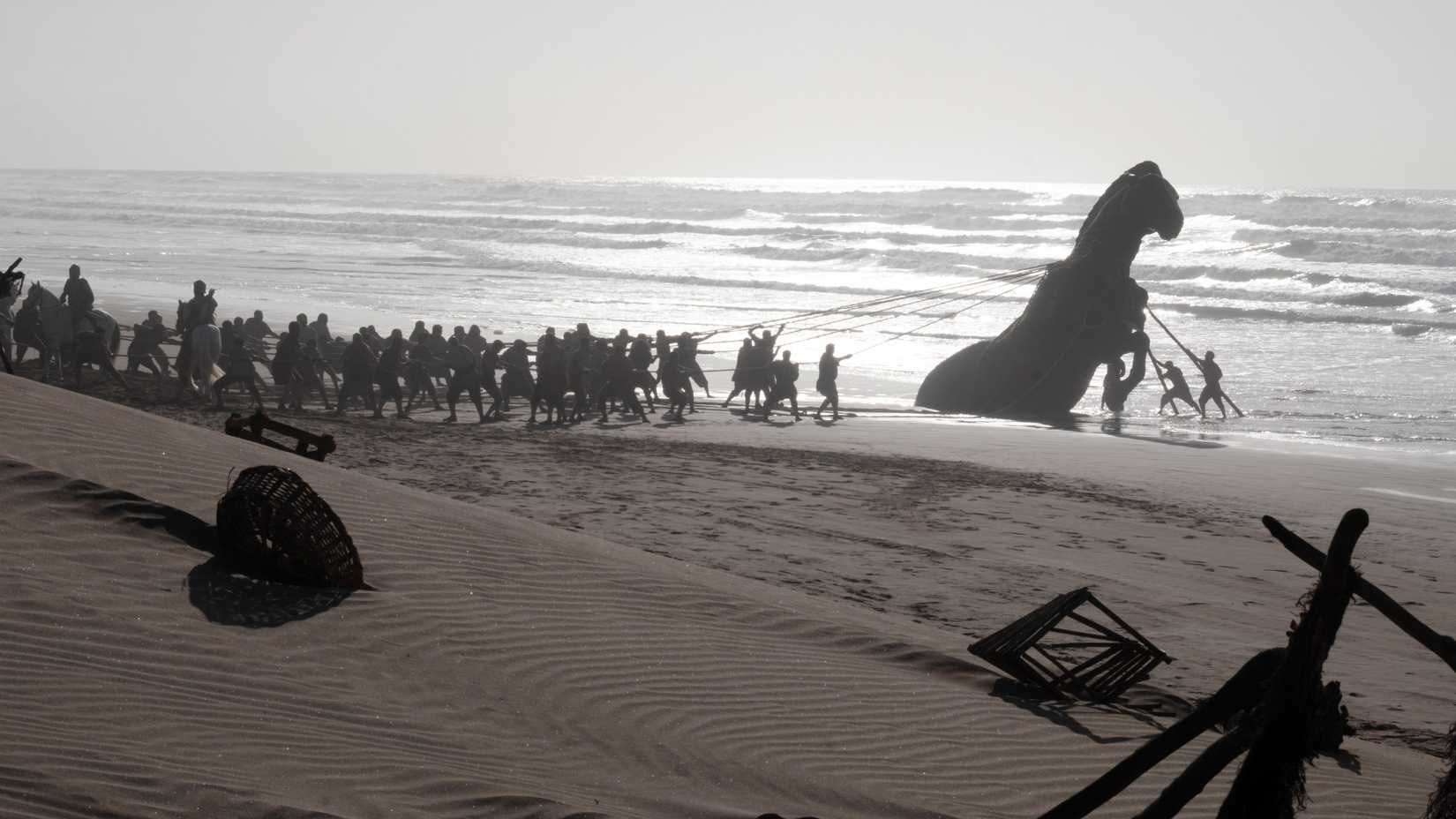
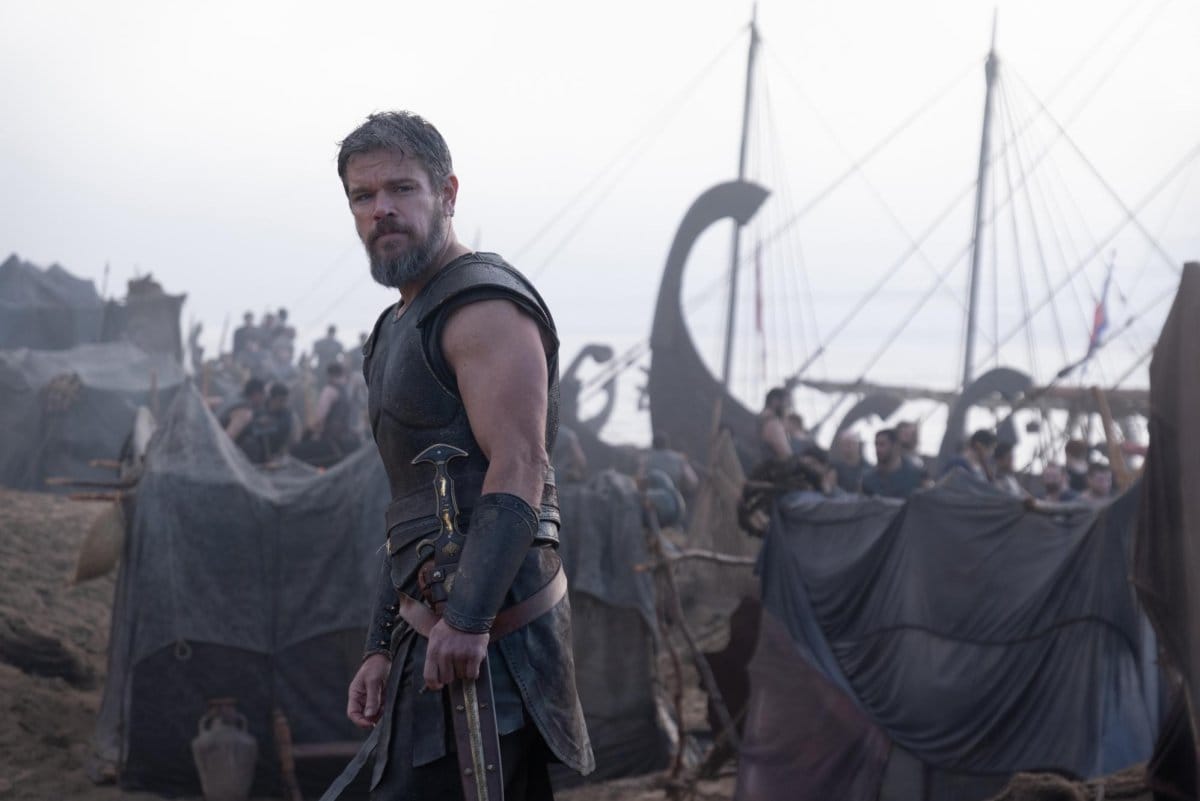
Oscar-winning director Christopher Nolan’s blockbuster take on the epic hews largely to the same plot beats as the poem and other adaptations, from Odysseus (Matt Damon) and his crew’s numerous deadly island hops to his wife Penelope’s (Anne Hathaway) unstable regency over Ithaca as dozens of local scumbags pressure her to accept her husband’s death and choose a rebound. The Greek gods and goddesses that figure so prominently in the poem are largely unseen except for Athena (Zendaya), but it’s clear this is a world where they hold sway and intervene, in contrast to 2004’s Troy, which excised supernatural elements from the Iliad altogether.
Where Nolan departs from the Homeric tradition is in his treatment of the Trojan War and Odysseus’s perspective on it. While both poems present it as a noble and prestigious pursuit, the highest glory available to a mortal man, Damon’s Odysseus is riddled with PTSD and guilt, convinced that the famous “trick to break the walls of Troy” represented an unforgivable violation of “Zeus’s law,” the sacred obligations of guest and host. He’s equally haunted by the death of Sinon (Elliot Page), the young Greek soldier who led the Trojans to that legendary wooden horse.
It’s tedious to spend too much time acknowledging the far-right chuds who brayed that Nolan had made a classic “woke” by casting actors like Page and Lupita N’yongo, who appears briefly as Helen of Troy. But Nolan really does clearly apply his own 21st century ethics to the film, in a way that makes it transcend the story we already know and feel both timely and of a piece with his other work.
In addition to Odysseus’s remorse, the movie adds a recurring theme of Penelope’s anxiety about raids on her kingless island from “sea people” rumored to be reaving their way through the Mediterranean. It’s not until she reunites with her husband and he describes the sack of Troy that she realizes they’re not foreign tribes, but returning Greek soldiers, continuing those same violations of Zeus’s law that Odysseus began at Troy. But Odysseus’s journey has also been a vision of what a world without that law looks like–from the Cyclops that chows down on Odysseus’s men when they assume they’ll be welcomed as its guests, to the witch Circe (Samantha Morton), who turns his crew into pigs in a nightmarish sequence but then tells Odysseus how she assumes any men coming her way are rapists and bandits with logic that’s hard to dispute.
In Kim, Rudyard Kipling’s 1901 novel of British India during the proto-cold war between the British and Russian empires, the title character’s mentor, a Tibetan lama, warns him “Thou hast loosed an Act upon the world, and as a stone thrown into a pool so spread the consequences thou canst not tell how far.” These rules of behavior, Nolan seems to say, don’t just protect those who would be harmed or exploited without them, they protect entire societies, including those who might appear to benefit from their violation in the short term.
King Agamemnon of Mycenae (Bennie Safdie, totally obscured by a massive suit of black armor that makes him look like the depiction of the god Ares in Wonder Woman comics) offers this same lesson on a more intimate, interpersonal scale. Appearing to Odysseus in the underworld, he warns Odysseus of his own fate upon returning home: his wife, and Helen’s sister Clytemnestra (also N’yongo), in collaboration with her lover, murdered him in revenge for sacrificing their young daughter Iphigenia for a fair wind before the war.
At first Agamemnon’s warning just makes him look like even more of a sociopath. Careful, he seems to tell a man who is his complete opposite ethically as a husband and father. Sometimes your wives just be murdering you for no reason. But in a broader way, he and Odysseus are in the same boat. They didn’t violate taboos in a vacuum, they disrupted them in a way that makes them vulnerable to similar violations from others. It may have gotten them what they wanted, but it started a cycle that ensured the home they left wasn’t the one they came back to. (And, as the film alludes, those ripples will affect Clytemnestra herself, when her son Orestes kills her to avenge Agamemnon, part of the bloody family tragedy called the Oresteia).
The film ends like the poem, with Odysseus returning home and killing Penelope’s monstrous suitors, but reckons with something Homer never does: the suitors are protected by Zeus’s law as well, with sacred hospitality preventing Penelope and her son Telemachus (Tom Holland) from taking action against them over the years. Odysseus ultimately decides the only response to another transgression of this kind can be self-imposed exile, abdicating his throne and returning to the sea, this time with Penelope at his side.
Dread of this same sort of cosmic blowback permeates Nolan’s previous film, the biopic Oppenheimer. After the use of nuclear weapons against Japan ends World War II, the eponymous physicist (Cillian Murphy) is surrounded by other scientists and military and government officials who are bemused and frustrated by his seeming fear of his own discovery, ultimately leading to him falling under suspicion during the Red Scare.
At first, the implication is that Oppenheimer is driven by his justified guilt over the Japanese civilian lives lost to the bomb. But it becomes clear that Oppenheimer is in fact driven by dread, his utter terror at the idea that, like Odysseus, what he thought was his victory came at the cost of the breaking of the world. As that much-memed line from Edward Teller (Safdie again) goes, the Manhattan Project only secured peace “until someone builds a bigger bomb.” In its final scene, we flash back to a 1947 conversation between Oppenheimer and Albert Einstein (Tom Conti). Oppenheimer reminds Einstein of a conversation, back when the bomb was only theoretical, where “we thought we might start a chain reaction that would destroy the entire world.”
“I believe we did,” Oppenheimer whispers.
We are living in a world made and ruled by men untroubled by such fears or restraints. Our government terrorizes immigrants–people both ancient and Christian tradition instruct us to receive with hospitality–and makes hype video edits of the violence. The richest man who ever lived, one of the people angriest about Nolan’s casting, once snapped that the US will “coup whoever we want” in pursuit of mineral resources.
Half a world away, the Trump regime is engaged in an open-ended war with the Iranian government, one that is in power and at odds with the US as a direct result of the blowback from our earlier meddling. Perhaps we can coup whoever we want, or at least whoever we can get away with, but once again, the dismantling of the old order is a two-way street. Like Odysseus and Agamemnon, the US tore up a pact, in our case Donald Trump’s exit from the 2015 Joint Comprehensive Plan of Action with Iran, and now we are told the war is vital to prevent Iran From Ever Getting a Nuclear Weapon, the very thing we released them from their obligation to avoid. The good news is, there are no rules, but the bad news, the terrible news, is that there are no rules.
As these things tend to go, what happens across the ocean comes home too. Early this year, a cadre of ICE goons in Willmar, Minnesota infamously ate at a local Mexican restaurant before detaining members of the staff, smugly availing themselves of sacred hospitality like Penelope’s suitors only to pull the rug out and reveal their victims had no such rights they were bound to respect. This week, Tom Homan, the corrupt, Judge Holden-esque goon currently serving as the face of ICE terror, whined that “hateful rhetoric” against ICE agents could lead to their deaths, eliding that that rhetoric came in response to the already-existing bloodshed from the two men agents killed in a single week. Or as a funnier but equally ethically challenged cop once put it, the law is powerless to help you, not to punish you. It’s a level of hubris that even the ancient Greeks wouldn’t dream of, to think that you can break the world and make it continue to work for your interests and only your interests. The Greeks at least could count on this level of entitlement to result in direct intervention from the Pantheon; we have the integrity of midterm elections to rely on. Athena preserve us.
Zack Budryk is a DC-area journalist and writer. His reporting and commentary have appeared in The Hill, The Washington Post, Teen Vogue and The Nation and his fiction has been published in Rock and a Hard Place Magazine.
He's written for Hell World on Amy Madigan and the politics of the Oscars ceremony, The Testament of Ann Lee, Venezuela and the gangster capitalism of Trumpism, The Knives Out film Wake Up Dead Man, and what it means to be a man, the impulse to take action during times like these and vigilante justice.
Related reading:
 Luke O’Neil
Clearly there's no shortage of horrors to choose from of late but for some reason this one in particular has really chilled me to the fucking bone. Last week a group of pigs had lunch at a Mexican restaurant called El Tapatio in Willmar, Minnesota. "Staff at the restaurant were frightened," an eye witness told the Star Tribune. You can surely imagine that they were. You can picture exactly how it must have felt in there. Four fucking Nazis with their shit-eating grins squeezing their fat asses into a booth at a family-owned Mexican place poisoning the entire room with their smug impunity. Desecrating a place of community. There's one like it where you live too. In almost every town in the country. We love Mexican food here so much.
They forced these people to prepare their food and to serve them all the while knowing that they were going to ruin their lives after. With full bellies. The threat hanging in the air. Of course they did ruin them. They arrested a dishwasher and the two owners a few hours later after the restaurant closed.
Can you imagine being made to wash the dishes used to feed the men who are waiting to kidnap you or worse? Cooking and plating their meals? I wonder if they put the same care they usually do into it or if their shaking hands made the work suffer?
Needless to say there have been countless cultural mores and vengeful myths about this very thing throughout human history.
"This is the kind of shit that would make you completely outside the bounds of any ancient society, the gods bestow generational curses for violating hospitality," the historian Patrick Wyman posted.
May they reap someday they sow.
Just another one of the increasingly many days I wish that the gods were real. The vengeful ones anyway.