Brawling itself out of a swamp

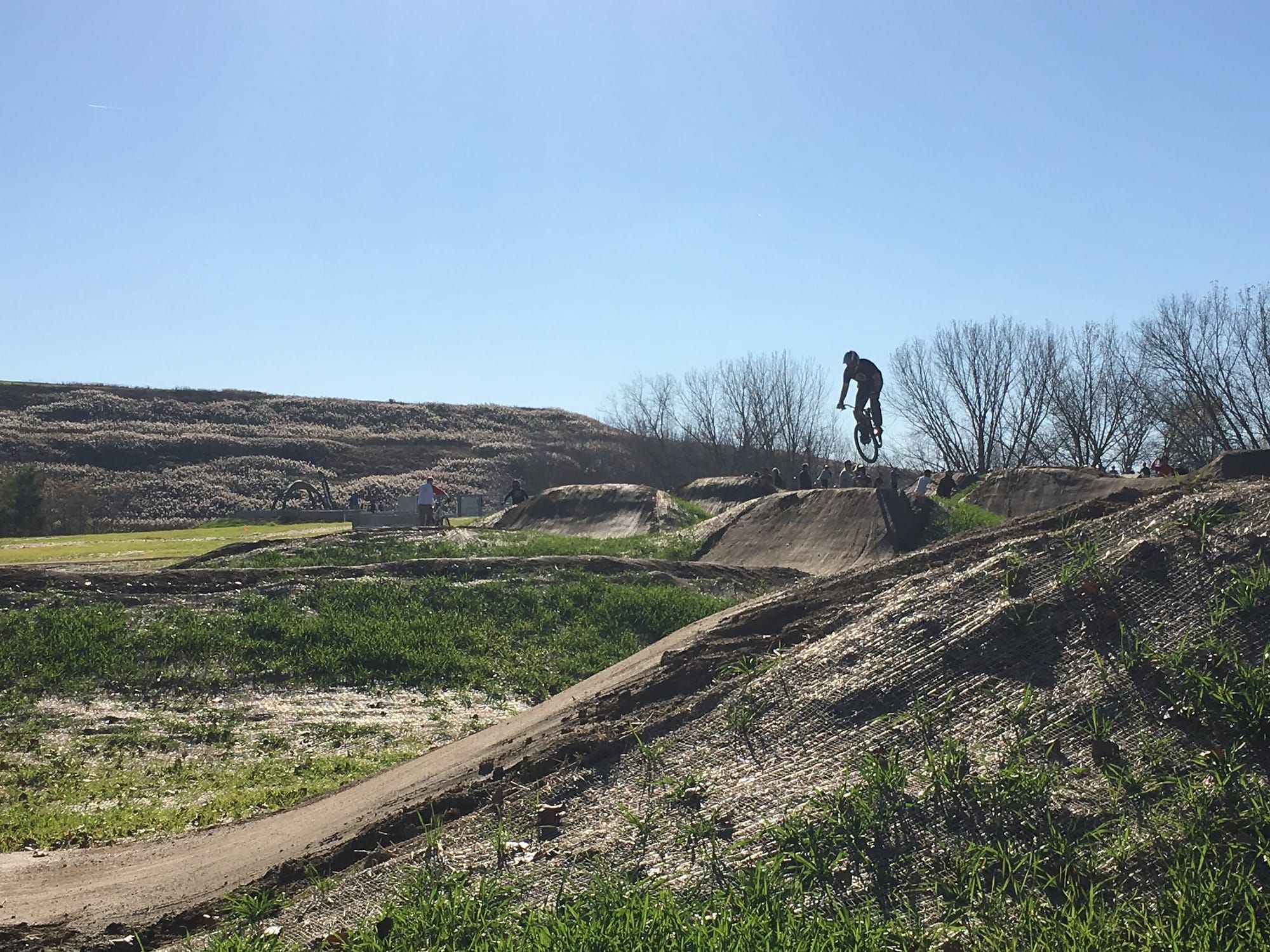
Carmen Aiken writes today about the tenth anniversary of a bike park in Chicago and the decades of toil and industry and spoil it was built upon.
They wrote about fighting ICE in Chicago last year.
 Luke O'Neil
Please consider a donation to Migrant Support Collective.
Ten Years of Chicago’s Big Marsh Park
by Carmen Aiken
On a Sunday in Chicago I had made no small, nor no large plans, except it was one of those last Midwest fall days where it would eventually hit 85. Lately there feels like so little to celebrate and so I decided to ride down to Big Marsh’s tenth birthday party.
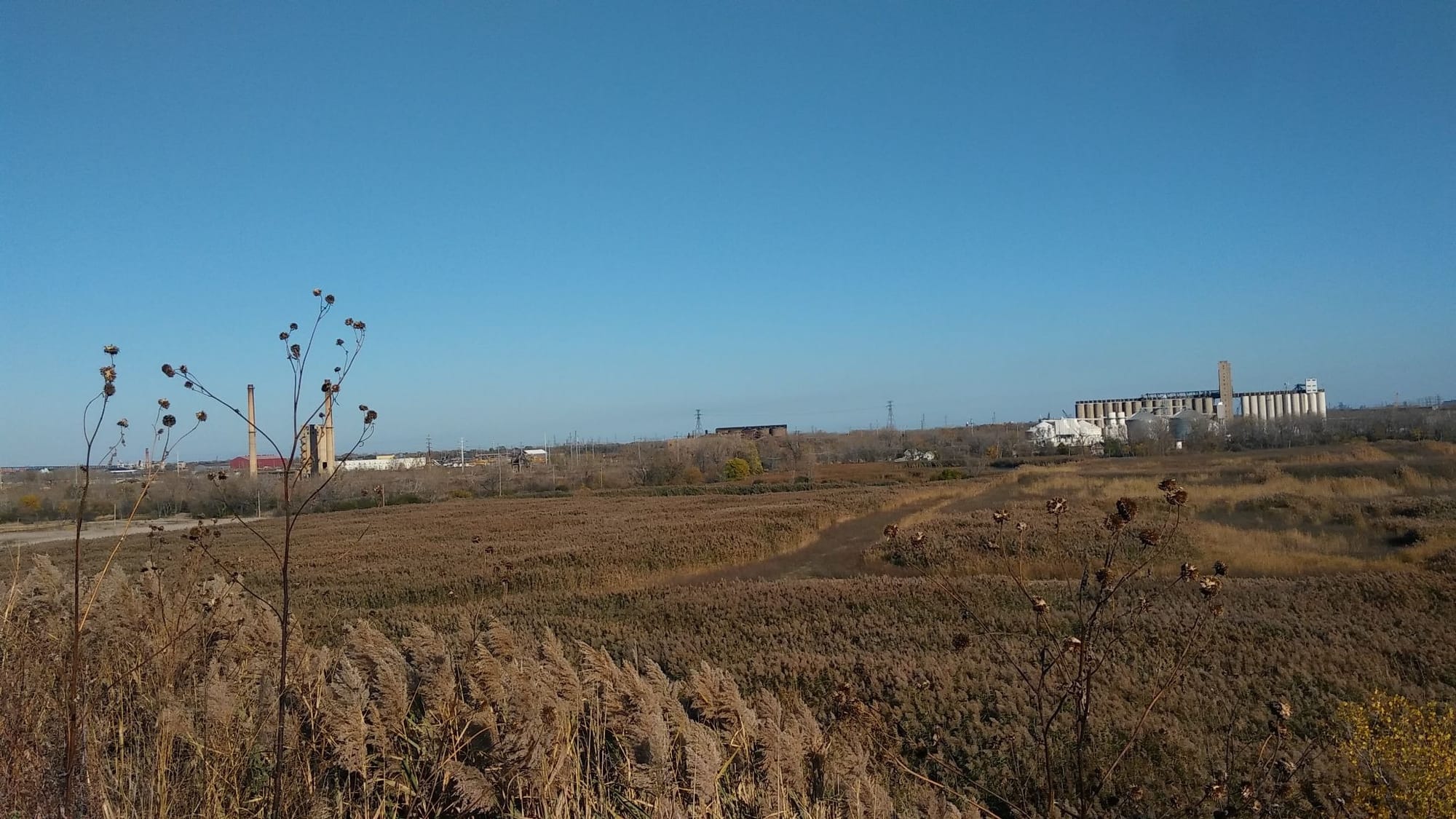
Big Marsh is the biggest park in Chicago. It is the size of 12 Soldier Fields or Comiskey Parks (for whatever that’s worth these days). Big Marsh is 300 acres in the Lake Calumet region, which encompasses the biggest tax-increment financing district, the Illinois International Port District, and environmental contamination from Carl Sandburg’s "Bareheaded, Shoveling, Wrecking" Chicago of 1880 to, well, now.
You will pass the park coming into or out of Chicago from all points East. Big Marsh is nestled between I-90 and I-94. The grain elevators and containers and concrete could maybe surprise you if you forgot how Chicago managed to brawl itself out of a swamp. But anyone who has lived in a Port city knows that there are the fortifications of your citadel: the muscled cranes of Oakland, the longshoremen of Newark Bay.
The convergence of environmental disenfranchisement and nature still affects me. That Sunday I decided to do the whole ride from my house in McKinley Park. Big Marsh is 10 miles due south on Stony Island Avenue from the latest attraction in town, the Obama Presidential Library. But you can barely drive on Stony, even on a good day, so I rode Torrence instead.
South of Jeffrey Manor is a plant converting vegetable oil byproducts into animal feed ingredients. Humans are making and shipping life’s things around Calumet like tubes and concrete and cars. The air around the plant smells of “corpses, dead fish, acidic vomit, spoiled food, garbage, rotten eggs and feces," depending on where you are in the neighborhood. Riding through Deering until I turned west into the Marshes, I decided the smell was baby vomit.
By the time I got to Trash Mountain south of the Park, the smell had mostly faded. I breathed in the Marsh’s truck exhaust, compost rot, and verdant humidity from cattails and milkweed that burst from the earth in our awful summer of rain.
Ten years ago we made our way to the top of Trash Mountain at the park. Trash Mountain was better known as Paxton Landfill and the methane was ever-present on opening day.
I was proud of the park. I worked in bikes and active transportation advocacy and had been close to the complicated partnerships that brought Park 564 out of slag heaps and dumpsite into existence. Rahm Emmanuel was there that morning, but I don’t remember him. My boyfriend at the time and some buddy of his came down on the Red Line and got off at 95th to cross east.
The City acquired the land in 2011. Five years later with help from companies like REI and SRAM there were dirt jump lines, a concrete skatepark, murals and rudimentary trails snaking to the park’s edges bordered by Norfolk southern rail yard and the aforementioned landfill.
Bikes in Chicago means there’s always some dude you know at some race or ride or fundraiser. So I low-geared my way up the hill with a burgeoning civic bike influencer. We stood at the top to look at scattered Deering houses, Harborside Golf Course, the abandoned hulk of C. T. C #1 and the first signs of what was to come: BMX riders flying through the air on jump lines to our amazement. We came down the hill and round and round the boyfriend and my friend went on the dirt pump track. I abstained.
I do not have that boyfriend or the bike I rode down to the park at anymore, but I still love Big Marsh. Over the past decade I have watched it grow up into something I wouldn’t recognize.
I became someone who mountain bikes at age 30, and then began extremely novice BMX riding at 31 because of Big Marsh Park. The boyfriend and I broke up but I somehow had a long-term loan of a very good rigid Gary Fisher hardtail in my purview and the need to fill time.
In summer of 2017 I began to bring said bike on the Jeffrey Jump bus and spun my way down Stony at dusk, learning to pump across tiny rollers and dusty, potentially toxic berms. I dug my way through the very first iterations of short track night races at the park where I DFL’d and threw up somewhere in the back 40. I didn’t eat shit at least.
In 2019 I wrote a very rough piece about Big Marsh. It was a recap of a party, but also mostly my frustration with how resources for active transportation and access to biking flowed in Chicago:
I want more decision-makers and gatekeepers of bikelandia to be like the kids trying jump lines and racing in the rain, making community, grilling and listening to “Old Town Road” for the billionth time. [..]I want them to pour resources into young people who don’t have the same luck as their children who get to ride bikes like they might want.
I wanted acknowledgement from the same people I saw bringing their $4000 bikes on Kuat Rack heavy Volvos that they knew about the importance of the park. I believed in the concept of a convergence. Big Marsh was a contact zone with the power to make them perhaps consider the persistent neighborhoods of those who lived and worked around the park. They would remember their neighbors made their city by trading hard work and their health for other people’s affluence. They would recognize their good fortune to live in gentrified neighborhoods with substantial bike infrastructure. They could lend their voice and power to improve the disenfranchised built environment for their predominantly Black and Mexican neighbors.
Resources did come to Big Marsh over 10 years. The Big Hill is made up of Obama Library dirt. The stunning Ford center is a gift connected to the Torrance plant at 122nd. It used to be there was a fine path that cruised around there but last summer when I rode from Wolf Lake into Pullman it was a nightmare. Picking my way across a glass-strewn path that ended nowhere and spat me into I-90’s interchange sucked in a way I did not remember from 2010.
In the nature center you can learn about the environmental struggles of the area and notable figures like Ms. Hazel Johnson and Ms. Marion Byrnes, Black women who fought for the health and dignity of their neighbors and were foundational to the environmental justice movement. Johnson focused on her Altgeld Garden neighbors in the “toxic doughnut” of the Southeast Side, and her work would impact policy nationwide and in Chicago long after her death. Byrnes was a labor and civil-rights activist without whom the open spaces of the region would not exist, and instead would have likely been paved over and become home to industrial incinerators.
You can also learn about the Black and Mexican workers who labored in the steel and railroad industry and the bankrupted Acme steel coke plant. There is a topographic map of the marsh, where the Mars pond is so blue due to industrial contaminants. There are snakes and turtles and sometimes a very nice lady possum.
BIPOC birding groups and Black nature enthusiasts plan excursions and go camping on the edge of one of the marshes. There are runners and kids building fairy houses, house music, and Polar Adventure Days known to have sled dogs. There are, of course, a lot of bike people.
On Big Marsh’s birthday, I coasted in and kicked it with another old buddy from bikes. We sat in the sun with everyone who came through: BMX ladies and SRAM product engineers and board members and 7th Ward ladies out for the day. The Executive Director of the park’s org DJ’d and golden hour arrived as the party came to its end. A middle aged man took turns jumping his kids and a homie of a homie did skate tricks on the pyramids.
After about a thousand too many chances given to bike culture, I’ve finally mostly given up in 2026. There are so many parts of the Big Marsh I still love. I can safely say BMX culture makes up the best people in this ridiculous ecosystem. At Big Marsh you can see little black and Latine kids doing cool shit on 12-inchers. BMX women want to teach you things. When the new, fancy pump track opened (thank you, Walton Family), I worked my wobbly legs around it while I watched a four foot ten lady wall ride effortlessly. She ended up giving me a Jehovah’s Witness pamphlet, but still.
I like pumping dirt and catching the smallest bit of air I can. And dudes at the top of the jump hill have always been encouraging and self-deprecating. I cannot say the same of any road, mountain, or cyclocross rider I know right now.
Some things came to pass. I wanted white people on bikes to bring their prowess to Big Marsh. Now they do, but I’m uninterested in their tourist attitudes about the actual context of the space they occupy. I’m a local cliche at this point but I just roll my eyes because bikes are not going to change. I wish I’d known that in 2016 or 2020 or 2023 when I still naively tried to encourage white people to be better.
There is no place in the world like Big Marsh. There is also no world where I would have tried racing bikes or riding Western State single track or handling my shit better on these streets without this park. It was an incredible sight to see and it as a joyful space: people throwing picnics, dancing, and hucking their bikes into the air. Hell, there were two eaglets born there a couple years ago.
Today the Feds are rolling out a welcome mat for destruction of the country’s protected natural world. Even though the park capped the toxic slag with soil for the Marsh’s restoration, people across the South Side fight for their health from industrial polluters next to schools and churches and parks. Politicians and civic leaders are high on their own supply about a quantum computing campus nobody asked for near Steelworkers Park just to the north of Big Marsh. Somehow it is so much worse than ever to try and ride down 103rd to get to the Park alongside drivers in the post-2020 landscape.
Still, Big Marsh’s birthday left me with the feeling I always get cruising out of the park with exhausted muscles and new pals. I was tired and happy and dusty. I remembered the almost extinct Illinois daisies that returned, pushing out of the chemical-marred dirt, and the quiet exhale of the park, surrounded as it is by so much of humanity’s mechanical tyranny. Chicago was swampland before. The Marsh will be what remains, "so proud to be alive and coarse and strong and cunning."
Carmen Aiken is a writer who still rides bikes in Chicago. Read their newsletter Team Hotspur or follow them on Bluesky. Listen to an excellent Big Marsh mix via the Executive Director of Friends of Big Marsh, DJ Scrabblor.