The only thing worse than the devil would be the American healthcare system
Sean T. Collins and Chris Cantwell on The Terror: Devil in Silver
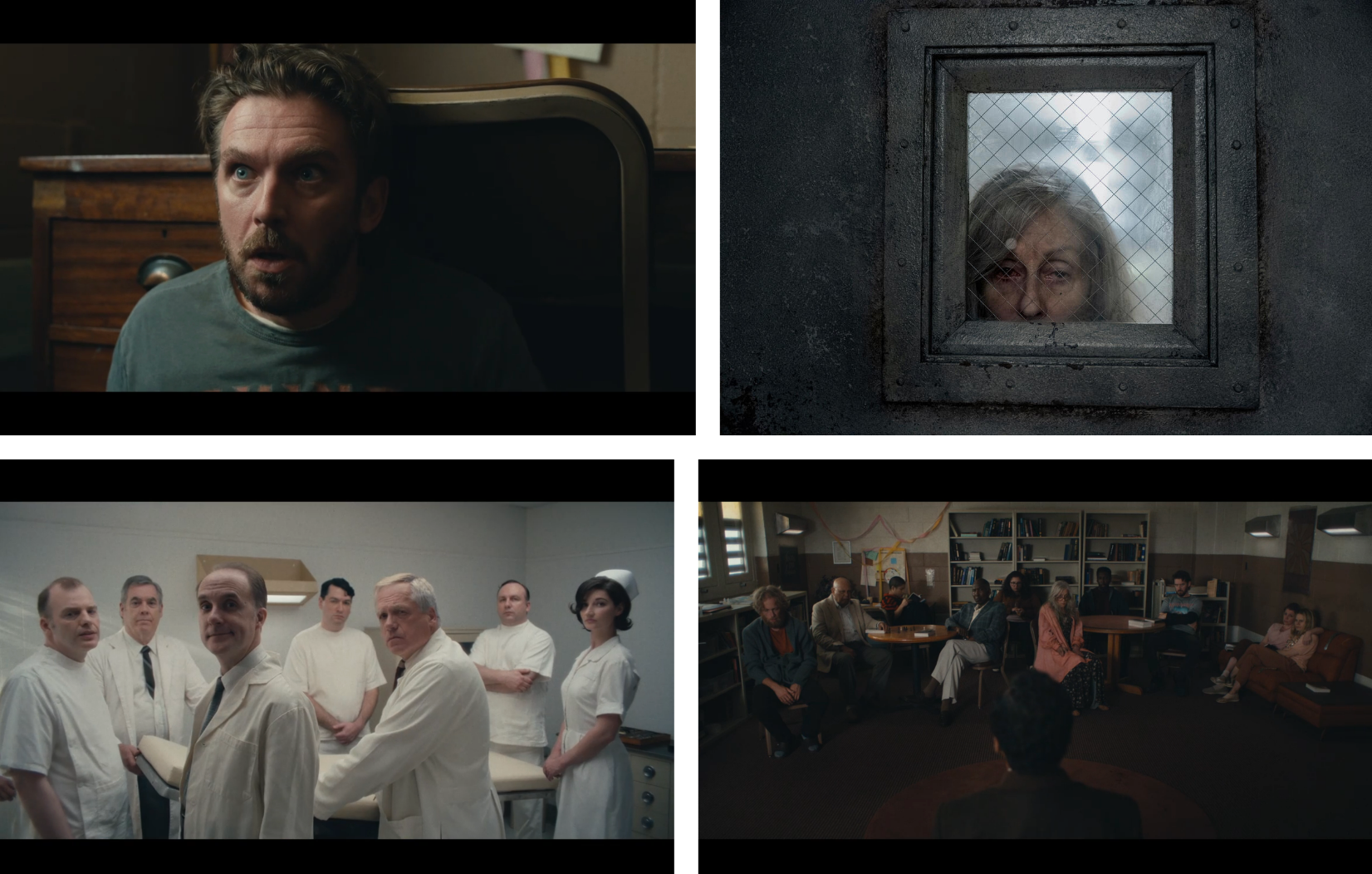
Sean T. Collins joins us again today to write about the recent series The Terror: Devil in Silver, whose central metaphor about being trapped in the "heath care system" in this country and dealing with mysterious malevolent forces will be familiar to all of us.
He also talks to showrunner Chris Cantwell (also the co-creator of the great Halt and Catch Fire) about trying to strike the right balance of evil and hope in the series.
"This idea of complacency is very resonant and potent today," Cantwell says. "You wake up every day, and here’s the situation at hand: How do I address that? Can I address that? Do I have any agency to do so? How do I just survive from the morning until when I can crash into the bed at night, and hopefully make it another day? Does that make me complicit in some way in the system that perpetuates over all our heads and grinds us up into meat fuel?"
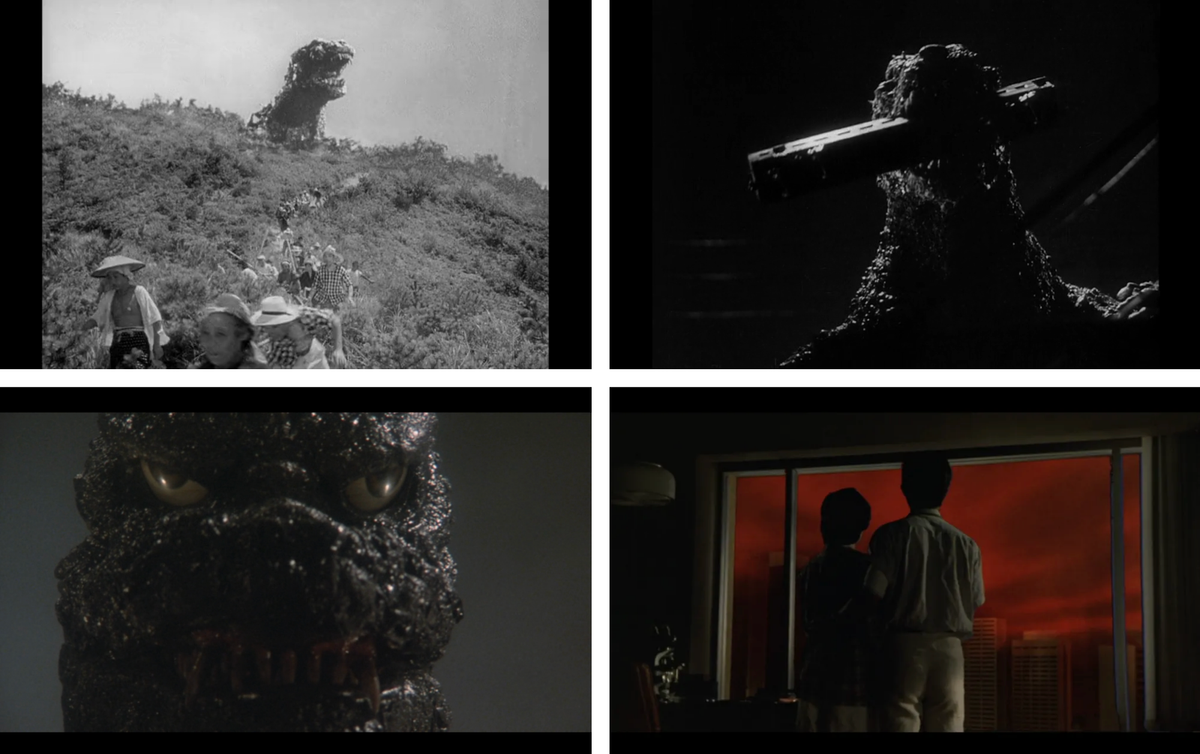
Collins most recently wrote for Hell World about the 1984 under-appreciated classic The Return of Godzilla.
 Luke O’Neil
He also wrote about The Chair Company and I Love LA; One Battle After Another and Kneecap; The Hunting Wives; Sinners; Fargo, The Curse and the 2024 election; Sexy Beast, vampires and class warfare; Godzilla Minus One and the trauma of war; and the surveillance cinema of The Curse, The Zone of Interest and Skinamarink.
This was originally for paid subscribers only but is free to read today. Please support our writers anyway if you can. Here's a 50% discount good for a couple days.
At-Risk Communities
by Sean T. Collins
“I am done calling for help. I used to think this system was broken, and people out there just didn’t know. But now I realize nothing is broken. The system is working perfectly. That’s why they never fix it.”
—Coffee, The Terror: Devil in Silver
The Terror: Devil in Silver is like Franz Kafka’s The Shining. Adapted by novelist Victor LaValle from his novel The Devil in Silver in collaboration with showrunner Chris Cantwell (Halt and Catch Fire), this bleak and brilliant eight-episode series (on AMC, AMC+, and Shudder) is also about a small group of people trapped in an evil place. But it’s not a snowy winter that keeps its protagonists prisoner. It’s the NYPD and the American mental healthcare system. Snow melts. The system does not.
Devil in Silver stars Dan Stevens (Downton Abbey) as Peter “Pepper” Coffin, a heavy metal drummer from Queens entering early middle age in the still wears a band t-shirt every day way so many of us do. He’s full of energy, hence the Pepper nickname — air drumming, working his day job as a mover, trying to start up a drum-lesson side hustle. He’s everyone’s best friend. “I help people,” he explains helpfully.
Pepper’s a white guy with a Latina girlfriend, Marisol (Juani Feliz). She’s got a daughter he dotes on to a financially irresponsible degree, buying her a $4,000 drum kit on a whim and wiping out their savings in the process. He’s the kind of man who thinks he’s a hero because he can trick a kid into looking at him like one.
And he smiles a lot but he’s angry, this guy. He’s quick with his fists, hoping this too makes him look like a hero. He breaks up an argument between Marisol and her shitty ex by attacking the guy. Then he goes after the bystanders who try to break it up, and who happen to be a trio of undercover cops. Just like that, he goes from white knighting to getting arrested for assaulting an officer.
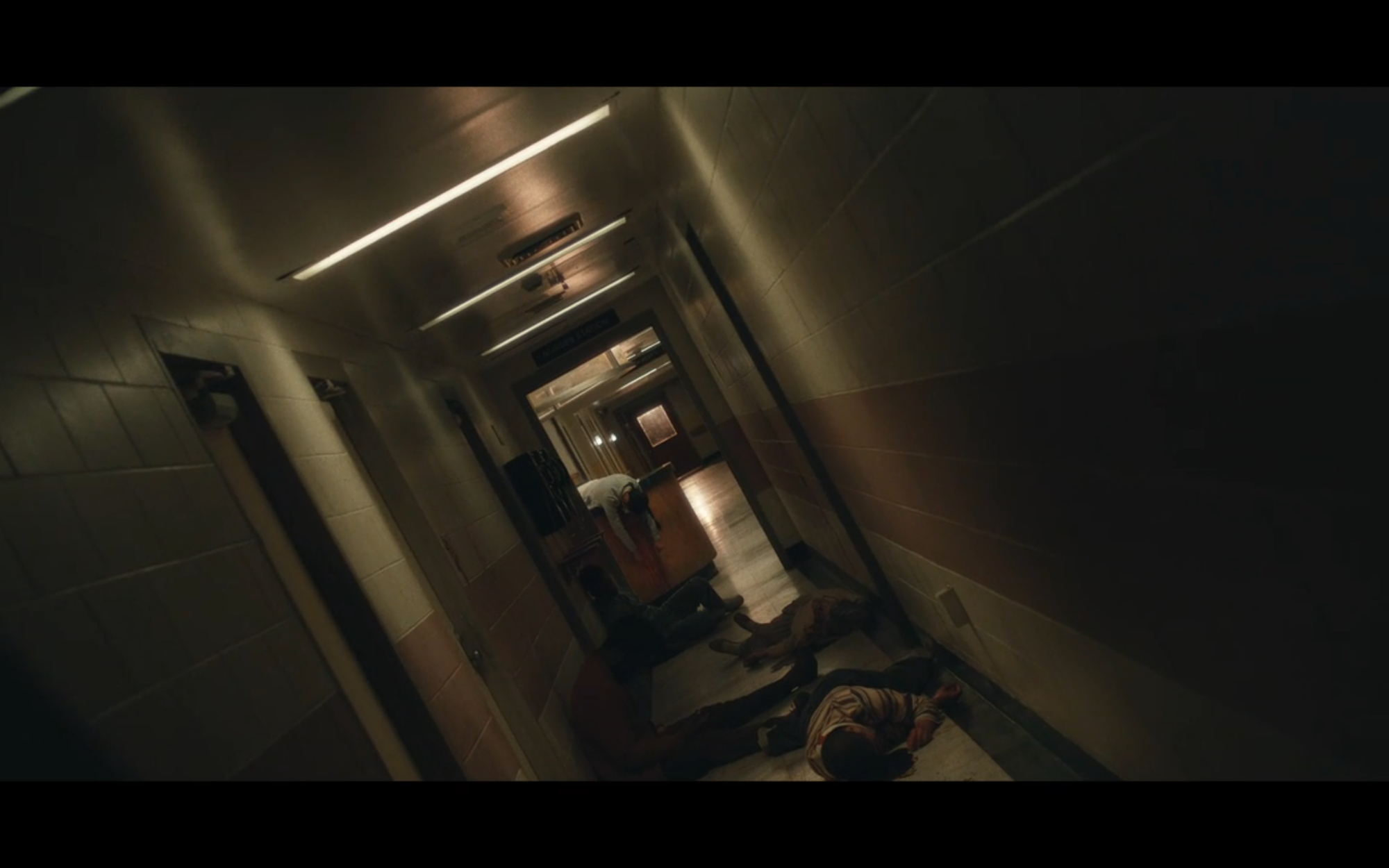
But it’s late, and the cops’ shift is almost over, and they’re tired, and they don’t want to fill out the paperwork. So — because they can, and because they have a deal with the place’s management — they drop him off at New Hyde Hospital, a run-down psychiatric facility in the only wing of a massive building that’s otherwise been completely closed down.
Pepper is placed on an involuntary 72-hour hold. He’s doped up with meds, knocked out cold by them, and marked noncompliant because he doesn’t wake up to take more meds. His mandatory stay is extended to two weeks. An escape attempt, a physical altercation, a bad attitude: The more he fights to get out, the longer he is forced to remain.
This, he learns from his fellow patients, is because New Hyde Hospital does not want him to leave. No one ever does. They are trapped there, and nobody — not the staff, desperate to keep their jobs; not their families, who might visit but don’t want them back home; certainly not their government, which put them there — is going to rescue them from the demonic entity that lurks behind the ward’s locked silver door. They aren’t patients. They barely qualify as prisoners. They are food being poured into a ravenous maw.
When The Terror began in 2018 under showrunners Soo Hugh and David Kajganich, the show was simply a limited series. It took its name from the book it brilliantly adapted: Dan Simmons’s sprawling historical horror novel about the doomed British sailors of the arctic Franklin Expedition.
But after that Jared Harris–starring season earned widespread critical acclaim, The Terror was retrofitted into an anthology series. The follow-up season, subtitled Infamy, shared none of the original creative team. The result was a well-intentioned but clumsy — and, this is key, not scary — horror story about the plight of Japanese Americans in a haunted internment camp during World War II. Despite the creative unevenness between seasons, the two stories shared a common theme: people trapped in a cursed place by their own government, with no ability to leave.
While the plot of the series’ long-delayed third season (Infamy came out in 2019), begins with Pepper, he’s merely the catalyst. Devil in Silver is as much an ensemble piece as was the stellar first season, staffed with a Widow’s Bay–style lineup of heavy-hitter TV actors including Judith Light, CCH Pounder, Stephen Root, Aasif Mandvi, and John Benjamin Hickey.
Expanding the story beyond Pepper is more than a matter of making use of the talent on hand, however. It’s true that he’s important to the entity that has haunted New Hyde since its founder, Dr. Walter (Hickey), practiced hundreds of involuntary lobotomies. This devil — or duppy, as it’s called by Guyanese immigrant and ward administrator Miss Chris (Pounder) — feeds on the suffering of New Hyde’s patients. I won’t tell you how, but Pepper is the key to its plans to continue eating.
But it’s precisely Pepper’s belief that he is important, his bone-deep conviction that he’s a great guy and fuck you if you disagree, that makes him so attractive to the devil. That anger gives him vitality, and that can be used. Taking the form of a rich white eugenicist with a history of violence against women and trying to enlist an angry blue-collar white guy with something to prove: Now that’s the work of the devil alright.
Though he at first intends to escape alone, however, Pepper comes to care about the other patients, especially his roommate, a fastidious Ghanaian immigrant named Coffee (Chinaza Uche); Dorry (Light), an elderly victim of Dr. Walter who’s been there for decades; and Loochie (b), a talented teenager whose anger exceeds his own but who belongs there no more than he does. Eventually he declares his intent to save them all and kill the devil or die trying. It’s the same go-in-swinging, hero-of-his-own-story mentality that got him there in the first place.
As Dorry puts it, “Guys like you always want to die for something. I get the appeal. You do it once, it’s over, they put up a statue or throw a parade. It’s easy to die for someone. Now, living for someone, that’s hard. You’ve never done that, though, have you, Peter?”
He has not. Over the course of the season, we learn that he has a Black son named Anthony (Hayward Leach) whom he abandoned to the foster care system when he was three years old. Pepper condemned a child to the same kind of bureaucratic hell he now finds himself in. When push comes to shove, you’ll forgive the devil if it expects a similar surrender from this shiftless white savior this time around.
Devil in Silver’s most incisive commentary on race stems from New Hyde’s staff, the people tasked with maintaining the devil’s house: Everyone who works full time in the ward is Black or an immigrant or the child of immigrants. Miss Chris has an adult daughter who followed her into nursing and worries about her safety, but can’t convince her to abandon her vulnerable charges. Josephine (Maureen Sebastian), New Hyde’s most recent hire, sends the money she makes as a nurse home to her family in the Philippines. Scotch Tape (Hampton Fluker), an imposing nurse who earned that nickname by holding the place together, sometimes by brute force, is just there to complete the only residency he could obtain so he can finally make a middle-class living as a physical therapist.
The show’s least sympathetic figure who isn’t undead or a demon is Dr. Anand (Mandvi, giving the performance that has lodged deepest in my head). As the facility’s manager, he’s an exhausted martinet whose draconian medicalized disciplinary regime produces approximately zero results. Yet even he believes he is helping, simply by keeping the place open in the face of hostile higher-ups and a crumbling healthcare system.
“The board of New Hyde sent me an award, in recognition of my tireless work with at-risk communities. They misspelled my fucking name,” he tells Miss Chris, holding up a trophy inscribed to “DR. ANOD.” “This is who we’re dealing with: those who will never face the consequences for their neglect. And those consequences trickle down to us. The money comes, they sleep fine. The money stops, they press a button, we all go away, and you know what? They still sleep fine.”
At New Hyde, the marginalized are made to ride herd on the even more marginalized, while the board — represented by a perfectly cast Robert Sean Leonard from House — can shut it all down at a moment’s notice and head back to their mansions and townhouses. It is not a system designed to help or heal anyone below the top. Everyone else is meat for the beast, even if they are momentarily empowered to tidy its cage.
I won’t spoil whether Pepper or his new friends escape the devil behind the silver door; as invested as you’ll become in the answer to this question, it’s nearly beside the point. There’s a lively thread of absurdist black comedy running through Devil in Silver: Everyone knows something is horribly wrong, everyone knows something should be done, and no one does anything. Like Vladimir and Estragon, they just don’t move. The patients, particularly Judith Light’s marvelous Dorry, can’t help but mine their situation for humor at times, as if New Hyde is an evil Cheers and she’s its Norm. What else can they do? Fight the devil, and the system designed to feed them to him?
“I know you’re tired,” Dr. Anand tells Miss Chris. “I’m tired too. But we’re all they have.” The scary part is that he’s right.
‘The only thing worse than the devil would be the American healthcare system’: An Interview with The Terror: Devil in Silver Showrunner Chris Cantwell
Sean T. Collins: I went into Devil in Silver expecting one man’s struggle against an evil place, and in the premiere it looks like that’s where we’re headed. Instead, it’s an ensemble piece about these two groups of people, the patients and the staff, who are stuck in this place and never leave. It’s like an evil Cheers.
Chris Cantwell: That’s exactly how we talked about it. When you first see this place, you’re seeing it through the eyes of Dan Stevens, who plays Pepper, and you’re like, I don’t want to spend one moment more inside this place. We knew we were a weekly show, so we wanted people to want to come back to be with the human beings inside New Hyde, as Pepper grows to see those neglected and forgotten souls as people himself. It’s a horror show, people die, and so as soon as we set up that wonderful Cheers vibe we start dropping bodies, but I think it makes the taking away of that ensemble community all the more potent and tragic. That was our hope.
Pepper is the main character, but he’s not the Heroic Protagonist, so to speak.
This was one area where we wanted it to have some grounded nature in the way it reflected the horrors of our world today. The core team was really Victor, me, Karyn Kusama — who was EP through the entire thing and directed the first block of episodes — and David Zucker, who runs television for [executive producer Ridley Scott’s company] Scott Free. It was the four of us huddling up and making sure this thing felt real. Our joke was that the only thing worse than the devil would be the American healthcare system. So a moment where Pepper punches the devil to death and saves everybody and goes out in a blaze of glory…that didn’t feel of a piece with the verisimilitude we were trying to create inside that place.
The character became about the harder challenge of living for someone as opposed to dying for them. It was very important to Karyn not to drive everybody into nihilism; she wanted us to have some note of hope, but which also shows the burden of what that could mean, to be there for somebody you’ve hurt in the past — specifically for a white man who has gone through the gauntlet that normally he would have the privilege of not experiencing.
It definitely struck me that the devil often portrays itself as a rich white man, trying to harness a blue-collar white man’s anger. That sure sounds familiar!
Absolutely. This patrician character, Dr. Walter, exists in the show but not in Victor’s original novel. We pulled inspiration from real physicians who did not hundreds of lobotomies, but thousands of lobotomies. Even the network was like, “Is it a bridge too far that Dr. Walter wants to equip an RV and drive around the country lobotomizing people?” The truth of the matter is there was a guy who did that.
Then along comes Pepper, another strong strapping guy who can get angry really fast and who feels like he doesn’t belong here and needs to get his own way. He fashions himself as this go-to guy who’s there to help you, but when push comes to shove he can be extremely selfish. Our antagonist says something like “I could use a man like you,” and if that ain’t the truth when it comes to what’s playing out on the national stage, even the international stage.
Meanwhile, the full-time staff whose job it is to keep the patients in line are all people of color. As New Hyde’s authority figures, they all seem extremely unsympathetic at first, but each of them has humanizing moments that show why they keep doing this dismal job. Was that a conscious choice?
It was. First and foremost we wanted to humanize the patients; we didn’t want to do Session 9 or Shutter Island. We made sure that every single one of these actors understood what their characters’ diagnoses and co-morbidities were, and how these might manifest the characters. They were playing real things.
With the staff, it’s the question sometimes people in the Midwest get, from both sides: If you hate it so much in this place, why don’t you leave? Most people don’t have the economic viability to do something like that. There’s also roots and heritage and family and connection. The history of your life might be tied to a place. You may not want to give up on a place. We took all those things and made them about New Hyde.
Dr. Anand specifically says that if it weren’t for this place, these people would be out on the streets, and out there they have no chance. That is probably true, but at the same time it’s the way he justifies to himself the neglect, the underfunding, the lack of resources and care he can give these patients. He’s like, “If they didn’t have me, they wouldn’t have anything,” but he’s also exhausted and broken.
Of course, as soon as anyone says “enough is enough, I’ve been lying to myself, I’m gonna do something about this place,” that’s the trigger point for the entity, and they’re history. No one can escape the system, not even the people who work there.
As dark as the show gets, there’s also something very funny about watching these extremely talented actors play people pretending they don’t understand that there’s some big demonic entity eating people at their hospital where they’re all stuck forever. It’s like the humor and the horror point in the same direction: no exit.
Yes, and the big credit for that goes to Victor LaValle. If you go back and read the novel, his voice is exactly what you described: It can be wry and funny, yet at the same time it does not look away from what is right in front of you, which can be quite horrific.
These people — why don’t they leave? As Victor would point out, that’s a very privileged question to ask of every single character on the show. Seeing the characters wrestle with that can be painful and enervating, but it can also be funny. “I’m sorry there’s an evil presence in the hospital that may be killing you. Let’s take you out for pizza!” Things like that are kind of a paltry consolation, but it’s one the characters often settle for. “Oh, Josephine’s mom made us lumpia, so this will be a nice day!” When they have the keys, Dorry uses them on the utility closet, where they keep all the shitty cookies. At the end of the day, they choose cookies instead of escape. Those little self-consolations, which are beautiful and also pathetic and nowhere near enough to correct a predatory system, are what’s at play in the story throughout.
This idea of complacency is very resonant and potent today. You wake up every day, and here’s the situation at hand: How do I address that? Can I address that? Do I have any agency to do so? How do I just survive from the morning until when I can crash into the bed at night, and hopefully make it another day? Does that make me complicit in some way in the system that perpetuates over all our heads and grinds us up into meat fuel? I think that’s something a lot of people are feeling.
Sean T. Collins is a critic who has written for The New York Times, Defector, Decider, Vulture, Pitchfork, Rolling Stone, and others. He is the author of the 2021 essay collection Pain Don’t Hurt: Meditations on Road House. He lives with his wife, the cartoonist Julia Gfrörer, and their children on Long Island.