Decades of glorious self-destruction
Niko Stratis on Jackass: Best and Last
The great Niko Stratis joins us today to write about the new and final Jackass film, and the gang's delightfully dangerous, hilarious and heartwarming legacy.
This was originally for paid subscribers only but I've opened it up for now. Please consider supporting our work here anyway. Here is a very big discount!
Read an excerpt from her book The Dad Rock That Made Me a Woman on Hell World here and a talk we had about it here. Niko also wrote about her favorite R.E.M. songs here.
 Luke O’Neil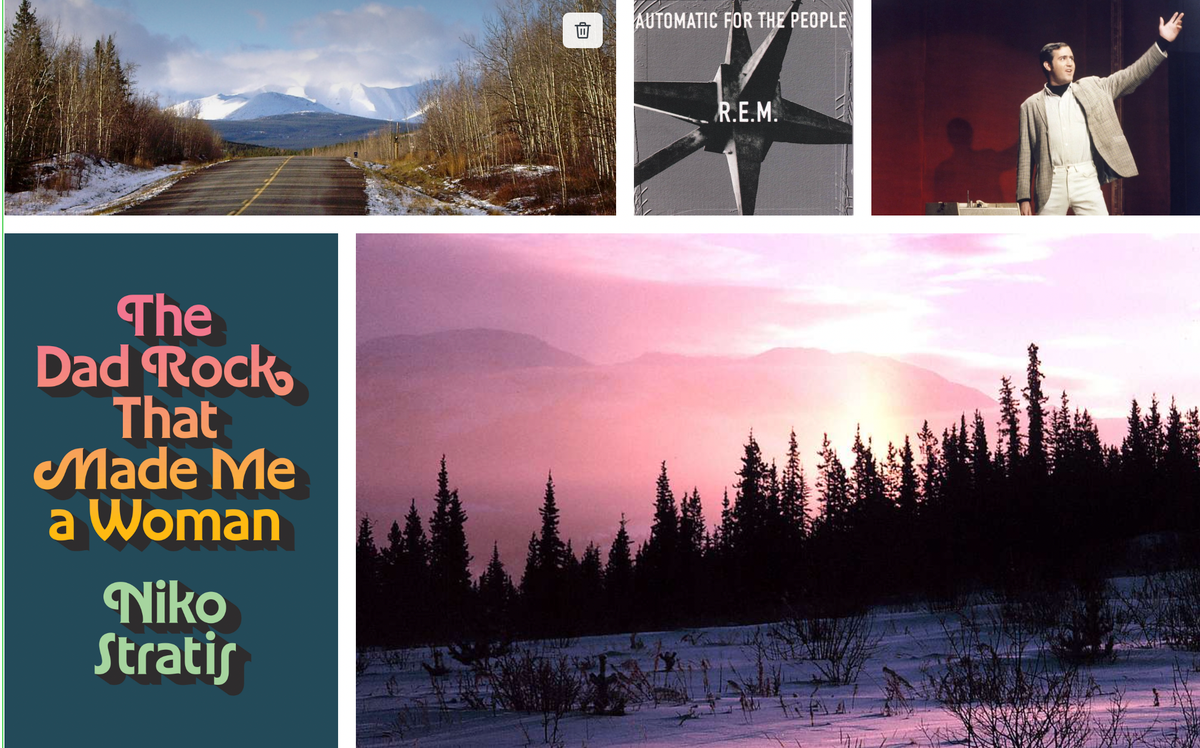
 Luke O’Neil
In other news I had four new pieces go up at Flaming Hydra the other day. You can read one or two below.
 Luke O’Neil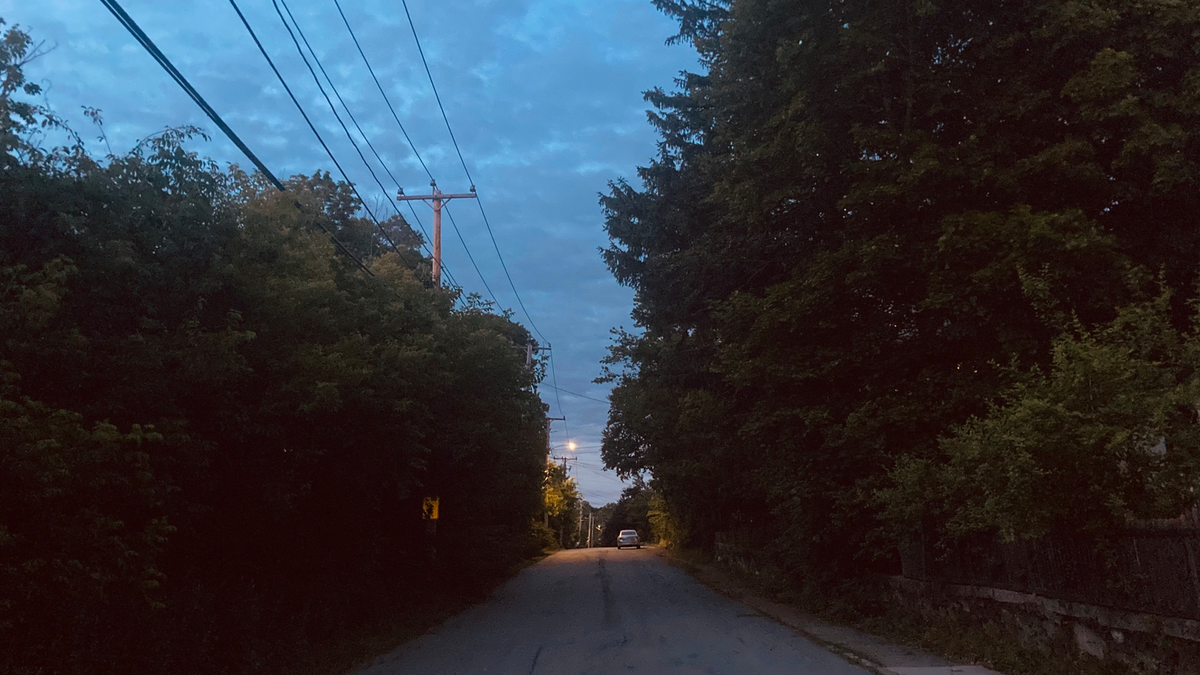
And be sure to read this excerpt from s.e. smith's brand new book All My Dead Cats and Other Losses if you missed it.
 Luke O’Neil
Decades of glorious self-destruction
by Niko Stratis
I saw Jackass: Best and Last alone on opening day, in a mostly empty theatre in Toronto in the mid-afternoon. When I arrived, there was only one other person present, a man sitting dead centre in the first row playing a game in landscape mode on his phone. I sat in my assigned seat, close to the back of the theatre on the aisle, and texted everyone I know to tell them I had made a mistake. I wanted the theatre to be full, and raucous, and loud. I wanted my laughter to feel drowned out by the voices of many, as it has always been for these movies. As the pre-show commercials rolled on, bodies slowly shuffled in. A woman by herself sat in the second row, then another on the opposite end. Another woman found seats close to me, and before too long was joined by a man, who produced a couple of tall cans he had smuggled into the theatre. We waited in our chosen spots, largely alone but together in spirit, as if we were seated in the pews waiting for the final sermon to be delivered.
I suppose then this will be about death, but only in that every end is about death in its way, and this is the price we pay for being here. Not just alive, a passive thing, but living. A dance someone chooses to learn the steps of. And so this is about death because it is about living, and it is about what happens between those two poles. It’s fitting, then, that one of the first things we see, in what will be the last of the Jackass films, is Johnny Knoxville shooting himself in the chest with a .38 revolver.
This is previously unaired footage, well before he had adopted the name we all know him by (there are multiple instances of people referring to Knoxville as PJ in the film, the initials of his birth name Philip John Clapp). We watch a young Knoxville gather a bulletproof vest, a hastily loaded revolver, and a stack of dog-eared porn magazines to act as additional padding between flesh and certain death. He drives out to a secluded spot, away from any potentially concerned onlookers, presses the gun against his chest, and after some understandable hesitation, pulls the trigger. Click. The chamber is empty. A voice from offscreen tells him “Well now you have to go through the chamber and find where the bullet is,” which feels like the last words the devil ever whispers. He pulls the trigger again. Click. Again. Click. It’s a harder scene to watch than one that appears later, where grown men wear see-through pants and drink heavy laxatives to slosh around in their own shit. When the gun finally fires, Knoxville is shocked, but delighted, and runs to his friends and their waiting car, the gun left smoking on the ground, laughing maniacally as he leaps in and drives away.
It’s his laugh that disarms it. It’s his laugh that disarms everything, as if it alone is what stops bullets. There is no real Jackass without it and without him specifically wielding it, and it’s only natural that it’s hard to say farewell to it ringing in our ears. I have been raised by Jackass, buying CKY tapes at a local skate shop and sharing bootlegs of the original MTV Jackass series aired in 2000 when I was 18 years old. They showed me a better example of masculinity than I had ever seen before, and modeled a creative use for self-destructive desires, that they might lead to glorious self-expression. That I never ended up being a man at all is no one's fault, it’s just that I wanted to stop being alive, and start living, and to do so meant learning to do a controlled explosion of the self.
Jackass: Best and Last is a farewell more than it is one more film in the canon. It’s composed largely of interviews and recollections from the longstanding cast members, Knoxville, Steve-O, Chris Pontius, Jason “Wee Mman” Acuña, Preston Lacy, Dave England, Ehren McGhehey and director Jeff Tremaine. They all share joyous memories of days long in the rearview, when they were all able to destroy their bodies with such delicious fervor, searching for something bigger than themselves. We see clips from as far back as unaired MTV bits recorded in the late ‘90s up through to 2022’s Jackass Forever, including the “Silence of the Lambs” sketch from the latter, which now includes Bam Margera, who was cut from the film due to his inability to abide by a sobriety clause. We see footage of Ryan Dunn, their fallen comrade and friend who died tragically in a car accident in 2011, and that one time Brad Pitt was willing to pretend to be kidnapped. We see moving memories of those who are no longer here, by virtue of no longer being able to hold themselves to the standard of the work, or by death.
It’s obvious to say that Knoxville is older now, his hair turned grey, almost white, his body no longer able to withstand what it once could. Same as all the other cast members he has hurt and scarred himself alongside. Same as the cameramen, like filmmakers Spike Jonze and Lance Bangs, who surely love this life enough that they are so willing to throw their bodies into harm's way in order to preserve its memory. That is true of so many of us who grew up watching their blood, sweat and other substances splattered across the screen. The body can only remain willing for so long and none of this was never going to be forever.
Maybe that was always the point, to be able to know when to live uproariously and to know when it's at long last enough. The body becoming a collection of scars, each of them telling a story. Some healed over and others still freshly bleeding.
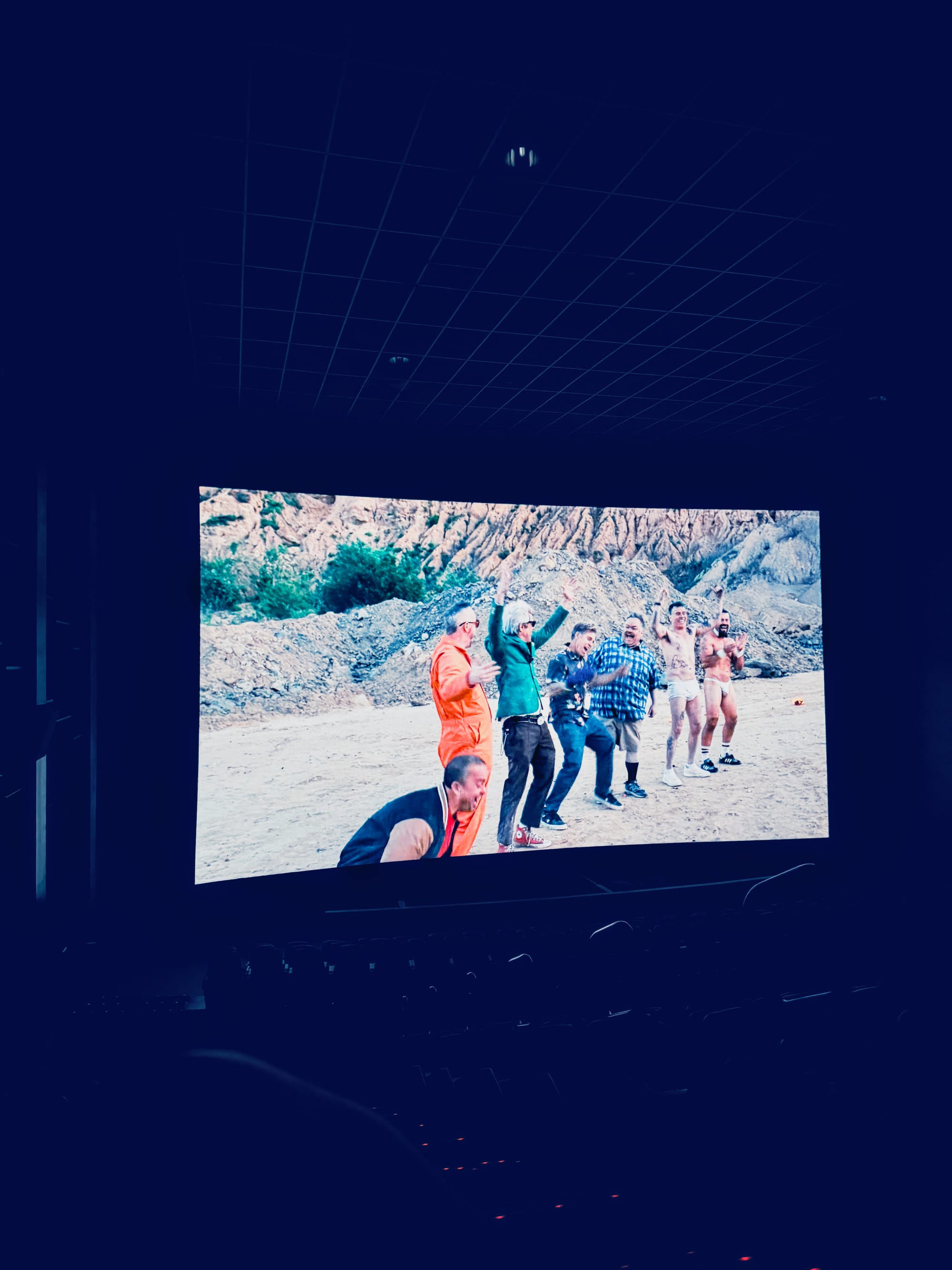
There’s no cohesive structure to the film, but that’s the nature of farewells and shared memories. Of the few newly filmed stunts — ones that include relatively newer cast members Poopies, Jasper Dolphin, Zack Holmes, Dark Shark, and Rachel Wolfson — the most poignant are two moments where Knoxville is strapped to an electric chair near a cliff that will electrocute him if he tells a lie. Steve-O asks him if hosting Fear Factor is something he did for money, or if he appreciated its artistic tableau. Johnny, all maniacal laughter and devilish smile, says it was for art as the electricity surges through him, and the contrast between the two becomes apparent. There is no real artistry to Fear Factor, a show where desperate individuals throw themselves at cheap stunts for screen time and a little bit of prize money. Not to mention the even more cynical and dead-eyed YouTube prank channels. Jackass, on the other hand, is a lifelong project shared by now middle-aged men, who were so eager to find their limitations in this world that they were willing to destroy themselves in pursuit of them, but, and this is crucial, only by testing those limits together.
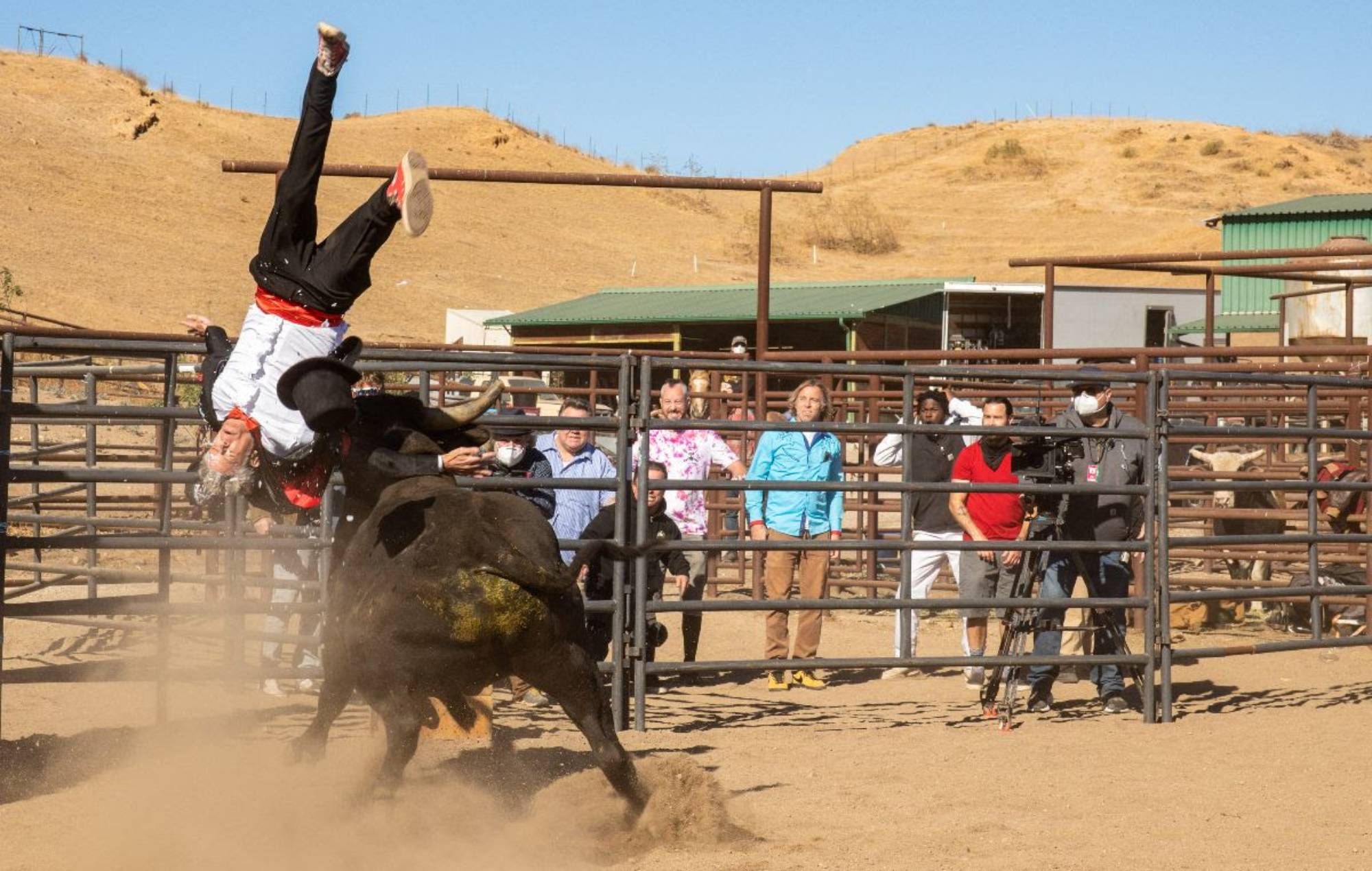
This is the important part, this connective tether between men that traces back decades. They have always taken this on together, never alone, rarely isolated. The few side projects that grew from the show, Chris Pointius and Steve-O's wild animal adventure show Wildboyz, the movie Jackass Presents: Bad Grandpa, and an array of Bam Margera-focused reality shows, never quite hit with the same force. Removed from the camaraderie of the crew at large, their pranks and adventures feel less urgent and foundational, if not a little hollow in their isolation. In Jackass, they are there for and with each other, their bodies often pressed together in various stages of undress and covered in a kind of dirty-soda of bodily fluids. When Knoxville is knocked down by a bull, they can barely watch, but they also can’t turn away, much like the rest of us in the audience. They stand, and they stare, and they wait for him to rise again. This footage, which we have seen before in Forever, is made new here by virtue of a single camera angle, tight on Knoxville’s face as he lays in the dirt. For the first time, you can see it in his eyes that this is not going to last. Then he tells Tremaine they didn’t get the shot he wanted. They need a bigger bull and a bigger farewell. He is once more pressing a gun to his chest and pulling until he feels death weighed against his body, this endless living dance.
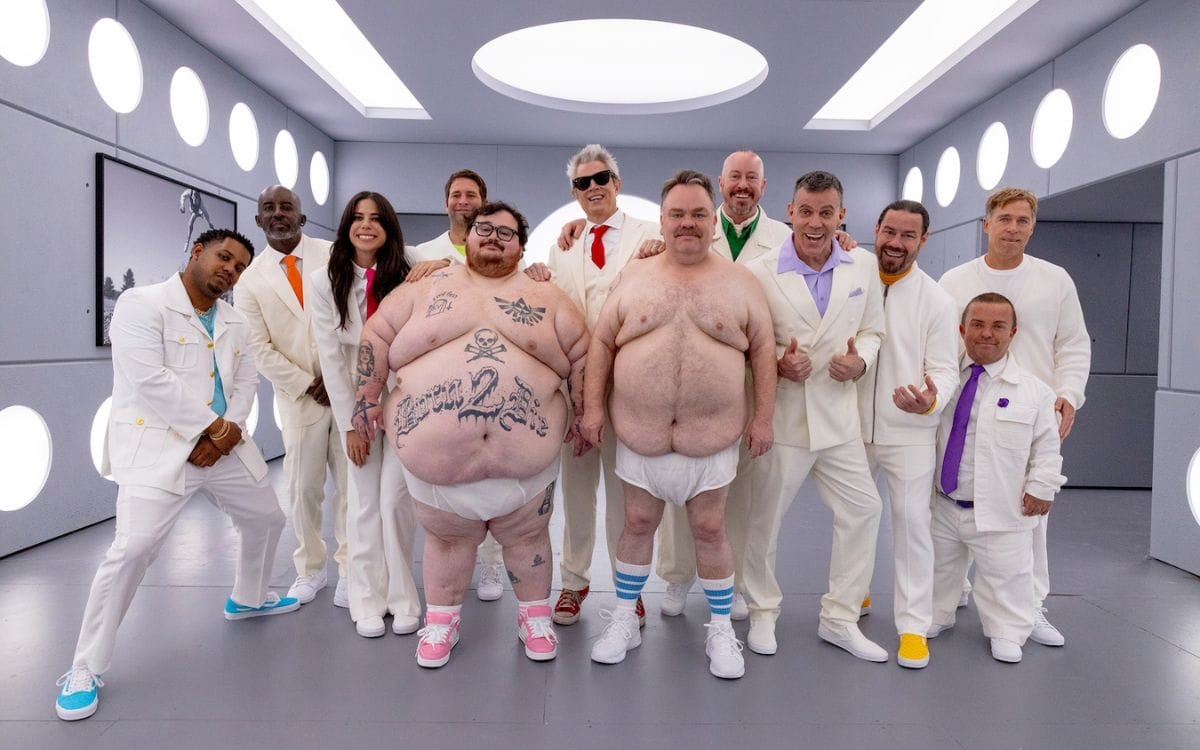
There’s a reliable structure to Jackass that has become familiar, if not comforting. There will be an explosive set piece off the top, as the cast moves through an impossibly outsized backdrop as introduction. The now iconic shopping cart at first, all the way through to the dick-as-kaiju that destroys a town and cums on Tony Hawk in Jackass Forever. The intro of First and Last is no different. In an explosive homage to Jamiroquai’s “Virtual Insanity,” the cast dressed in white suits, contrasting with sneakers and ties that offer a pop of color. When they line up they create a rainbow. They stand together, perfectly still on a floor moving below them, waiting for their final earthly punishments: tackles from off-screen, boxing gloves that appear from nowhere, tasers, and full-bodied cacti. Eventually our host delivers the iconic line, “Hello I’m Johnny Knoxville, Welcome to Jackass!” Only this time he can barely escape the finality of the line reading, and you can hear his voice wavering.
There is no real point in writing out the bits that are in this movie, as to describe them is to spoil them, and the few newly filmed set pieces in the movie work best when experienced fresh. My only disappointment is in the addition of the new cast, and how little some are given to do on screen. Rachel Wolfson in particular, the only woman with a speaking role in the primary cast, only participates in one sketch that we see, and is otherwise relegated to the backdrop, smiling and laughing as so many others do, and it’s sad in its way to see so much new blood go unspilled on the pavement.
When Knoxville is once more in the electric chair, Steve-O asks him if this is truly the end of Jackass, something he has said in the past, before new numbers were added to the crew. Knoxville makes a short speech about everything they have done together, how old they have grown in the spotlight of so much self-afflicted pain, and as he nears the finality of his point you can hear his voice unable to hold itself aloft. As if it too has taken too many hits, and suffered so much, and the spirit itself can no longer be so strong. I have seen Jackass in the theatre on opening day for each new arrival, and while I have laughed and groaned and cheered along with so many, I have never cried in communion until now. There are moments beyond this that elicit the same emotions, and just as it spoils the bit to explain the setup, I will instead stay silent and tell you that you simply have to see it, and pay your appropriate respects.
In the credits, as the memories scroll through to the end, the honest and true end, long after the bits and set pieces and final stunts have smothered their flames, the thesis of what this has always been is answered. As if these movies have been a treatise on formative masculinity and self-destruction in search of a body. Knoxville, laid cold on the floor where he can barely stand, says three words we have never heard him say before: “I need help.” Jeff Tremaine, Big Brother founder, Jackass co-creator and director, eagerly and gently throws his shoulder under his arm and helps his friend back to his feet. When they debrief later in the safety of a hotel room, Knoxville talks about how close to eternity he may have just come, and, crucially, how sick it probably looked. He withstood what he might not have otherwise survived because he was assured of help in the aftermath of so much pain and destruction. There is no bullet that even he can stop with charm and an endless smile alone. It has always been about needing help, and relying on those you can trust to lift you gently when asked.
And then the lights in the movie house came back on. We shuffled to our feet and headed back out into the light of day to live as wildly as we could with the days we have left in our own tired bones. Ready at last to say goodbye and be at peace with how much we have learned about living, about falling to earth and asking for help. How lucky we are to have learned the stories of our bodies through their scars and these decades of glorious self-destruction.
Niko Stratis is the author of The Dad Rock That Made Me a Woman and the creator of the newsletter Anxiety Shark, where she has written about Jackass, amongst other things. She is a cancer, and a former smoker.
Come and look
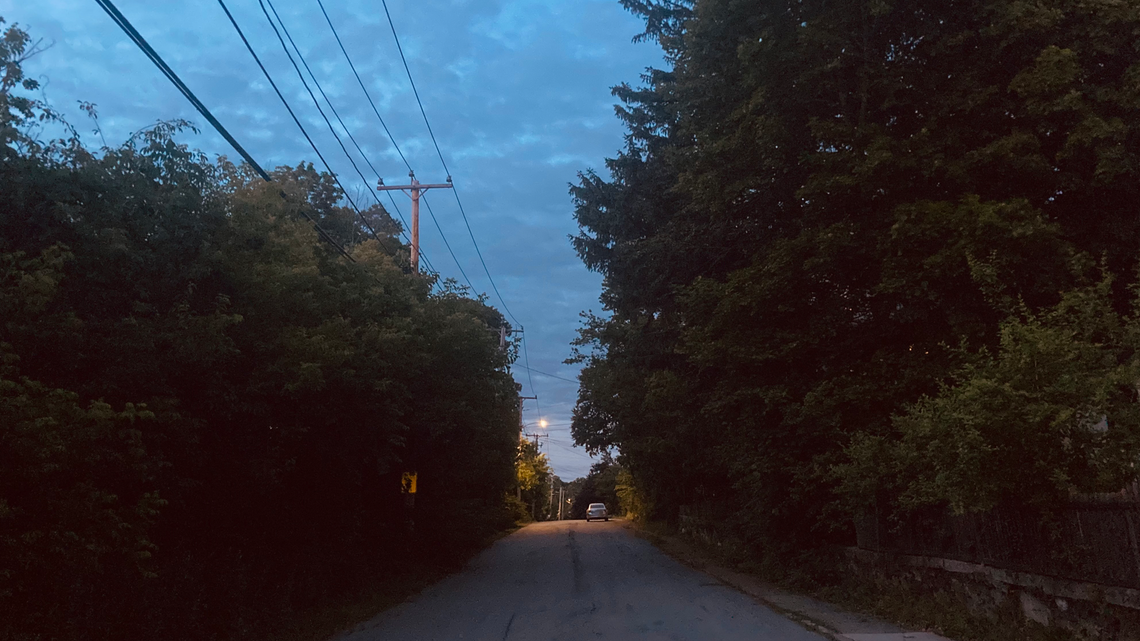
The clouds were sponged violet across the sky over the old wool mill. As the sun diminished I pictured lava draining backwards into a volcano. I was busy trying to lasso it all impossibly into my phone while you walked ahead of me down the quiet side street we use as a short cut into town. The wormhole we call it. Why does no one else ever come this way we always said. Like it was a secret of our own. I thought for the first time in many years of a painting of a lighthouse sunset we found at a yard sale in Maine that I bought for you even though it was $40 which is ambitious for a yard sale painting and was about all I had to my name. We left it behind during a move somewhere along the line and you cried when you couldn’t find it later.
The decline of the street emptied us out at the 150 year old church on an overlapping hill where the woolworkers must have once filed through one by one to launder their mortal filthiness. They painted the insides condo gray a couple of years ago to sell it.
What do you think they got for it you said when I caught up. They tried for 1.5 at one point you said. That doesn’t seem worth it to me I said. In this town.
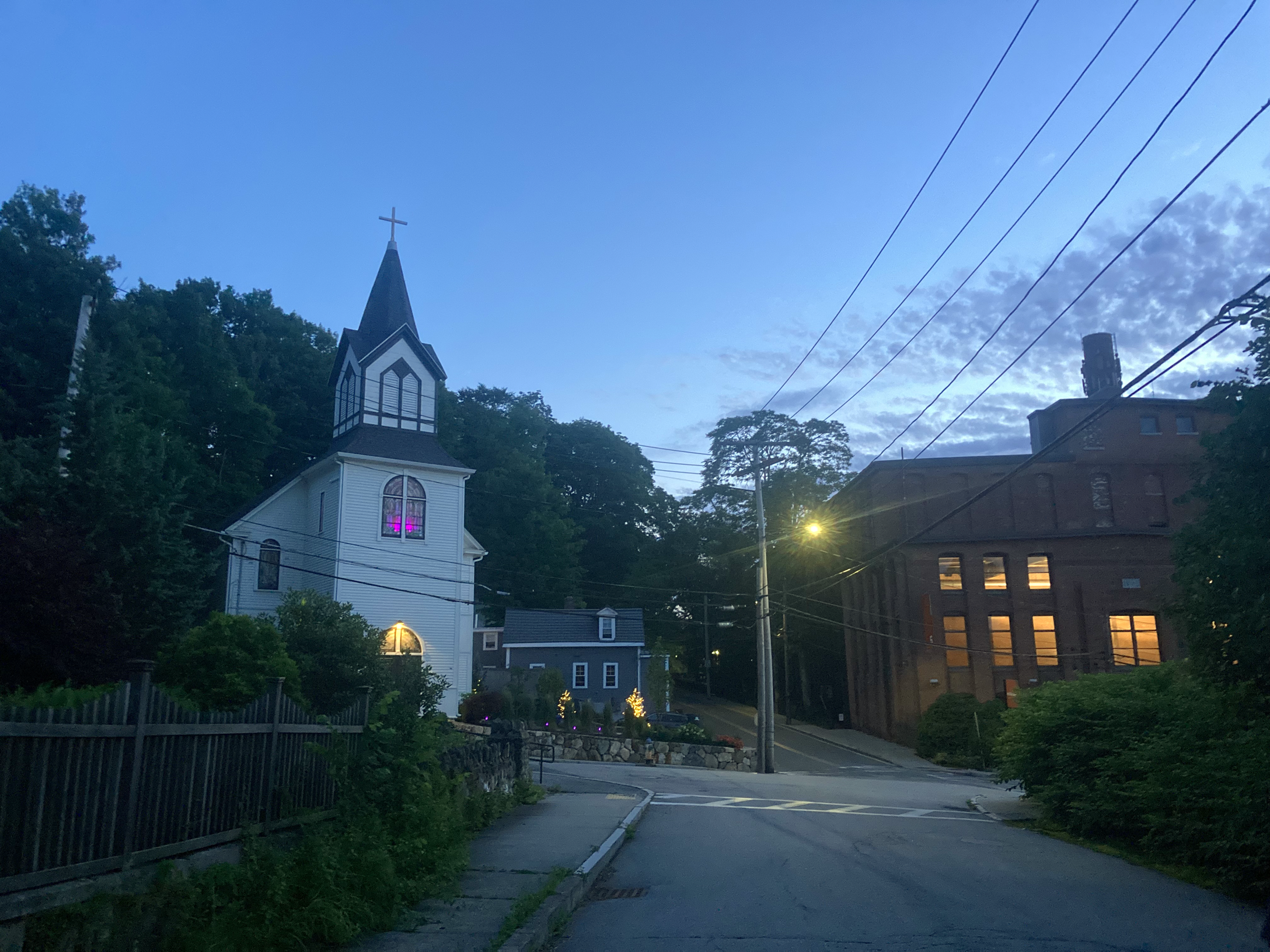
All my pictures were turning out poorly. Years of secondhand smoke in the lens.
There was a jetski parked on the lawn out front of the church just across from an ancient-seeming cemetery stone wall. I sometimes imagined it was a half dinosaur jaw when I wandered down here alone.
A single slouching street lamp flickered in the empty parking lot built for the computer people who also do not work in the mill building anymore. Look down there I said. Into the woods. Do you see that? It looks like that horror movie we watched I said. I should have been a cinematographer I said. Don’t say that you said. Actually scared now so I stopped. It’s funny to pretend to spook a girl until it isn’t. They only like it up to a point.
I meant the first part you said. You could be a cinematographer if you wanted to you said.
It’s probably too late for that I said.
We walked a little further on toward town and could feel the rushing of the river now. A single car finally drove by and backlit you in angular shadows and I took a snap. You looked so beautiful. When I showed it to you you didn’t sign off on it so I didn’t post it. Later on the way back home you took a picture of me taking a picture of you and showed me and said you look so handsome but I didn’t like it so you didn’t post it either.
It’s a picture of a bird on my back porch
The one that wakes me up every morning. Perched outside the bedroom window. I don’t know if it’s the exact same bird every time but I have rendered them guilty collectively all the same. I’ve seen them conspiring elsewhere. It’s not visible in the frame but the neighbor’s cat is busy looking out the window pouring an imaginary cartoon bottle of ketchup over the bird’s head. Outside of the other border there is a newly built bee’s nest hanging from the eaves of the roof. It occurs to me the bird has got ideas of its own about what to do regarding that. And here I am taking the picture and also not getting what I want most in the world right now. Walking back inside and posting it.
Read more at Flaming Hydra.