Blizzard of Lies/ Who goes transphobe?
Blizzard of Lies by Dave Wedge and Sandy Ernest Allen on Who goes transphobe?

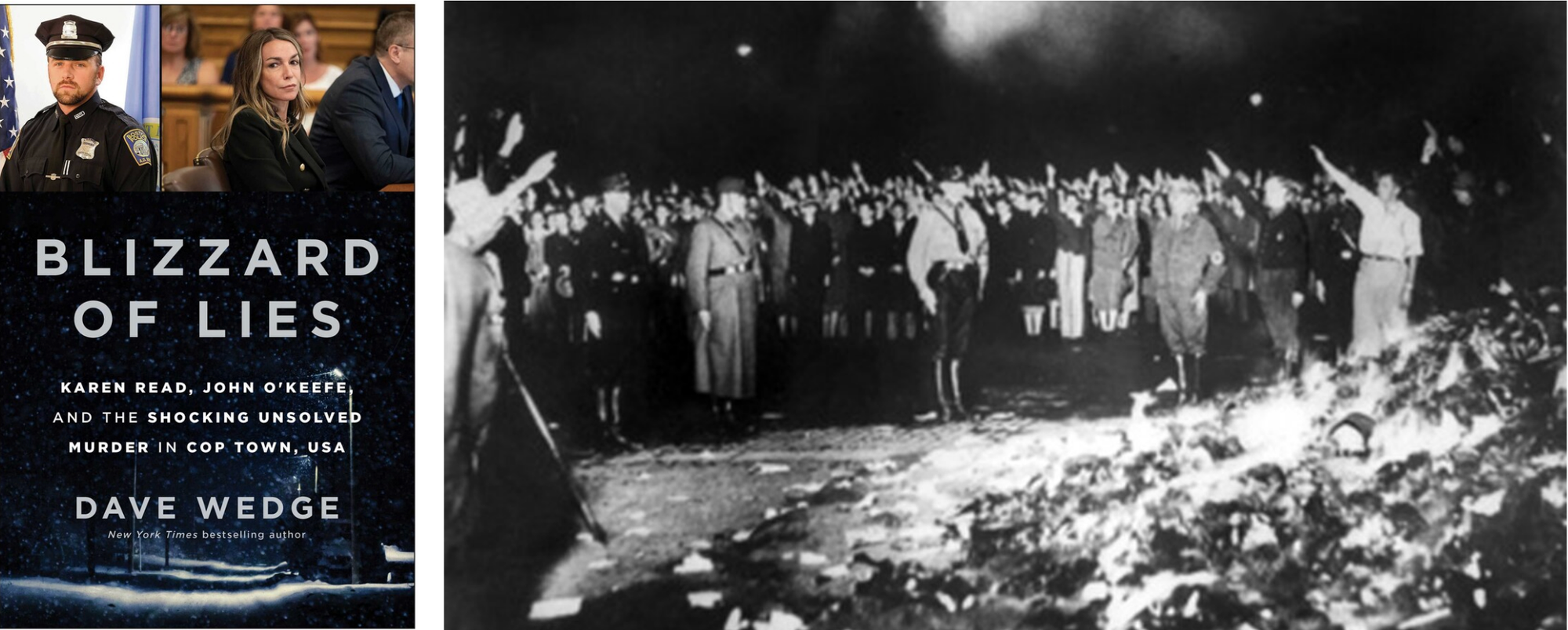
We've got another great two-parter today.
I'm happy to share an excerpt from Blizzard of Lies: Karen Read, John O'Keefe, and the Shocking Unsolved Murder in Cop Town, USA by my old pal the prolific author and reporter Dave Wedge. If you're unfamiliar with the case – which is all anyone could talk about in Massachusetts for years – it's about as quintessential a "true crime" story as they come. Doomed romance, death, insular Massachusetts townies, alleged police corruption and all the rest. I happen to be one of the only people around here who didn't follow it as it happened so I found it to be a fucking page-turner kid. It's also an impressive and thorough work of good old fashioned journalism.
Read it here or down below.
If you're in Boston I'll be speaking with Wedge tonight at Parkside Bookshop.
Wedge most recently wrote for Hell World on the passing of Ozzy.
 Luke O’Neil
Also today Sandy Ernest Allen joins us to ask a familiar sounding question. Who goes transphobe? You can also read it here.
Help pay our great writers with a subscription if you can.
Last week I sent out this piece to paid subscribers.
 Luke O’Neil
In it Gareth Watkins writes about what a great time it is to be a hedonistic dumb guy. Even the stock market is for dumb guys now.
The highs and lows of gambling still exist, just as the visceral thrills of sex and drugs are still there for men like that, and it’s almost always men, but the context they appear in means that there’s no actual pleasure available. You aren’t Dean Martin in the MGM Grand putting it all on black with a showgirl on each arm, you’re some guy with an email job on an extremely hot leather couch taking out another mortgage so you can buy 0.88494844 of elon.moon.coin. Structurally there is no way to “do anything else except pursue pleasure,” and, structurally, there is no pleasure in pleasure.
Watkins previously wrote for Hell World about the proliferation of AI-generated "deepfake" pornographic images and the domineering masculinity of the "traditional" conservative family structure.
It's always a nice treat to be featured in Perfect Sentences a newsletter I enjoy reading every week. In the latest they highlighted my poem about the swords.
I don’t know why everyone’s losing it over these swords he said.
"The sword situation", Luke O'Neil
I'm so glad that people are still out here going full Barthelme sicko mode writing short stories with absurd framing devices and the barest minimum of punctuation. I know writers who use quotation marks and they're all cowards, etc.
One more thing! Today is the day that Ray Bradbury’s There Will Come Soft Rains takes place. What a classic.
‘Today is August 4, 2026,’ said a second voice from the kitchen ceiling, ‘in the city of Allendale, California.’ It repeated the date three times for memory’s sake. ‘Today is Mr Featherstone’s birthday. Today is the anniversary of Tilita’s marriage. Insurance is payable, as are the water, gas, and light bills.’
Somewhere in the walls, relays clicked, memory tapes glided under electric eyes.
Who goes transphobe?
by Sandy Ernest Allen
It is an interesting and somewhat macabre parlor game to play at a large gathering of one’s acquaintances: to speculate who in a showdown would go transphobe. By now, I think I know. I have gone through the experience many times—in California, in Iowa, and in New York. I have come to know the types: the born transphobes, the transphobes whom democracy itself has created, the certain-to-be fellow-travelers. And I also know those who never, under any conceivable circumstances, would become transphobe.
I promise this entire essay won’t just be me riffing on Dorothy Thompson’s iconic Harper’s essay Who Goes Nazi?. And some are probably already thinking to themselves, well, “Nazi” and “transphobe,” these are the same; the Nazis were transphobes. Yes, I am aware.
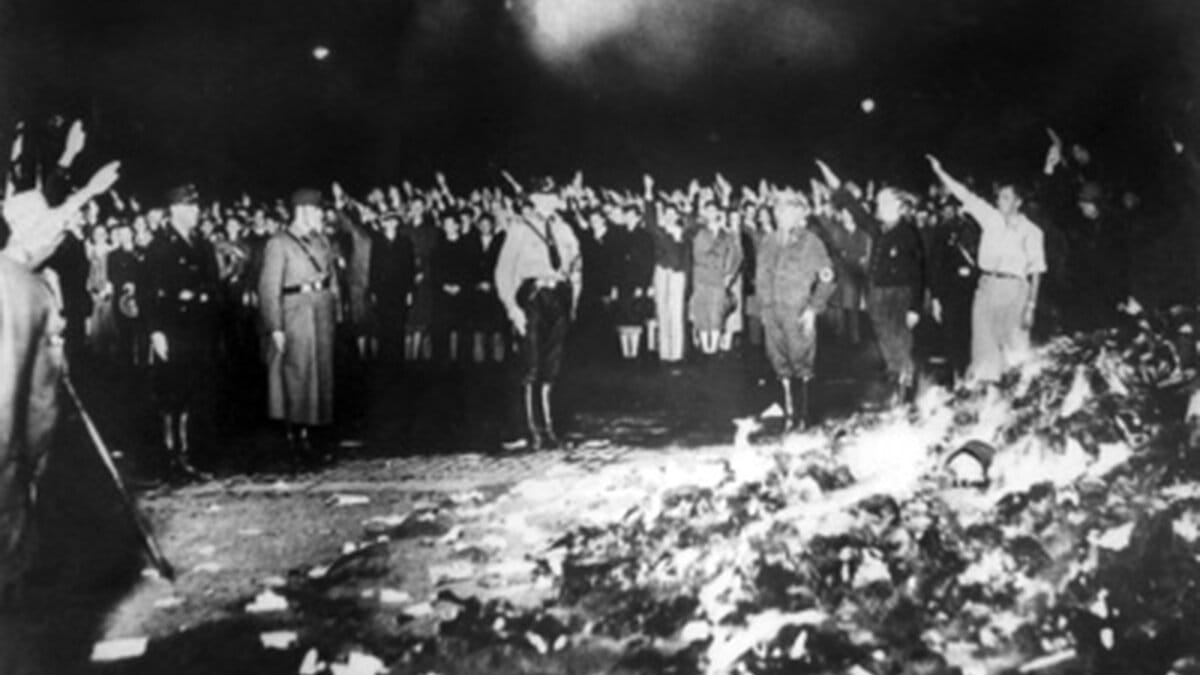
Perhaps you too think of the image above, of Nazi book burnings at the Institute for Sexual Research.
And yes, maybe like me you’re pausing to think about another irony, the Harper’s of it all, and how thoroughly that magazine in particular, alongside many others, failed to clock the rise of fascism as it’s come back around again.
How if anything Harper’s itself … went Nazi.
For trans folks such as myself, the now-infamous Harper’s letter was an obvious anti-trans dogwhistle, and a harbinger of a broader media onslaught to come, signed by a who’s-who of intellectually unserious jerks, many of whom have made it their brand to bully trans people. As trans people (especially in media) we are perpetually aware of our more prominent antagonists.
One thing to keep in mind: Transphobia itself is a delusion. People who’ve fallen for this sort of hateful nonsense aren’t worthy of anyone’s respect, not as intellectuals at least.
On Bluesky, I use an account labeler that warns me when someone was a “Harper’s Signatory.” I admit it always makes me chuckle when I see it pop up.
Amongst media-aware trans people someone who signed the Harper’s letter is shorthand for this person didn’t give a fuck. This is someone who didn’t care, as fascism rose, whether I lived or died. Who maybe even joined in with the fascists in encouraging my demise. The flames were rising, threatening us, and they eagerly fanned them.
For a trans person such as myself, this assessment regarding who goes transphobe is mostly a matter of safety. Cis people who haven’t yet awoken to what era we are living through, right now, are dangerous — whether they’re merely clueless or actively malicious.
Cis people who still do their Wordles or who still like Harry Potter? I cannot trust them. They are a threat in the sense that a drunk behind the wheel is dangerous or a sleepwalker stumbling towards a staircase is dangerous. Willfully or not they may cause actual harm.
Let us look around the room.
There is the gentleman who is still on X for some reason. A self-described liberal or even leftist who knows all the correct things to say, he nonetheless remains watching the garbage fire burn, making whatever excuses or not even bothering to do so at all. One suspects he really just enjoys it there, enjoys the high of the second hand toxic fumes, enjoys the fight and being around it. He misunderstands himself as being impervious to rightward influence, even though that’s clearly what being on this platform has done to him (as his credulity towards transphobic talking points betrays).
To him the stakes of this fight have never been real, and he has failed to process the premise that the “first they came for” poem was a warning. If this kind of guy says some transphobic rhetoric and trans people react, he laments that he’s under attack. Free speech! he cries. Maybe he accuses trans people of ganging up on him, unaware seemingly of the absurdity of his own position. He who, by virtue of his privilege, is quite oblivious. He who has never felt any actual threat.
Then of course there are the just-hateful types, the ones who’ve become fixated on making trans lives hell. The bigoted politicians and fifth place collegiate athletes and the like. Alongside them are the supposed “science journalists” who launder anti-trans misinformation to the wider public while cherry picking data and feigning concern for children, and the male commentators who’ve suddenly become oh so opinionated about fairness in girls and women’s sports.
In general, this type of transphobe has no other interest than being a transphobe. He’s a schoolyard bully yelling an epithet. He’s also the adults standing by doing nothing as the epithets are yelled. These are people with no actual conscience, as best I can tell, who do not stand for anything. In this sense I cannot relate to them.
The third category I do wonder about. It is the individuals who abet the previous two groups, even if they ostensibly don’t agree. These types even side with the transphobia against their own interests, in the sense that transphobia is merely a tool for enforcing patriarchy, another form of sexism. I think of the cis women for example who’ve made it their careers’ focus to spread anti-trans misinformation about bathrooms or whatever, which clearly winds up hurting many more cis women by mere numbers, in addition to trans and gender non-conforming people.
Why these types behave as they do one can only guess. Perhaps it’s just for the paycheck or the approval of their managers or billionaire bosses. In general, I find this the most depressing category, in terms of who goes transphobe. (And I’d point towards Steven Thrasher’s new book The Overseer Class.)
Perhaps such types consider themselves “apolitical.” They might say they’re just doing their jobs. But I’d assume these types don’t spend much time actually thinking.
This sort of transphobe is going with the herd perhaps. Transphobia is popular so they engage in it too. They may or may not actually like or dislike trans people. They may or may not know a trans person or two in real life (whom they may think of not as "trans" but just as “Susan in accounting”). These are types who have decided to not see their own complicity in the big picture. Sometimes, regardless of their other actions, they’ll even hang a flag or boast about knowing a trans kid.
Sometimes cis people online will jump into my replies effectively boasting in this same way. Look at me! I’m one of the good ones! They’ll do so often in response to me lamenting about transphobia itself. I’m a good cis person, they'll counter, as if this is helpful at all. They’ll do so seeming to misunderstand me as being interested in hearing from the likes of them. If I reply back to such types, they then almost inevitably flip out at me. They’ll get upset, they’ll call me names, they’ll scold me like I am a child. One senses such reply-people are just spoiling to fight a random trans person.
Or else they’re so insecure that they easily drown in their own shame when an actual living breathing trans adult dares to respond to whatever they’ve interjected to brag about in my direction. These types, again, don’t actually want a trans person to respond to their assertions. They don’t want to imagine they aren’t already perfect. They don’t want to have to admit any growth left to do on their own part. They don’t want to learn nor recognize their own limitations, given their privilege. To me this is all simply childish.
I asked my mental health professional recently what the fuck to do about all this, about the quantities of people online who are attempting to spar with me. Like I’m some jacked guy in a bar the drunk insecure dweebs feel the need to pick fights with.
This is all in addition to the fact that this country’s two major political parties are either actively trying to kill me or doing nothing to stop the other one. Many supposed “liberals” and “centrists” and “apolitical” sorts will even pay lip service to supporting LGBTQ people, as they meanwhile throw trans folks under the bus.
The ones who scare me the most, candidly, are those who have decided they’re fantastic allies because they’ve got a trans kid or partner, or because they’re a doctor or therapist with trans patients, regardless of their actual behavior.
It’s the queer friend group who abandoned that one trans person amongst them the moment they started hormones. It’s the cis doctors at the ostensibly trans-affirming practice who fired their trans colleague the moment Trump took office a second time. It’s these types, again, who scare me the most in terms of who goes transphobe. Those whose betrayals have been so intimate and so wretched.
I don’t enjoy meanness myself. I was raised amongst tons of bullying and cruelty and anger and mistreatment. Always but especially these days I find it painful inside if I am mean, or angry, even momentarily, even in ways that “don’t matter,” like if I’m swearing at a printer or because I dropped something on my toe.
In general I wonder about the bored cis people who spend their time picking fights with trans strangers like myself online, or who pen us hateful messages. I worry about how much such people have bought into the notion that trans people are some problem worth their energy. I worry that such people just need more interesting things to do with their own time, with their one and precious human life.
In other words, I think transphobes need better hobbies. Find a pottery class or a book club or a bird watching group, and leave us trans folks in peace, I often think, you fucking assholes, you fucking weirdos, stop being obsessed with what’s in other peoples’ pants. Unless you’re about to have consensual sex with someone or you’re someone’s healthcare provider (and even then, maybe not), it’s probably none of your business what somebody else’s genitals are like.
As I sometimes repeat, if you, whoever’s reading this, told a transphobic joke back when, or if you laughed at the end of Ace Ventura, or if you once believed in some bullshit regarding trans girls playing sports, or if you fell for some transphobic misinformation, that doesn’t make you a bad person. Ultimately what matters is what you do now, once you wake up and realize what’s been going on.
Do you remain stubbornly on X, drinking at that Nazi bar, insisting against reason you don’t have a problem? Or do you finally get up and leave?
It’s fun — a macabre sort of fun — this parlor game of Who Goes Transphobe? And it simplifies things — asking the question in regard to specific personalities.
Kind, good, happy, gentlemanly, secure people never go transphobe. They may be someone who’s not online at all, a luddite, off the grid, or someone “who doesn’t follow politics,” …. or they may be the opposite, perhaps they’ve got MSNBC on 24/7. Either way, when it comes down to it, some people will stand up for their trans coworker or neighbor — you’ll never make transphobes out of them. But the frustrated and humiliated intellectual, the rich and scared speculator, the spoiled son, the labor tyrant, the fellow who has achieved wealth by smelling out the wind of success — they would all go transphobe in a crisis.
Believe me, nice people don’t go transphobe. Their race, color, creed, or social condition is not the criterion. It is something in them.
Those who haven’t got anything in them to tell them what they like and what they don’t—whether it is breeding, or happiness, or wisdom, or a code, however old-fashioned or however modern, go transphobe. It’s an amusing game. Try it at the next big party you go to.
Sandy Ernest Allen is an author and journalist who has been published by Esquire, The Cut, Eater, and This American Life. He writes a self-care focused newsletter called What's Helping Today.
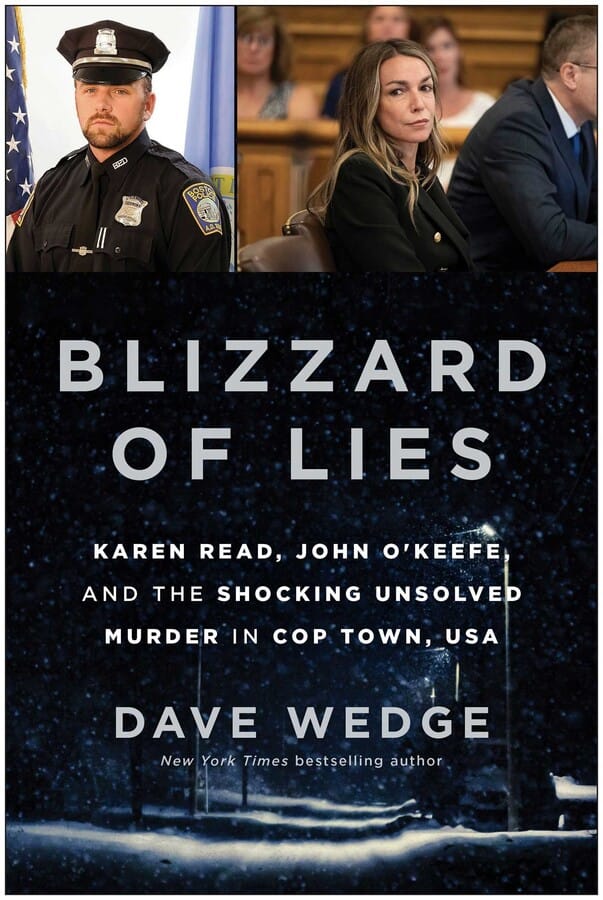
Here's how the publisher describes the book:
The explosive story of O’Keefe’s death, and the subsequent accusation and trial of his girlfriend Karen Read, ignited one of the most high-profile true crime mysteries in decades. The apparently open-and-shut manslaughter case quickly devolved into a chaotic mixture of lies, institutional corruption, and police cover-ups that threw the Massachusetts law enforcement scene into turmoil.
And Read’s 2025 acquittal left O’Keefe’s death an unresolved mystery, with more questions than answers.
With dramatic twists including a rogue journalist, a mistrial, and polarizing public protests—along with revelations that called several other murder cases into question—Blizzard of Lies is a Boston-area veteran reporter’s detailed and immersive account of one of the most controversial crime stories of his career.
CHAPTER 1
John, I fucking hate you,” Karen shrieked into the phone. It was just after 1 am and she was drunk. Very drunk. And angry.
Karen Read, by day a pretty, successful professor at Bentley University, was just a half hour away from the serene campus in Waltham, Massachusetts, but the calm familiarity of the college might as well have been a continent away. At that moment, she was in a hellscape of
stress, chaos, and anger as a blizzard whipped outside.
The alcohol coursing through her veins—vodka and sodas consumed for hours—tormented her thoughts. She was racked by uncertainty and jealousy as her emotions launched into overdrive. Her night of drinking with her boyfriend, Boston Police Officer John O’Keefe, took her on a roller-coaster journey that night in January 2022.
Karen helped John in raising his niece Kayley and nephew, Patrick, both of whom he adopted in 2014 after their parents died just a few weeks apart. John’s sister, Kristen, died of cancer in November 2013 while her husband, Stephen, followed her in January 2014, suffering a sudden heart attack while grieving at her grave. It was a shock to the O’Keefe clan and ended John’s bachelor life abruptly as he was suddenly thrust into the unexpected role of father. While shocking, he embraced the responsibility and loved Patrick and Kayley.
John and Karen had a classic COVID relationship. While locked at home during the pandemic in 2020, he and his cousin Stephanie were watching the romantic comedy He’s Just Not That Into You one night when John decided he was going to reach out to some old girlfriends.
He sent out messages to a dozen former girlfriends and acquaintances via Facebook. He was looking for someone to hang out with while riding out the dystopian isolation of lockdowns and social distancing.
As a Boston cop, he never stopped working and was frustrated by quarantines and business closures. He desperately wanted to get back to having some fun. He craved normalcy and human connection, so he threw out lifelines to several old flames.
He started scrolling through the “People You May Know” section of his Facebook feed. Karen’s profile popped up.
“Hey, I used to date her like twenty years ago,” he told Stephanie.
He fired off a message.
“Hey, blast from the past. How’s things?” he wrote.
Karen responded. They started chatting and eventually spoke by phone.
“She thinks I’m a married dad with kids,” John told Stephanie.
After he explained that he was single and had adopted Kayley and Patrick, Karen agreed to get together with him.
They’d first met sixteen years earlier, at a party in 2004 at the Black Rhino, a now-closed restaurant and nightclub in Boston’s financial district. It was a thirtieth birthday party for John’s sister, Kristen. Karen didn’t know the O’Keefes, but she went out that night with a woman who graduated from Braintree High School with John. Karen and the friend had met randomly in Newport, Rhode Island, and became close friends. That night, they were invited to the Black Rhino by a mutual acquaintance of John’s, also from Braintree. The Black Rhino, on Boston’s Broad Street, was a four-floor financial district hot spot with a rooftop bar. In the early 2000s, it was a notorious meat market for twentysomething singles and young professionals in the after-work crowd.
Karen and her friend followed the pulsing sound of the DJ up to the third floor where John and several friends were partying. Karen and John were introduced and hit it off quickly. Karen was a knockout and immediately had John’s full attention. She thought he was cute, and they had a fun night together. They went on a few dates, but the relationship went nowhere as neither was looking for a long-term commitment. Her work took her to Dublin, and they stopped seeing each other.
“We maybe dated another couple of weeks after that,” Karen recalled. “Then I went to work that spring in Ireland temporarily. Because of that I stopped seeing him. Just lost touch.”
When Karen reentered his life, she embraced her role as surrogate stepmom. Together, they got the kids to and from school, sports, and playdates with friends, leaning on a large inner circle of family and friends to help out. Patrick and Kayley had been through unimaginable pain and trauma, but John—the “funcle” (fun uncle) in the family—was the lighthearted, fun-loving soul they needed to help them find their way through the darkness. Karen stepped in at just the right time to support John and be a strong female figure for Kayley as she navigated her teen years and Patrick as he became a tween.
The blended family had plenty of good times—trips to the beach, cookouts, family dinners, movies—and their lives were as normal as could be, given the tragic circumstances that had unfolded, as well as a global pandemic. It was a mostly stable home for the kids, but there was a good deal of arguing between John and Karen.
John was always a party guy and a heavy drinker. Karen was more of a social drinker, and she abstained at times for health reasons, but when she was living with John, her drinking escalated.
It was not unusual for them to have all-day/night drinking sessions. Karen would sometimes join the other wine moms at the kids’ sporting events, drinking vodka and soda from her Yeti at the baseball field. John would go to Patriots games or out to bars to meet up with friends to watch games and have a few beers. He was a big Boston sports fan and loved nothing more than celebrating the hometown team victories with a few cold ones.
They enjoyed each other’s company, had a busy social life, and became good drinking buddies. They were also good at sharing the duties in caring for the kids and running the household. Money wasn’t an issue, as Karen made a healthy salary as a financial executive, and John took home around $150,000 a year as a Boston cop, depending on his overtime.
While their day-to-day life was stable and they had busy social lives, the normal stresses of relationships, jobs, and responsibilities sometimes turned them against each other in heated arguments. It was not unusual for them to swear at each other or for her to scream at him and call him names. Kayley and Patrick saw volatility between them and heard them fight frequently.
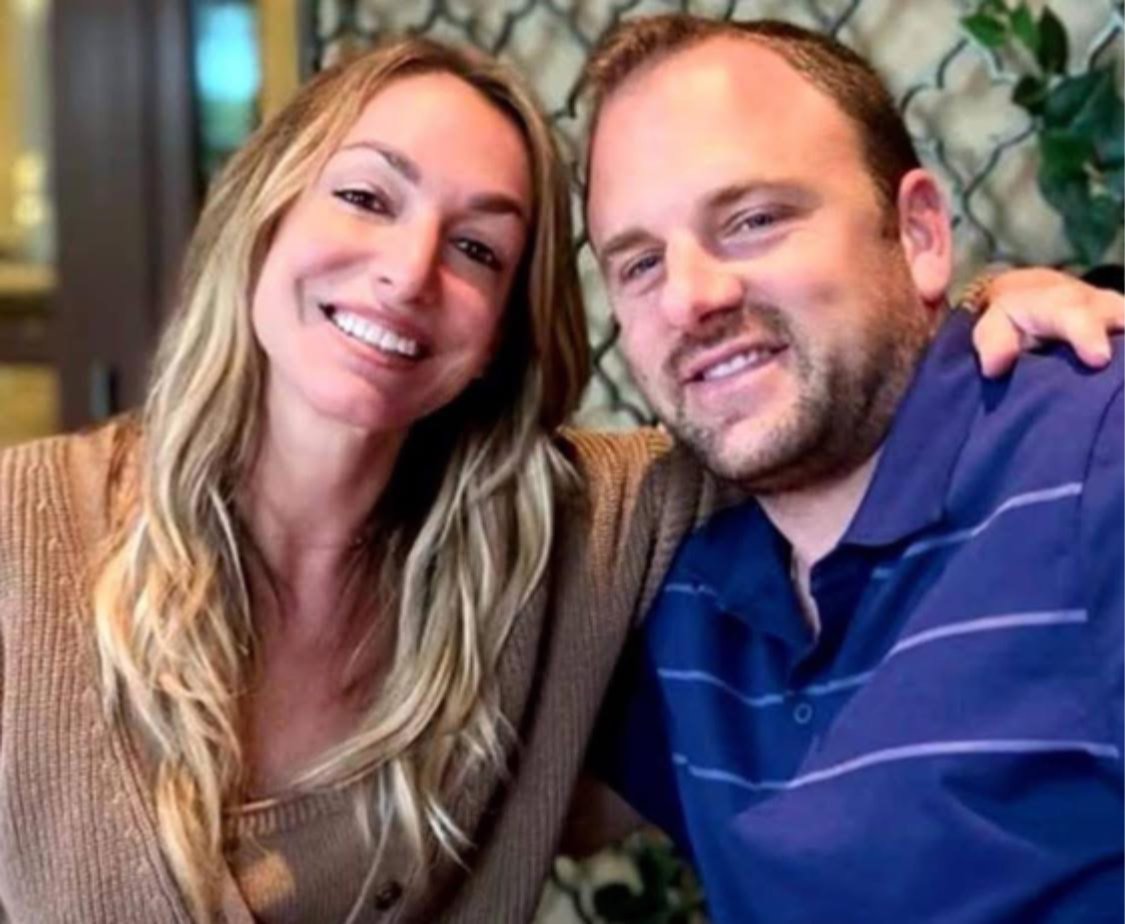
The bickering aside, Karen liked the life they were building. She was forty-one with no kids of her own and was committed to him. But John, a forty-six-year-old serial dater who never wanted the married lifestyle, was not long for the relationship. Before reconnecting with Karen, he was a guy’s guy, single to his core. He was well known on the dating scene on Massachusetts’s South Shore. He had a couple semiserious relationships, but nothing approaching buying a ring. Mostly, he dated women for a few months at a time and moved on. And he liked it that way.
When Karen responded to his fateful COVID message, they again hit it off. But this time, they were more than a decade older and the stakes were higher for both.
When they’d last met, both were just finding their postcollege careers. But now, John was raising two kids and working as a full-time Boston Police officer, while she was a successful executive for global investment house Fidelity.
Kayley and Patrick were just six and three, respectively, when their mother, Kristen, died of cancer in 2013. Their father, Stephen, died just two months later. In 2020, Kayley was a gregarious, happy twelve-year-old who loved American Girl dolls and making videos dancing with her uncle John. Patrick was nine and loved playing his Nintendo Switch and having donuts with his grandfather, John’s dad, John Sr.
John never wanted kids but embraced his fatherly duties not only because it was the right thing to do, but because he and his sister had been extremely close. He was with her when she died and made her a promise that he would always watch out for Kayley and Patrick. He was true to that word.
When COVID first hit, he struggled to homeschool two kids over Zoom while working full-time. His cousin on his mother’s side, Stephanie Rizzitano, was a twenty something young professional who worked from home. Stephanie was already close with Kayley and Patrick, as she had been helping out with the kids from the time Kristen first got sick.
Stephanie moved in with John and the kids and became a live-in caretaker, helping with dinners, laundry, and keeping Kayley and Patrick going on their schoolwork. It wasn’t how any of them planned it, but life threw them all nasty curveballs, and they pulled together to make it all work.
Stephanie and the children hadn’t met John’s previous girlfriends, so it was a bit of a shock to them when he announced one day: “This new girl I’m seeing is coming over.”
It was a big step for John to introduce them to Karen. They made a plan to rent the Disney movie Frozen II, which was one of the kids’ favorites. Kayley was protective of John and pulled a power move when Karen came over and the movie started. Karen went to sit down on the couch next to John, but Kayley slid in next to him, blocking her. She leaned on John throughout the movie, sending a clear message to Karen that she was the number one girl in John’s life.
As a good Catholic boy, John always gave something up for Lent, usually beer. That night was during Lent, so beer was out. Instead, he and Karen drank what became their drink of choice: Tito’s vodka. They each had Yeti tumblers filled with ice and vodka while the animated movie played. Perhaps it was her nerves, but Karen drank to excess that night. She was buzzed and kept talking during the movie, which upset Kayley and caused some bickering.
After the movie ended, Patrick showed her his Nintendo Switch. He also showed her a game he was saving up to buy.
“I can just buy it for you right now,” Karen told him.
John got mad.
“No. Don’t buy him that,” he said.
“It’s my money. I can buy him whatever I want,” she shot back.
“No,” John said. “He’s on his video games all the time. We’re trying to get him off them.”
Karen was persistent, though, and convinced John it was her decision and she wanted Patrick to have the game. It wasn’t a big deal, but it was a bit of a sign of things to come. Karen often showered the kids with gifts. She bought Kayley makeup, hair products, pricey Lululemon leggings, and a cashmere sweater. John often got mad at her for “spoiling” the kids.
Kayley and Patrick liked Karen. She was the fun aunt to John’s fun uncle. She became part of the family’s COVID bubble and started spending a lot of time at his house in Canton, Massachusetts, where John and the kids lived.
“I felt like this [was] a perfect situation,” Read told Vanity Fair. “It’s a Karen-sized hole in this house that I have the energy and resources to fill.”
Karen worked remotely from the house. She made meals and helped the kids take their Zoom classes throughout the pandemic, while John worked at the District A-1 police station.
Kayley and Karen sometimes butted heads, though. They would go shopping and to the grocery store together, but their relationship “kind of depended on the day,” Kayley would later say. The teenager felt that Karen spoiled Patrick and would sometimes be “cold” toward her.
Bickering and family squabbling were one thing, but nothing prepared any of them for the events of January 29, 2022. That night started off like any other night for the couple. They were planning to have dinner with John’s brother, Paul, and his wife, Erin, who had become a close friend and confidant of Karen’s.
The plans were derailed, though, by a nasty nor’easter headed to coastal Massachusetts, bringing with it whipping winds, frigid cold, and thirty inches of snow. Paul and Erin canceled dinner, but John and Karen had cabin fever and still wanted to get out.
It was one of the worst snowstorms in years and shut down Logan International Airport for two days. For many hardy New Englanders, there’s nothing quite like riding out a snowstorm in a dark Irish pub with a fireplace, music, hot chowder, cold pints of beer, and shots of whiskey while the snow piles up outside. Count John and Karen among them.
They left the kids at home and hit some local bars in Canton with a group of fellow snowstorm revelers. They drank heavily at two townie haunts, C.F. McCarthy’s and the Waterfall, before driving to an after-party at 34 Fairview Road, the home of one of John’s fellow Boston cops, Brian Albert.
John and Karen argued on the way there. When they arrived, John stepped out of the car into the blizzard, and Karen sped off back to their house. After leaving him there, he didn’t answer her calls or texts. She made a string of desperate, angry calls to him that went straight to voicemail.
“John, I’m here with the fucking kids. Nobody knows where the fuck you are. You fucking pervert,” she screamed in one.
“You’re fucking another girl. John, I fucking hate you! This is fucking dirty!” she said in another.
After sleeping for a couple hours, Karen awoke in a fog. She stumbled into Kayley’s room in hysterics around 5 am.
“Kayley, John’s not home. He never came home,” she yelled to the teenager through tears. “Could I have done something? Could he have been hit by a plow?”
Karen then called Brian Albert’s sister-in-law, Jen McCabe.
“Maybe I hit him,” Karen said to McCabe. “We were in an argument. Maybe I did something.”
Dave Wedge is a New York Times bestselling author and award-winning investigative journalist who wrote for the Boston Herald for 14 years. His book about the 2013 Boston Marathon attacks, Boston Strong: A City’s Triumph Over Tragedy, was adapted for the 2016 movie Patriots Day. He has written bestsellers about Tom Brady and “Deflategate,” Whitey Bulger, and John Lennon. His most recent books, Riding with Evil: Taking Down the Notorious Pagan Motorcycle Gang and Blood & Hate: The Untold Story of Marvelous Marvin Hagler’s Battle for Glory, are both in development as feature films.
Dave is also a co-producer on Hunting Whitey Bulger, a three-episode Hulu docuseries produced and narrated by Ben Affleck and based on Dave's book, Hunting Whitey: The Inside Story of the Capture and Killing of America’s Most Wanted Crime Boss. The series airs in early 2027.