After decades of naked exploitation
A rare triumph for workers over capital

Luke DeCock reports from Indianapolis from the first NCAA Final Four where athletes are being paid directly by their schools. Subscribe to help pay our reporters if you can.
by Luke DeCock
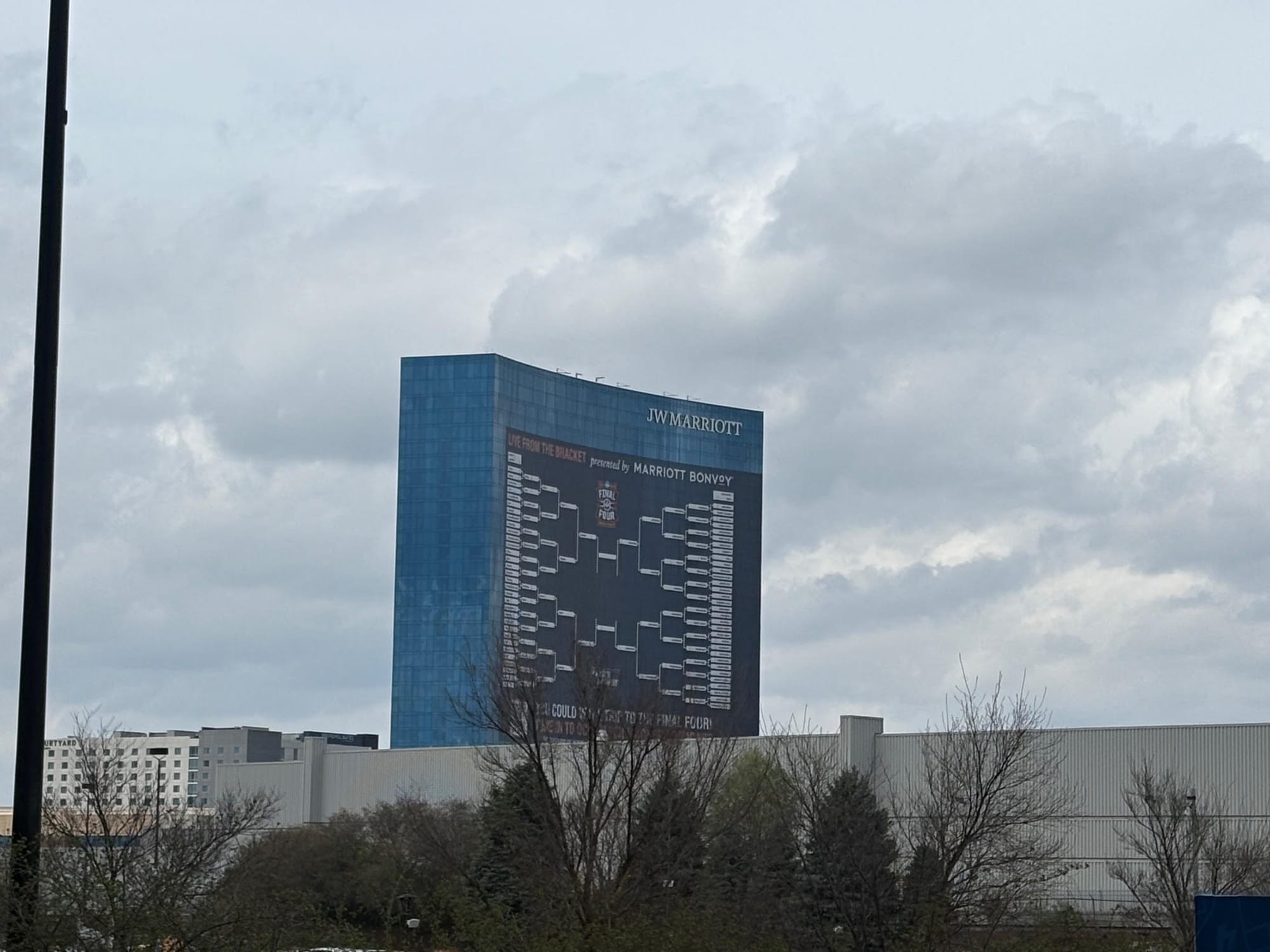
A giant NCAA basketball Tournament bracket looms over downtown Indianapolis, 34 stories high on the facade of the JW Marriott hotel. If you weren’t already aware the Final Four was in town, it would be impossible to avoid it. The bracket is, of course, prominently sponsored by Marriott Bonvoy.
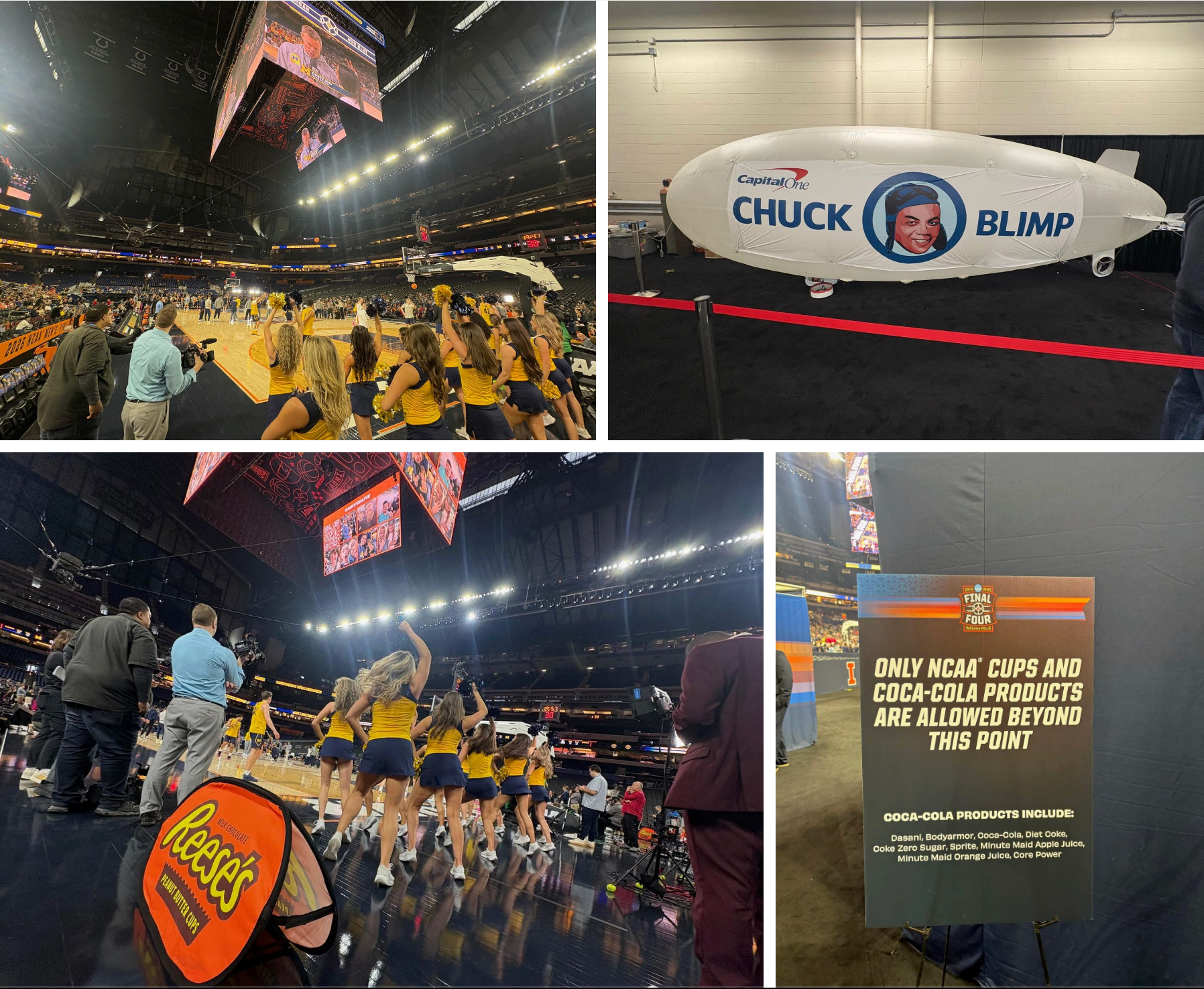
One of four basketball teams — Arizona, Connecticut, Illinois, Michigan — is going to be a national champion Monday night, but the brands are always the big winners at the Final Four. [Update: Michigan and Connecticut advanced]. On television it looks like any other major sporting event, with the same commercials from the same sponsors over and over again. In person those sponsors are even more omnipresent, more so than at the Super Bowl even. The logos are everywhere. You cannot escape them.
And yet amid this supernova of hypersponsored apex capitalism labor can claim a massive victory.
After decades of naked exploitation, this is the first Final Four to be played by athletes paid directly by their schools. The entire men’s basketball tournament has been generating billions of dollars for the NCAA for years, money that goes to conferences and then the individual schools. Some of the money has finally filtered all the way down to the players who actually generate it. The reason any of us pay attention to the sport in the first place.
“I tell our younger guys they’re very blessed,” Michigan player Roddy Gayle Jr. told me. “Even my freshman and sophomore years, it wasn’t very much a thing. Just kind of seeing the money people are allowed to make and benefit their families. I know a lot of these guys come from literally nothing. So being able to support their communities, their families, even these past two years being able to support my family, it just means so much to me personally. I know how much it means for other people as well, just the ability to earn exactly what you work for. It’s been a really good element for us, my family, my community as well.”
It’s a stunning change from decades of a commitment to “amateurism” that outlasted even the Olympics and made generations of coaches and administrators rich on the backs of unpaid labor. There was a time when the finances involved in college sports were modest enough that a scholarship was fair compensation, but those days ended when television contracts hit 10 digits and players started to notice how much money was flowing through the system. Eleven years ago there were rumors of a player walkout or boycott at the Final Four led by a polymath Wisconsin player named Nigel Hayes. It never came to that.