If I Am Coming to Your Town, Something Terrible Has Happened
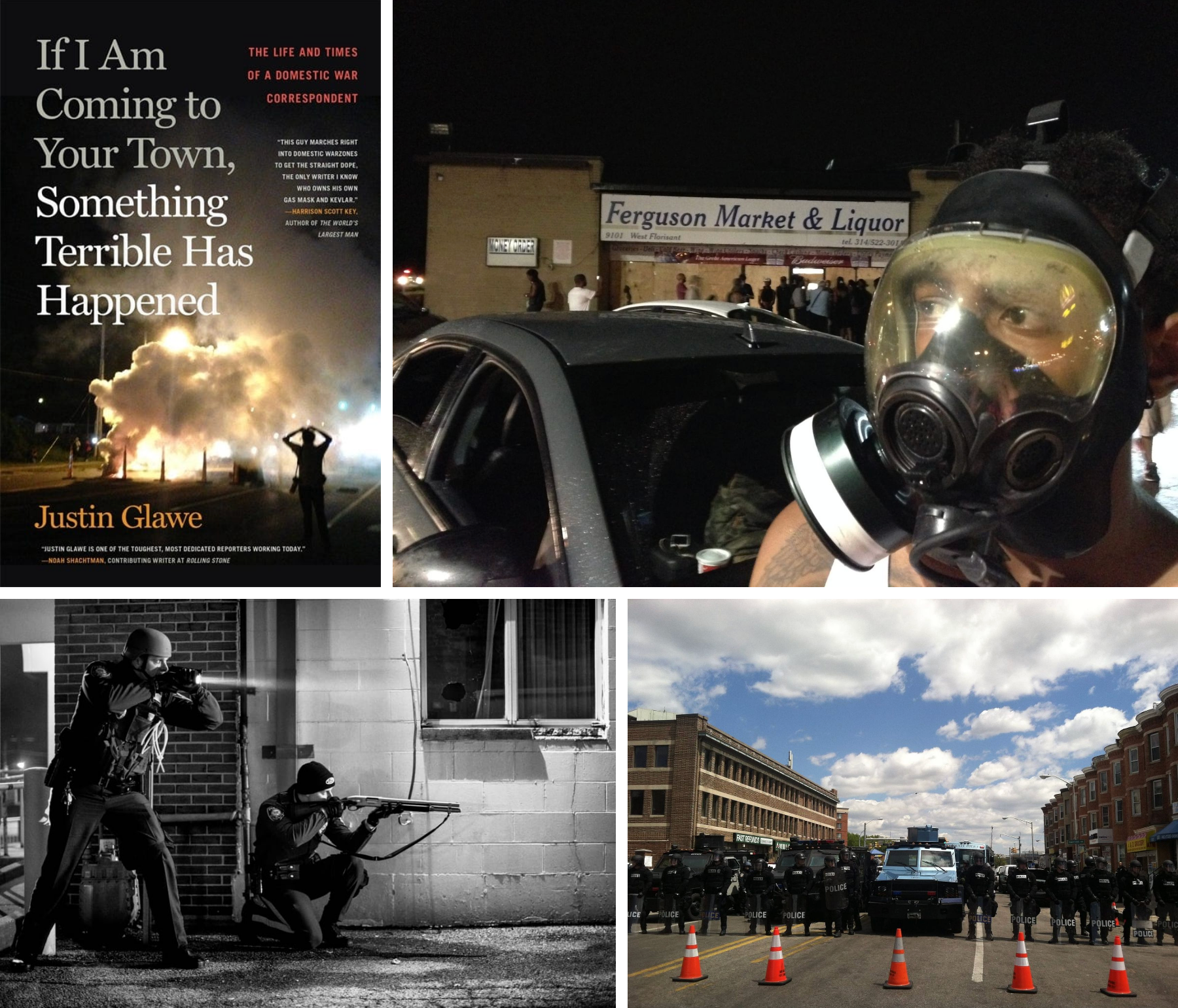
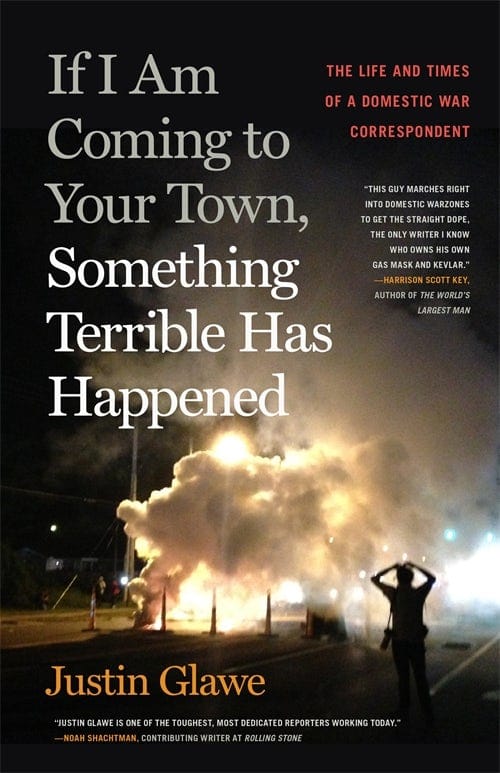
Today I'm happy to share an excerpt from the forthcoming book If I Am Coming to Your Town, Something Terrible Has Happened - The Life and Times of a Domestic War Correspondent by Justin Glawe. It's a gripping and often times heavy read about the past decade or so of unrest and police violence around the country intercut with the author's attempts to cover it all while struggling internally himself. You'll probably find yourself going "oh fuck that's right that happened" and "shit I forgot about that one" multiple times throughout. More likely saying "this country has really not been doing well man."
Glawe previously reported for Hell World from Springfield, Illinois after the release of bodycam footage showed police murdering Sonya Massey in cold blood in her own home.
 Luke O’Neil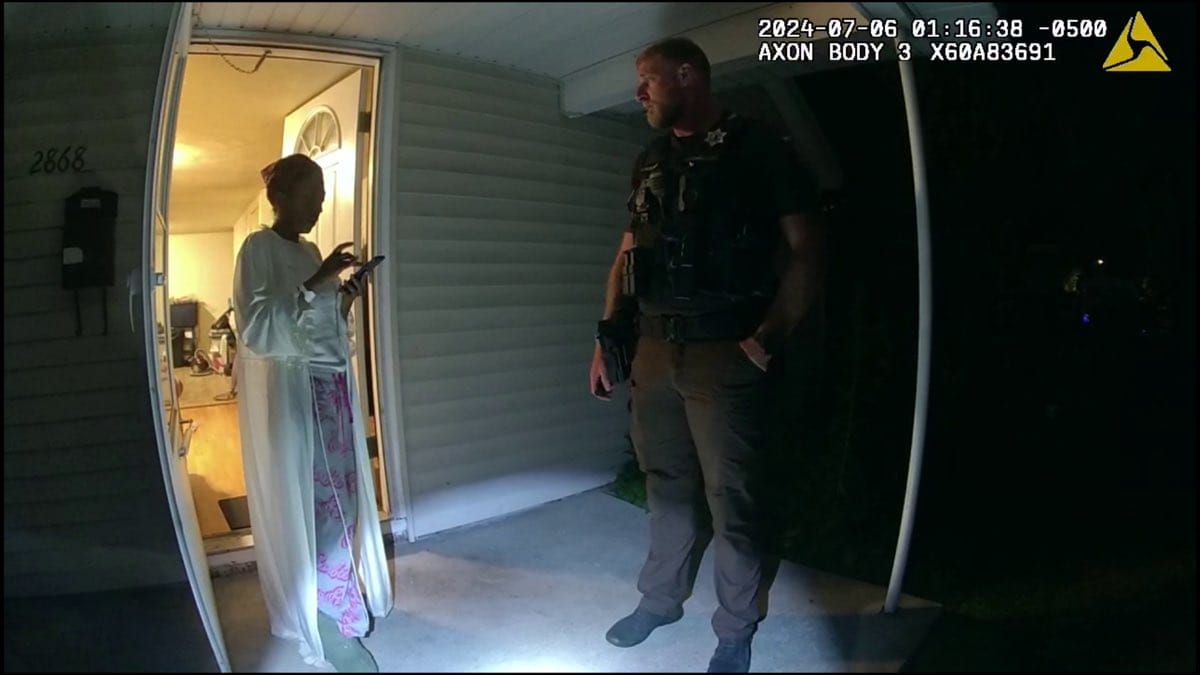
He also covered election-deniers in positions of local power around the country and a movement of Trump-worshipping election-denier conspiracy theorists in Georgia.
More from me after the excerpt. Thanks as always for being here. Chip in if you can.
Maybe you haven’t started paying attention yet, but the drumbeats can be heard if you listen. The People In Charge are gearing up to spew all sorts of insane bullshit about the mid-term elections in November, which millions of our friends and neighbors will believe. On top of all the political discord, these lies will almost surely result in bloodshed.
It’s hard to tell sometimes whether we’re actually experiencing something new or whether it’s just a repeated simulation of the bad stuff from before. That’s part of the reason why I wrote my book If I Am Coming to Your Town, Something Terrible Has Happened - The Life and Times of a Domestic War Correspondent. I needed to get it out in case there were others thinking “Haven’t we already done this shit? Didn’t we already have several variations of right-wing panics and societal upheaval like the ones we’re experiencing currently, or did I just make that up?”
What you’ll read below are some of those past events, which I covered on the ground as a reporter based in Chicago, then Texas, and now Georgia. The title of this chapter from my forthcoming book is called Sustained Chaos and Collective Trauma, and it’s about a few months during the turbulent period of 2014-2016. There’ll be some stuff in here that you remember and some things you don’t. These years seem chaotic as I look back on them, just as these days seem chaotic in the present. Maybe it’s time to start measuring our chaos in decades then.
If I Am Coming to Your Town, Something Terrible Has Happened - The Life and Times of a Domestic War Correspondent will be published by the University of Georgia Press in June. You can pre-order a copy here (and get 30% off with the discount code 08TERRIBLE).
by Justin Glawe
Sustained Chaos and Collective Trauma
How to be on the road: It costs approximately $1,000 per man per week to sustain life on the road. And this is not a fancy life. We're talking a diet that consists primarily of gas station chicken and lukewarm Diet Cokes, plus beer and whiskey if you're still in your drinking days, cigarettes, Subway (for health) and rooms at a Drury Inn.
BALTIMORE — The pilot said something about “and in case you weren’t aware,” something is happening in Baltimore so “be safe out there.” Keeping people calm doesn’t jibe with what the pilot would have said if he were speaking the truth: “Alright, folks, we’re making our final descent into Baltimore where the temperature is 62 degrees on a pretty clear night. You might have seen on the news that Baltimore is the latest scene of what increasingly looks like a national uprising against police brutality and questionable police killings — what some might call extrajudicial murders of Black people — and as a result a good portion of certain parts of the city are expected to burn tonight as random gunfire crackles through the air. If you’re white, don’t worry though, because the National Guard will soon be coming to protect the white parts of town and the commercial districts. For you Black folks on today’s flight, your neighborhoods are going to be the site of ugly clashes between police and your fellow citizens. We here in the cockpit hope you enjoy your time in Baltimore or wherever your final destination may take you, and remember: always secure your own tear gas mask before helping the person cowering on the sidewalk next to you.”
The TSA agents hadn’t asked about the strange apparatus I carried with me when I left Chicago but did manage to hassle an Indian man who went through security behind me, double-checking his pants pockets while I waltzed through with a Yugoslavian respirator in a backpack with my computer, police scanner, press pass and a change of clothes. I would need the mask soon. When the plane landed I caught up with a soldier who had been on the flight and was carrying his rucksack through the terminal. I asked him what it felt like to be coming home to a warzone. He said it was weird, which is about all you can expect someone to think when they’ve been off in some foreign desert fighting for their country only to come home and see it on fire. That kind of thing will make you wonder who the enemy is supposed to be and why.
I got outside into the crisp spring night and lit up a Camel. Driving from Brooklyn, Bill pulled up and I got in the car and we drove toward the city. He had only been in town for a few hours but had already secured a hotel room downtown, not far from where the action was, and had been around enough to have a general sense of where to go. (To be brutally honest it really isn’t that hard to find possible inflection points of unrest in a major city. You just have to find the Black part of town because that’s where all the police are swarming to in order to either quell a riot or, as is often the case, start one themselves.) We cruised around a mostly deserted Baltimore until we came across a man sweeping up outside his convenience store. He and his family were Asian and didn’t speak much English. The neighborhood had been the scene of looting and riots the night before and he was just getting the chance to return to his store and clean up. Among the shattered glass all over the sidewalk were pennies that had scattered when the looters and thieves took the cash register. He picked them up and put them in his pocket.
The next day we went to Sandtown, the neighborhood where Freddie Gray had been put in the back of a police van and given a “rough ride.” Police said Gray had had a knife when they approached him on the street to talk. It was a seemingly harmless interaction that happens in cities across the country every day but far too often turns out deadly if the person being stopped by police is Black and in the wrong neighborhood, through no fault of their own. Gray’s neck had snapped inside the van, killing him almost instantly. But like every city that burns in the wake of a police killing, the fire had been smoldering for a while.
We found the intersection — and there is always an intersection — where police and protesters were squaring off. There was the MRAP, the war wagon I’d seen in Ferguson but with a different police department’s logo on it, painted matte black with a helmet-clad sniper poking out of the top. There were the police with batons and shields, helmets and body armor, holding shotguns loaded with rubber bullets and rockets that shoot tear gas canisters. The protesters jawed at the police who stood stone-faced as Bill and the other photographers clicked away. I walked inside an open door of a nearby building to see if I could get upstairs to have a better view of the scene. A man in the building’s stairwell said he had an office on the second floor where he ran a bail bonds business and would let me hang out there. I started to ask about Freddie Gray, who he was, how long he’d been in the neighborhood, and what, exactly, happened the day he was killed. The man couldn’t answer most of my questions but he could fill in one blank about Gray’s life: after a recent arrest, he had bailed Freddie Gray out of jail. I had been in town less than 24 hours and found a sliver of a piece to the puzzle of Gray’s death. I sat on the window sill in the bail bonds office for the next few hours and watched a riot slowly brew, then explode.
Bill and I chased the fighting in Baltimore for hours as the battles spread across the city, ending up on an interstate while we walked with a large group of people chanting and screaming at nearby police. There, we wound up where we always inevitably did: in between the protesters and the police as we did what can only be described as one of the strangest and most exhilarating jobs in the world. By now the police had obtained a new weapon: a mace can that could shoot stinging hot liquid 20 feet through the air. They were blasting protesters with it as Bill snapped away. We had our masks on but they did no good. A cop looked right at Bill, who screamed “PRESS!” but the cop fired anyway, soaking Bill in an orange goo that seeped around the rubber edges of his gas mask and started burning his face. He ripped the mask off and rubbed his eyes. Then, we got separated. I walked with protesters on the interstate for a while longer and then weaved back into the city and managed to find our car. Luckily it hadn’t been burned or destroyed, a reasonable possibility that would have resulted in an awkward conversation at the return lot. “Hi, yes, our 2013 Hyundai Elantra was great, thank you. Unfortunately it did not withstand the Molotov cocktails you might have seen skittering across your TV screen when you turned on the news this morning and is at an intersection I can’t really remember right now. Just look for the bare, blackened chassis of the car. You can get at least a few hundred dollars at the scrap yard for it, I’m sure.”
Molotovs weren’t the only weapon protesters had. Some had used giant water balloon slingshots to hurl rocks and chunks of curb at police. Since I’d last seen Bill getting soaked with mace by the cop, he had taken one of these projectiles in the knee, knocking his legs out from under him and tearing his ACL. I walked up as he poured more water on his face, still red hot to the touch. He got in the passenger side and I got behind the wheel, driving back to our hotel where he took a long shower and I tried to air out our clothes from the tear gas and pepper spray all over them. I had gone through the night unscathed, not a scratch on me. In Ferguson we watched the French cameraman’s face spurt a river of blood and I watched as a man screamed in pain after breaking his leg while running over a concrete wall to get away from police who kept firing tear gas at us anyway while I tried to tape a splint onto his leg. I looked through the back window of a car and had seen a man pressing hard on a bullet wound to his stomach, trying desperately to stop the bleeding and the pain. Now, Bill had a knee that required surgery and a face full of pepper spray that made him want to puke. I had been through all of this and yet had never been injured myself — physically, at least. I felt a strange sense of awe about all this carnage. I felt the weight of the importance of these events, but was struck more by a sense that this was a particularly insane set of circumstances to be in the middle of, rather than simply the latest in a never-ending flow of the chaos of history.
A few days later I flew back to Chicago and continued my investigations of unsolved murders in the city, in nearby Gary and in Ferguson. I wasn’t there for long before a man was killed by police in Cincinnati. Time to go.
CINCINNATI — Samuel DuBose wasn’t on foot when he tried to get away from a University of Cincinnati police officer in July 2015. Instead, he was in his car as the cop, Ray Tensing, ordered him to get out of the driver’s seat. With the door half open as the two struggled, DuBose put the car in gear and Tensing fired a single bullet into DuBose’s head. As the cop fell away, DuBose’s body slumped forward and the driverless car thudded into a telephone poll. Tensing then lied to his fellow officers and said his arm was caught in the car. Fearing he’d be dragged to his death, Tensing said, he fired at DuBose. The body camera video showed that Tensing’s story wasn’t true. He was charged with murder, and during the first trial, a judge said that the prosecution could not introduce a key piece of evidence: the shirt Tensing wore the night he killed DuBose had a Confederate flag on it. (Do I need to tell you that Tensing is white and DuBose was Black?) Tensing skated.
When I arrived in Cincinnati I expected to see some form of protests but found none. By then, Tensing had been indicted, tamping down the type of rage that came with the announcement in Ferguson that Darren Wilson wouldn’t be charged. There was a sense of relief both on the streets and in the media. Since the previous summer, the nation had been inundated with the gruesome details of the police killings of Eric Garner in Staten Island, Brown in Ferguson, Tamir Rice in Cleveland, Gray in Baltimore, Walter Scott, an unarmed Black man running from a police officer in South Carolina, and others. The dam buckled with protests across the country in August 2014 and continued into the new year. It burst in Ferguson and Baltimore, and every new police killing brought the prospect of widespread civil unrest. So the calm in Cincinnati after Tensing’s indictment was an oasis. But I knew it was only a mirage.
Simmering beneath every day in American life is a violence. It shows up in horrifyingly attention-grabbing ways like mass shootings and riots that make us all gasp, but it quietly carries on its carnage in ways that you have to choose to see. I had been making that choice for a while. After arriving in Cincinnati I turned on my police scanner and waited. It didn’t take long. I heard a call of a person shot at 113 Gage Street in the Mount Auburn neighborhood and headed to the scene. There, I found the brother of Donielle Kelly, a 34-year-old Black man who had just been shot to death. Kelly’s brother was distraught, charging through crime scene tape to ask the question that no one ever seems to have an answer to: why? A pair of detectives quietly carried on their work at the scene of the city’s 43rd homicide that year as other cops and Kelly’s family tried to soothe his brother. A half block away was the telephone pole where DuBose’s car harmlessly bumped to a stop as his lifeless body slumped over the steering wheel.
Back home in Chicago, summer carried on in its typical beautiful yet brutal way. Violence and death haunted poor and Black neighborhoods on the city’s south and west sides even as people there made the best of it, celebrating graduations and holding block parties. Where I lived on the north side of the city, Chicagoans lived out their summer days mostly free from worry. I went to Cubs games and ate sausages from the German grocery store in Lincoln Square. I day-drank at bars and watched people sing karaoke at night.
I also had a girlfriend but never fully committed to our relationship — I drank and worked too much. I was selfish and uncaring. She decided she had had enough when she awoke one morning to find me sitting on the kitchen floor with a needle in my left arm. An old friend who had taught me much of what I knew about being a journalist was helping me to shoot heroin. I was 30 and had done most drugs you can think of, had developed a significant daily drinking habit, and was shooting up for the first time. Why? Because fuck it, I thought. The friend who held the needle was a reporter, too. He had seen much of what I’d seen — the daily drumbeat of gun violence in places like Peoria and Chicago, the seeming senselessness of it all. When he called to say he was on his way to Chicago with a duffel bag full of drugs, I should have told him no thanks. But I figured it was time. He was one of the only people who’d ever alluded to me being a good candidate for sobriety. He told me this while he was sober, and as he hung out with me in bars watching me get my fix. Now, he was back on my side of the street, feeding an addiction that looked a few steps even more dangerous than my own.
Later that morning, as I lay in bed nursing a terrible hangover and coming down from the heroin, my girlfriend went to run errands. It was Sunday — a day to spend with family and friends, and put your head on right for the week ahead. I left her to do that alone as I recovered from a hell of my own making. It was the beginning of the end of another relationship.
It would be almost another decade before I saw my friend again. Battling a foe even more powerful than alcohol, his life has followed a pattern of relapse and ruin, recovery, redemption, repeat. I shouldn’t have enabled him that day but I wasn’t feeling right. Something was off that I couldn’t understand. I had started to feel strange sometimes, queasy or nervous and a little scared for what seemed like no reason at all. I was angry, too. I tried to drink it away but that didn’t seem to help. I went to a doctor who gave me pills that he said would calm me down. I took them for a while but they made me black out just a few drinks into the night, so I went back to just drinking. But I kept the pills with me. They were a knockout punch if I needed one.
The blackouts, the heroin, the strange feeling, the fear — they all gnawed at my conscience in little bits, telling me things like You’ve got to get this drinking under control. Or, Why did you blackout again? What is wrong with you? You’re in your 30s now. Those questions came in the morning, but the other voice in my head— the one that started to gain strength and lucidity after a few cups of coffee — would soon take over. It’s nothing, that voice would say. You’ll be fine, and besides, you have a bunch of work to do. Look over there, the voice would remind me, that story needs attention, and you should probably get to work. By the afternoon, the voice was telling me that I’d already gotten a lot done. You can probably have a few tonight if you want.
In August, a police officer was killed in the Chicago suburb of Fox Lake. That doesn’t happen very often, I thought. Let alone in some sleepy place like Fox Lake, where cops spend most of their time stopping drunk people from taking their boats out on the water. As scant details of the situation came in over the ensuing hours and days, I talked with my editor in New York. We both agreed: something seemed off here. We decided not to cover the case until later. That time came when the town held a memorial for the fallen cop, “GI Joe” Gliniewicz.
I stood behind the cameras as they focused on a small stage backed by American flags. The officers’ family, friends and law enforcement from around the area saluted him as a hero. The procession honoring him was hundreds of police vehicles long. Right-wing media had seized upon Gliniewicz’s death as the inevitable result of all this unrest over police shootings. It was clear to many that “GI Joe” had died because of animosity toward law enforcement that had been growing since Ferguson. There was no evidence of this, of course. But the unscrupulous hacks who populate American airwaves couldn’t let a dead cop go to waste.
For the year prior to Gliniewicz’s death, right-wing politicians and their allies in the media reflexively pushed back against overwhelming evidence that American law enforcement had a brutality problem, as well as rampant fascism and racism within their ranks. They tossed around phrases like “a few bad apples” in arguing that the growing national outcry over police brutality was not just off-base, but something much more nefarious. The Black Lives Matter movement and its social justice allies on the left and in the middle represented an undoing of the conservative, Christian, law-and-order-based systems that were the foundations of the nation. These were Marxist and socialist ideals that were spreading under the guise of police accountability, the thinking went. Gliniewicz’s death was a part of this anti-American insurgency. It was part of the War on Police — a phrase created by the right and seized upon by many Americans despite its complete absence in the realm of fact.
There was just one problem with tying Glineiwicz’s death to all this ginned-up madness: they were completely unrelated. GI Joe had killed himself and staged his own murder because he was about to be caught for stealing money from his own police department. There was no pair of suspects — one white, one Black, supposedly — no chase for the two men as he’d reported to his fellow officers on his radio that day, no crime he was investigating or trying to prevent, no noble cause of upholding American law and order that he was in the pursuit of defending, nothing but his own bullshit. On the day he died, Gliniewicz was covering his own ass. He had been stealing money from a police youth program to pay for gym memberships, mortgage payments and porn websites. He shot himself in the woods that August day in an attempt to distract investigators from his own crimes.
Right-wing media and politicians never corrected their mistake when it came to Gliniewicz. They never do. Instead they just moved along to other battles in the culture wars. It wasn’t hard. The spring had seen an uprising against police in Baltimore. Police actions were under scrutiny in the case of Sandra Bland, a Black woman who ended up dead in a Texas jail after a heated interaction with a cop, and other instances of questionable policing. Law enforcement practices were being criticized in Ferguson and many other places for what the Justice Department deemed unconstitutional targeting of minorities. In cities across the country, protests erupted over police killings. The images of young and diverse crowds taking to the streets not surprisingly terrified conservative Americans. First, they responded by “backing the blue.” Later, they would respond in more extreme ways.
Chicago had yet to have its own reckoning with law enforcement but it was coming. Since October 2014 word had been spreading about a police killing so shocking that even the Chicago Police Department — known for its history of torture of Black suspects during the era of police commander Jon Burge — couldn’t get away with. But first, we had to see the bodycam footage.
As a lawsuit over the shooting played out in court I focused my attention on other fatal police shootings throughout the city. Compiling a list of names of the dead, I began traveling the city to the neighborhoods in which they’d been killed. I drove all over the south and west sides visiting alleyways and parking lots and homes where the men and boys on my list had been killed. People told me they didn’t trust the police. It didn’t matter if the officers on patrol were white or Black. There was no white or Black in the Chicago Police Department as far as many Black Chicagoans felt — there was only blue.
In the fall, journalists and lawyers won their lawsuit and secured the release of the video of the shooting all of Chicago knew about but hadn’t seen. It showed 17-year-old Laquan McDonald walking down the street with a knife in his hand but far away from Officer Jason Van Dyke, who stood near his police cruiser. Before McDonald could get within 15 or 20 feet of Van Dyke, the officer opened fire. He shot McDonald 16 times, firing until his clip was empty. He kept firing even as McDonald lay on the ground. Small puffs of smoke rose up each time a new bullet hit him. Enraged, protesters took to the streets and the city waited and wondered whether it would get as bad as Ferguson or Baltimore. Meanwhile, I began combing through hundreds of pages of emails and other records that the city released after losing the lawsuit.
The records showed that police, the mayor and his staff had all seen the video almost immediately after the incident. Instead of sharing it with the public they chose to hide it. The city’s lawyers then went to the McDonald family and offered them $5 million to settle their claims against the city, if they agreed not to release the video themselves. The timeline showed that the mayor had taken part in the coverup, but for some reason everyone in Chicago had missed it — everyone but me and my editor. The story that Rahm Emanuel quashed the video exploded and I was back on TV for the first time since Ferguson, explaining to Chuck Todd why offering the family of a man killed by police a huge amount of money to not discuss the video that showed how awful that shooting was a coverup. He had asked me to defend that statement and I struggled to answer. I thought it had all been pretty obvious. Journalists often fail to say what is obvious — to simply state the truth — in favor of giving both sides their say. I did not.
To celebrate, I went to the Billy Goat Tavern and got drunk with the dusty ghosts of Chicago journalism. Hamburgers quietly sizzled on the flat top grill as baseball highlights played on TV. For a few days I had the biggest story in Chicago. I looked at the photos of Mike Royko and Studs Terkel and thought they would approve. This is one of the places I had always wanted to be, I thought. The newsroom in Peoria is where I first fell in love with journalism, where I figured I would live out my life holding power to account in my hometown. When that dream fell apart, the next closest thing — which I could barely imagine — was busting asses in Chicago. The Peoria in me told me I was too much of a loser to pull this off. The Chicago in me told me, No, go get what you want. I had willed this version of myself into existence, using the bodies I’d found along the way.
I thought that was my problem — that I was using people’s deaths, lives and stories to build my own. I thought that the fucked up nature of this job — writing about what other people have done or said, or how they have killed or died — meant that I was a terrible person. I had exploited people’s deaths for my own fortune. This certainly was a problem. In fact it’s the problem with journalism — we’re vultures. But there was something else and I was going to have to figure out what it was. If I didn’t, I’d end up like all the other beat up reporters who reached the end of the line too early, or the writers who wound up dead because of something inside they couldn’t get a hold of. Meanwhile, these moments of conscience — or perhaps consciousness — could be easily defeated. I pushed them aside and moved on to the next task, story, reporting trip, or terrible event to bury myself in. At the Billy Goat that day, I simply turned to the next drink.
I had to find what that stowaway in my bag — that thing that showed up everywhere I did — wanted. That way I could shut him up for good.
Justin Glawe is a writer and independent journalist who has covered much of the chaos, violence, and unrest of the past decade of American life. Originally from Peoria, Illinois, Glawe got his start in journalism at small newspapers in the Midwest. Since then, his work has appeared in The Guardian, Rolling Stone, The Bulwark, The New York Times, The Washington Post, Esquire, The Daily Beast, VICE, and other news publications. He lives in Savannah, Georgia, with his wife, two dogs, and many guitars that he enjoys playing with his band, the Savannah Morning Blues.
If I Am Coming to Your Town, Something Terrible Has Happened - The Life and Times of a Domestic War Correspondent is available for pre-order. (Use code 08TERRIBLE for 30% off).
Hm what was it that Josh Crowley was saying in here the other day? Something like...
Luke O’Neil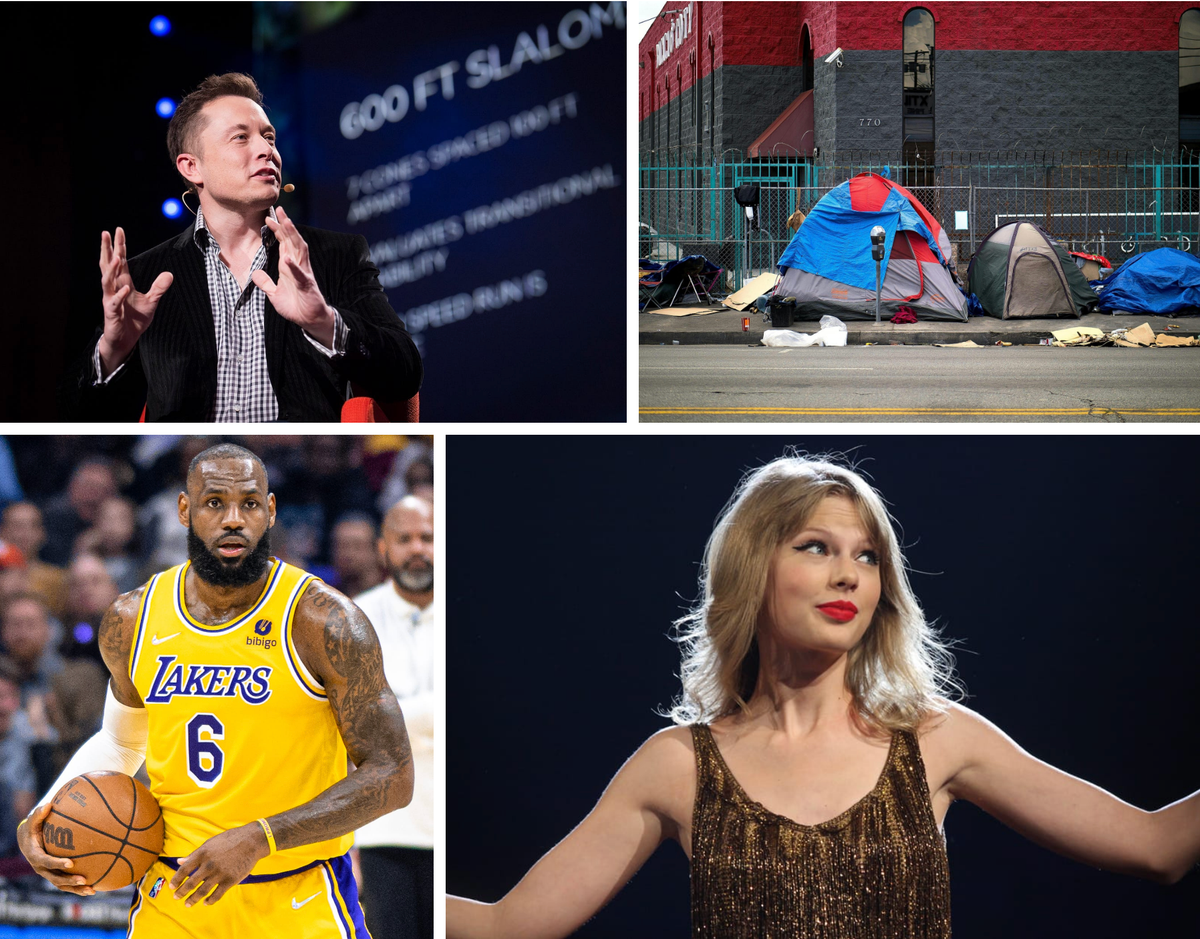
To spot this in the wild one need look no further than the rhetoric surrounding poverty and wealth. Poor people, the thinking goes, should “make better choices.” It’s all about “personal responsibility.” From the other end we often hear that we can’t tax billionaires, because that would be a form of “punishing success.” The wealthy, in this binary, deserve their prosperity because of their “good” choices and the poor deserve their suffering because of their “bad” ones. Simple as.
Thank you to the Washington Post – a real newspaper by the way – for making his point clear yet again.
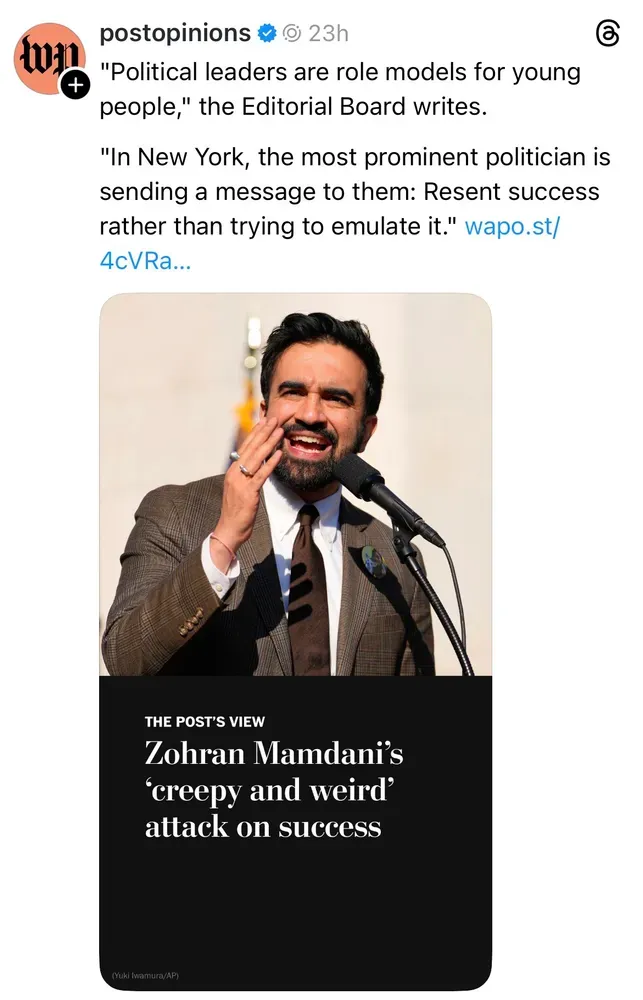
I know this is right:
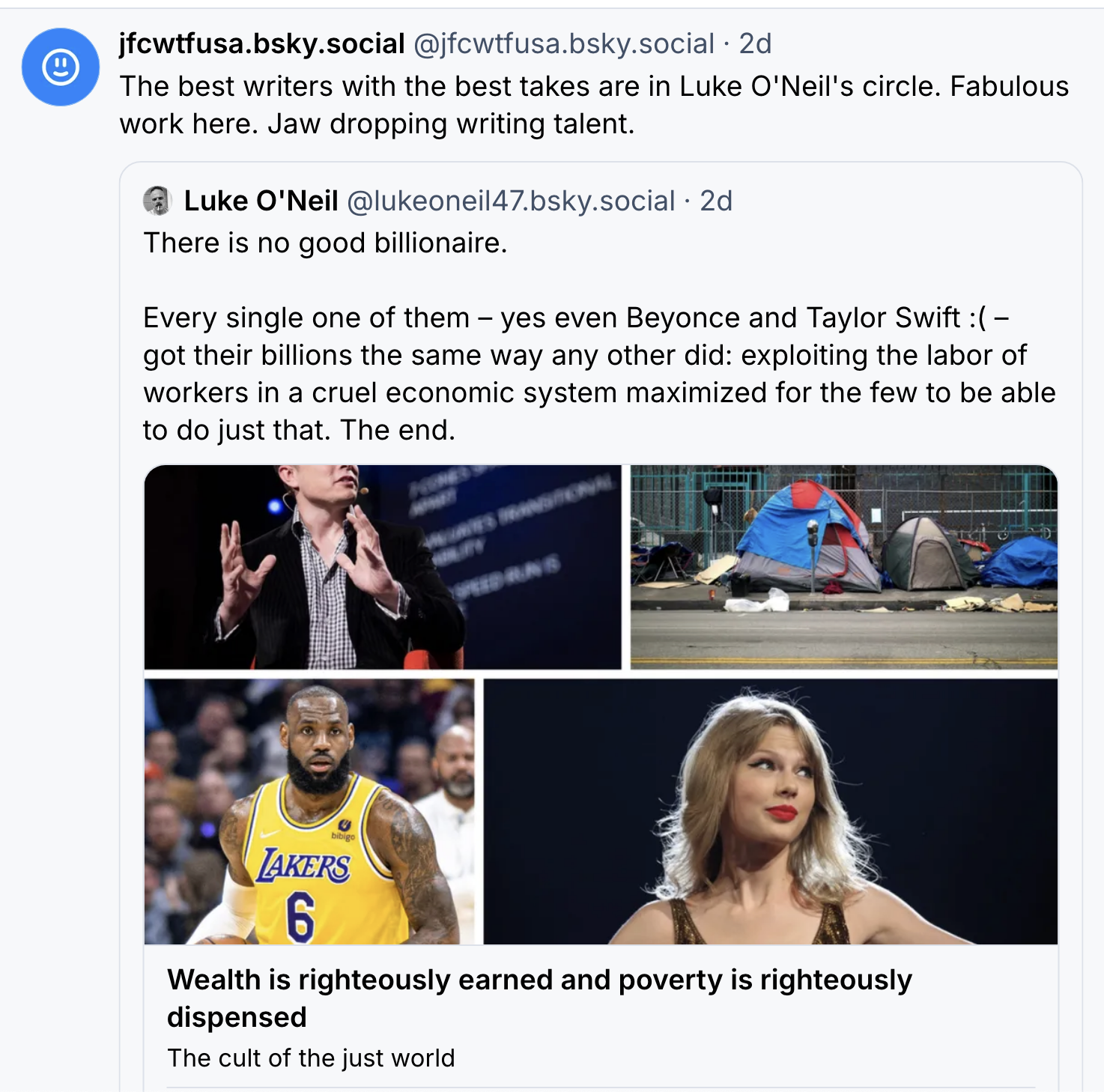
This too:
A sad ending to an already awful story:
Jaimie DingLOS ANGELES (AP) — A jury Thursday found the city of Los Angeles was not liable in the killing of a 14-year-old girl who was hit by a police officer’s stray bullet during a shootout while Christmas shopping in 2021 with her mother.
The ruling came after a nearly monthlong trial in the wrongful death lawsuit filed against the LA Police Department by the parents of Valentina Orellana-Peralta. She was at a Burlington store in the North Hollywood neighborhood on Dec. 23, 2021, when she was struck by a bullet that had gone through the dressing room wall.
The jury sided with the city 9-3 after deliberating for just over a day.
I wrote about this police killing in here back in 2021 when it happened and again in 2024 when they declined to bring charges against the cop.
Luke O’Neil Luke O’Neil
Here's what I wrote at the time:
Police were called in December of that year after reports came in of a man named Daniel Elena Lopez assaulting shoppers at a Burlington Coat Factory. The police footage of the incident is tough to watch but here it is nonetheless.
Despite other officers already being on the scene – including one with a non-lethal weapon ready to engage Elena Lopez – Jones can be seen on the footage barreling into the situation ignoring other officers yelling for him to "slow down." "Hold up, Jones, hold up – I got it," another said.
Instead Jones fired three rounds at Elena Lopez, killing him, and sending one bullet ricocheting into a dressing room where it struck and killed a 14-year-old girl named Valentina Orellana-Peralta.
She was trying on quinceanera dresses with her mother.
In the video footage you can hear the mother screaming out in anguish as her child has been shot seemingly out of nowhere.
Orellana-Peralta had come to the States from Chile earlier that year. Only six months here and killed by cops. The American Dream.
"She dreamed of becoming an American citizen and an engineer, and looked forward to seeing LeBron James play basketball in person,” as the Guardian reported. "In a press conference days after her death, her father held an unwrapped skateboard he had bought her for Christmas."
"This case was a particularly challenging one to process as this involved the loss of two lives,” Attorney General Rob Bonta said of the decision not to bring charges against Jones.
“Any loss of life is a tragedy, and my heart goes out especially to the family of Valentina Orellana Peralta, who tragically lost her life and whose only involvement in this incident was by being at the wrong place at the wrong time."
Ah yes the wrong place at the wrong time. In the vicinity of a cop with his gun drawn.
"DOJ conducted a thorough investigation into this incident and concluded that the evidence does not show, beyond a reasonable doubt, that the officer involved acted without the intent to defend himself and others from what he reasonably believed to be imminent death or serious bodily injury. Therefore, there is insufficient evidence to support a criminal prosecution of the officer," the report concluded.
The DOJ has recommended that the LAPD "improve their lines of communications" to prevent something like this from happening again and that's that.
There is almost nothing that they can do to us that will ever get them in trouble.
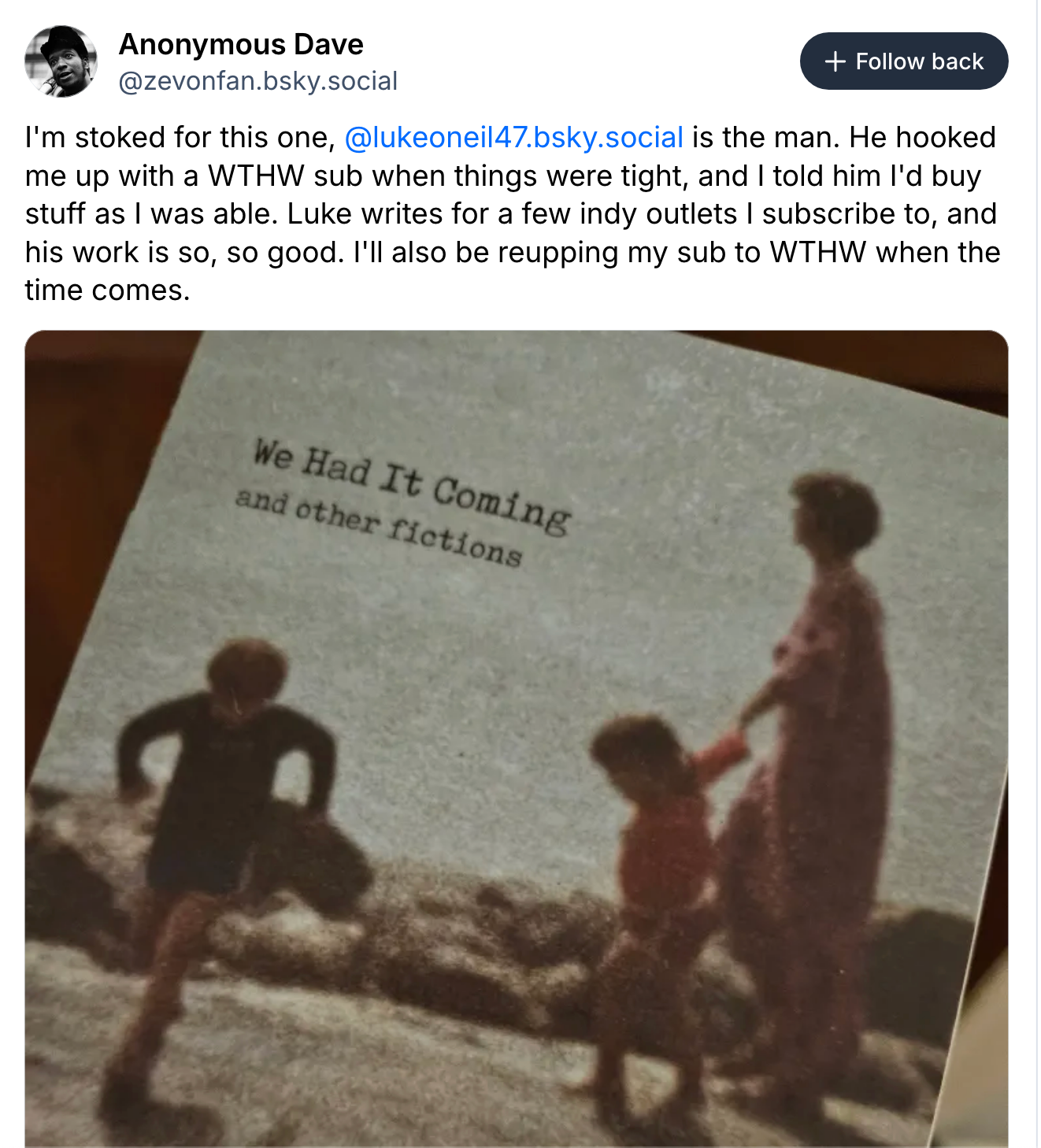
This is very funny. Please enjoy. And remember it's FUCK AI
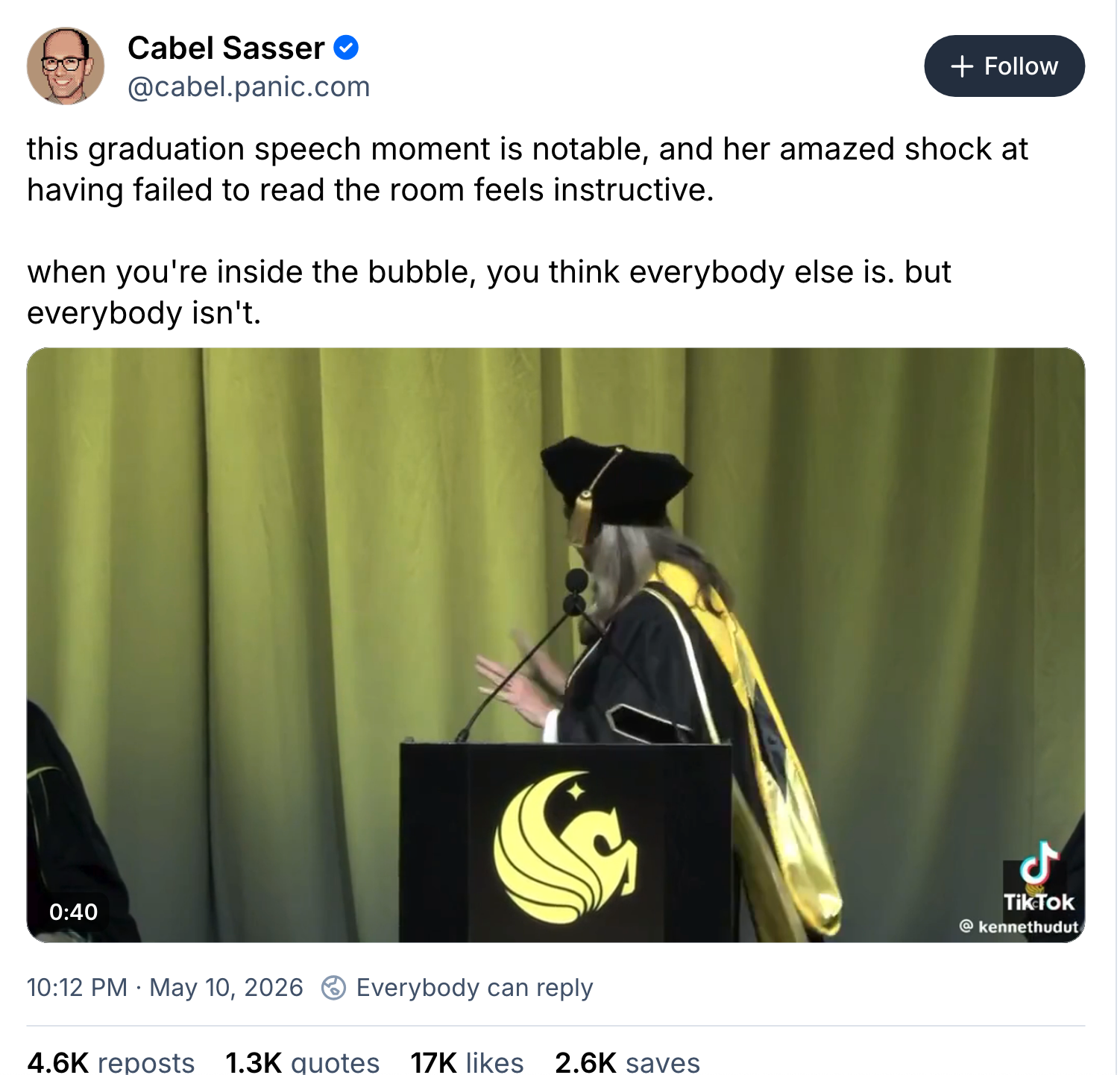
Check this one out from the other day if you missed it.
Luke O’Neil
This shit goes really fucking hard.