All my teenage feelings
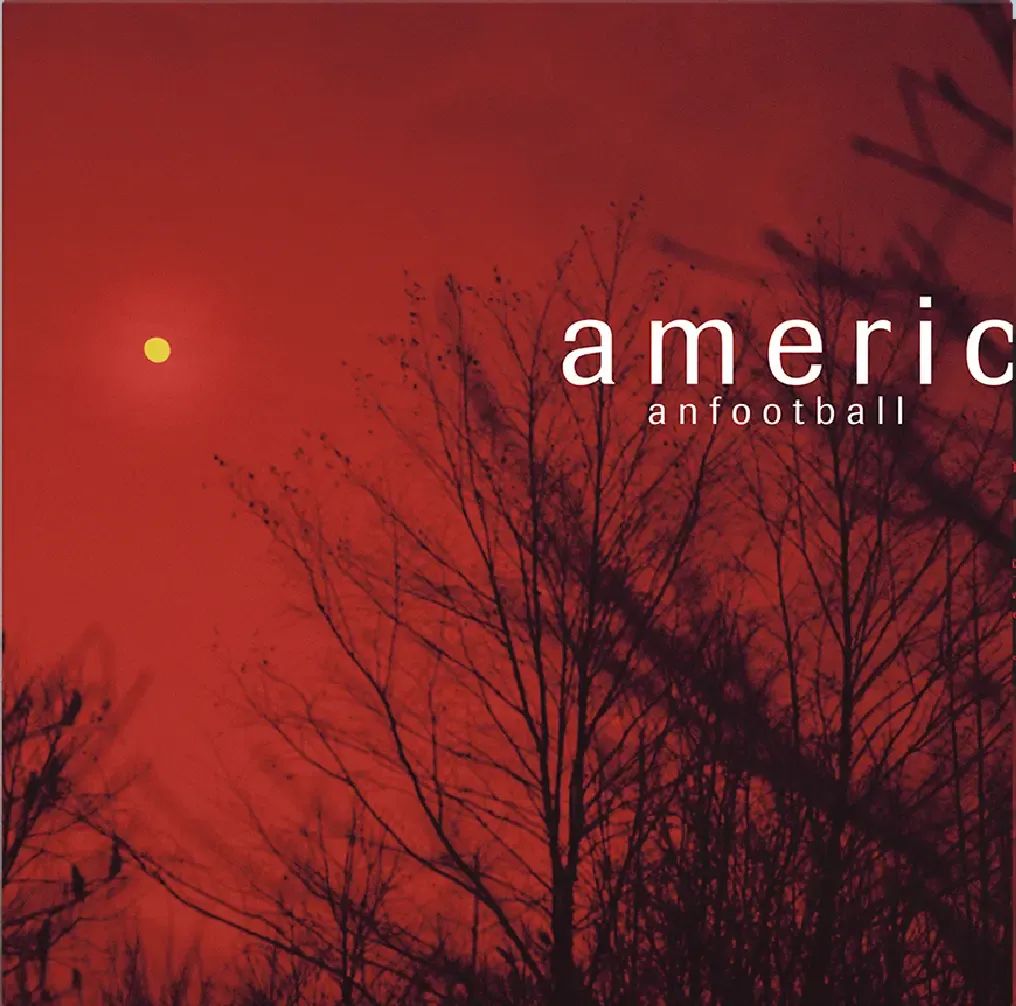
On American Football's LP4
Today's feature is about the career of and the new album by everyone's favorite emo legends American Football.
"The eventual return didn’t feel anything like those other bands or artists running through the greatest hits of teenage millennial music past because the American Football of the past was a band that barely existed in the first place," Kevin Koczwara writes. "The most beloved act that no one ever saw. Instead, this was the mysterious lore of a lost band, a perfect record, and a warm glowing light from a window in a nondescript home in Illinois."
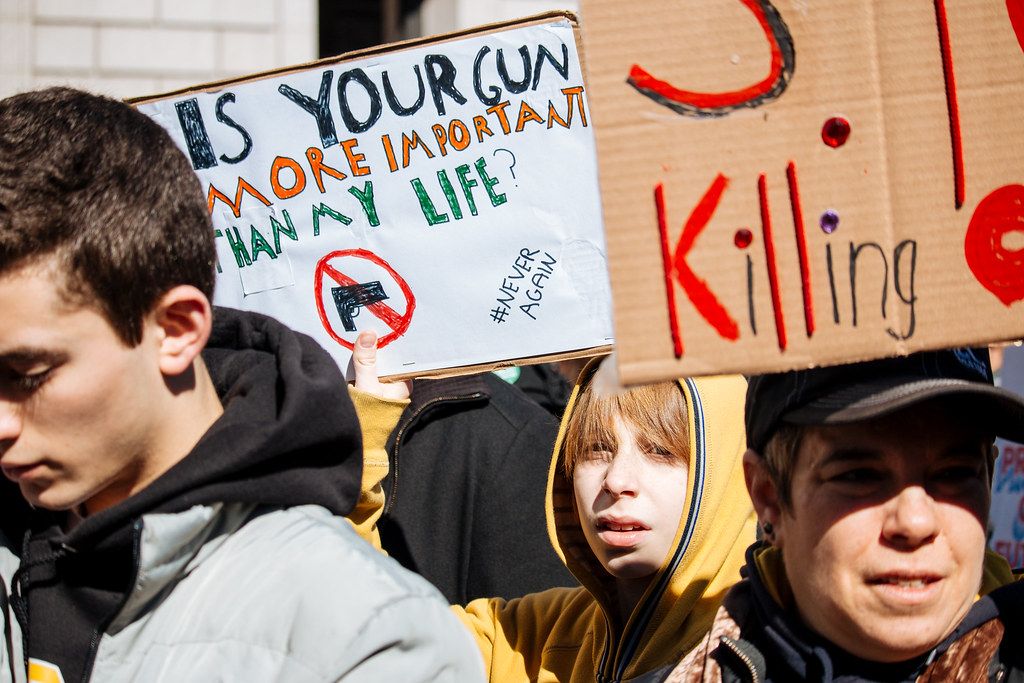
Koczwara previously wrote for Hell World about the fears of being a parent raising children in the age of school shootings.

"Who can go to a mall or a concert or any place really without second guessing the decision? Who would bring a child into this world? Who would bring something so precious as a child into a place filled with hate and violence? My wife and I have. Two little kids — seven and four years old now — who weren’t alive for Sandy Hook or Columbine or Texas Tech or any of the hundreds of other mass shootings before they were born. But they’ve been around for enough mass murders that it feels like they’re possibly numb to it already."
He also wrote about his favorite Jason Molina songs.


All my teenage feelings and the meanings
by Kevin Koczwara
When we’re young time moves at a glacial pace. Every moment seems like it matters. Waiting to get your license or your first kiss takes forever. As we age the space between moments blurs and all of that accumulated life appears as if it happened yesterday. A song from twenty years ago still feels fresh, as if it’s playing in your friend’s car, that one blown-out speaker rattling a little with each bass thump. And why not? It only just happened.
What we constitute as new or old shifts too. How do we measure the years between a proposal, marriage and children? It no longer makes any sense. Each passing year feels like a minute. A month is a snap of your fingers and a day is the blink of an eye. Our lives stretch out, counting down toward the inevitable. The journey lengthens and contracts with no escape.
For American Football time created the perfect circumstances for a band that never intended to do much of anything to become itself. Three young friends wrote nine songs. Recorded them in a garage. Their other friends decided to release them on a record before they graduated from the University of Illinois at Urbana-Champaign. No one would hear from them again they thought. The band had played a few shows before and no one showed up. At first there weren’t even lyrics to go with the noodling guitars and oddly-timed drums.
When Polyvinyl Records, still in its infancy, released the self-titled album in September of 1999, the same month Fight Club premiered at the Venice Film Festival, there was no tour. No album roll out. Copies went out to college radio stations and it found a bit of airplay, but by and large no one yet knew the importance of what they were hearing. Pitchfork was still in its infancy and blog band culture didn’t exist. There were zines and scenes, but a band that broke every rule and bucked against the scene they grew up in themselves — the midwest emo world that singer and guitarist Mike Kinsella helped forge with his brother Tim as teenagers playing in Cap’n Jazz —was supposed to disappear.
“We thought we were doing the opposite [of making an emo record],” guitarist Steve Holmes told GQ earlier this year. What Holmes, Kinsella and drummer Steve Lamos could not have predicted — no one could have seen — was how an extremely, perhaps overly, earnest record made for a few thousand dollars by a few college friends would become a cultural touchstone for an entire generation. How this anti-emo record would become the benchmark by which so many others would be measured. How songs like “Never Meant” or “Honestly” would transcend and then define the genre.
“You've re-written history,” Kinsella sang on the latter. “These things change. Despite the complicated beginning to all of this.”
American Football would vanish and somehow become more powerful because of it. And because a reunion always seemed impossible, despite the cash grab possibilities, the band’s lore grew until the restraint couldn't hold anymore.
None of it happened quickly though. It took years of the now self-mythologized American Football LP1 to wind its way across the internet, from one streaming apparatus to the next, from one message board and mix CD to someone else’s headphones. But those years and that underground success made the record feel all the more special because of the slowness. Those not yet enlightened still had time to catch up. So many people eventually did.
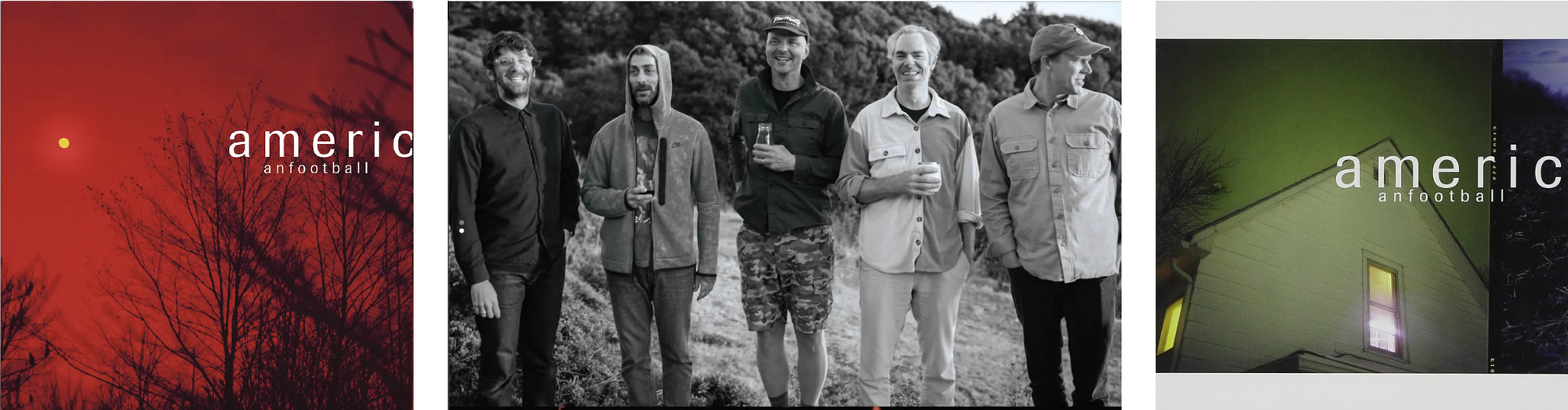
And now, 27 years after Polyvinyl Records released LP1, American Football has returned with its most American Football album to date, LP4. The newest addition to a growing catalogue of records that stand out because each one expands on the sound that this band, (which grew to four permanent members with the addition of Mike’s cousin Nate Kinsella) created. There’s the interplaying guitars of Kinsella and Holmes, Lamos’ jazz-like drumming (and trumpet playing), and now Nate’s luscious bass lines that fill the space between the rest of the notes, connecting all the parts. With each record something new stands out as they grow into being a proper band. You can hear it as they begin to trust each other’s instincts again, like they did the first time around, and explore the deepest avenues of their shared and individual experiences of accumulated time.
Or, as a friend put it recently, “what band uses a xylophone more effectively?”
On LP4, Lamos’s offbeat syncopation on the very first track, “Man Overboard”, creates a sense that anything could happen on the record. That no note or movement will be perfunctory or taken for granted. And Kinsella holds nothing back when he begins: “I made my bed. And I lied in it.”
While LP1 gave us a cultural blueprint for the longing of turn-of-the-century young men, the sound of American Football the band has followed the paths of its aging members. The compositions have evolved, maturing, while Kinsella bears more and more of his soul lyrically each time out, outlining the middle-aged troubles of child-rearing, growing old, divorce and the inevitable.
“I'm scared, and I don’t want to grow up“ he sings on “Bad Moons.” “I only feel alive at night, so during the day I cover my eyes.”
What’s more astonishing is that in any other version of time, this fourth record wouldn’t have come out at all. There was never any intention for an American Football reunion. “It was just a marker in time — this is a band that existed, and they’re not going to exist anymore,” Holmes told GQ about the first record. The band was disconnected for years while LP1 created its legacy for them.
During that initial absence, interest in the band came to a crescendo. Fans clamored to hear these songs that had grown into a part of so many of their lives finally played live. At the time the nostalgia bandwagon was up and rolling with festivals and single album tours, but somehow American Football avoided all of that. The eventual return didn’t feel anything like those other bands or artists running through the greatest hits of teenage millennial music past because the American Football of the past was a band that barely existed in the first place. The most beloved act that no one ever saw. Instead, this was the mysterious lore of a lost band, a perfect record, and a warm glowing light from a window in a nondescript home in Illinois.
But reconnect they did. Tours across the globe followed. Crying fans. Then, magically, American Football recorded and released a second album, LP2, after a seventeen year gap. Four years later LP3 arrived. Then another break up and seven years for LP4, which just dropped last week.
With the quartet there hasn’t been a rush to release new material, no push to jump into the current climate of putting as much content out as possible to stay relevant. Instead a slow burn has paid off because the American Football sound has settled into itself, finally able to capture how time has changed them from the kids who wrote the seminal emo song “Never Meant” to the perfect “sad dad music” record, which is a term my daughter coined while I listened to LP3 on repeat when it came out.
My daughter has a strange relationship with American Football. She was born in 2016, the year of LP2, and she spent much of 2019 listening to LP3 on repeat with me because I was assigned a profile of Kinsella by The Believer. In preparation I played the record on our stereo in the living room while her mother worked and I took care of our two small children.
At the time I saw my own life as something of a mirror to Kinsella’s. We were both stay-at-home dads who ventured off occasionally to work on something that we struggled to explain to other parents. He was the musician playing solo shows as Owen to modest crowds and at festivals in American Football. I was the barely employed writer of semi-read stories for magazines and websites, and collector of rejection emails from editors.
That was the hope for the story anyways. Two dads trying to keep it all together while also trying not to lose our other identity.
Eventually I found myself seated across from Kinsella in the summer of 2019. We’d both driven to Cambridge from Brooklyn. He’d played an Owen show down the street from where I attended a wedding. We agreed to meet to talk for the profile at a restaurant across the street from the Middle East, where he was playing upstairs. I thought a drink might do us good. It did not.
Something felt off the moment we met. Kinsella was standoffish, and his pat answer to most of my questions was “Why do you want to talk to me?” The self-loathing wasn’t a ploy. He was genuinely ashamed of something and I couldn’t figure it out. We danced around some inevitable terrible truth.
The show didn’t go much better. Kinsella forgot words to songs and struggled to make it through a disjointed and uninspired set.
What I should have known was that Kinsella was in the midst of his own personal crisis. I wanted to talk to him about being a stay-at-home dad when his life had been upended and he and his wife of fifteen years were struggling and would eventually get a divorce.
Sad dad music indeed.
In high school I highlighted John Berryman’s poem “He Resigns” in an anthology titled “Eight American Poets” which I had gotten as a present. It’s a short poem that flows with extraordinary grace, as so many of Berryman’s do, and, because of that quality, its darkness reaches into your guts. Three short verses of four lines that rhyme:
Age, and the deaths, and the ghost.
Her having gone away
in spirit from me. Hosts
of regrets come & find me empty.
I don’t feel this will change.
I don’t want any thing
or person, familiar or strange.
I don’t think I will sing
any more just now;
ever. I must start
to sit with a blind brow
above an empty heart.
At the time I was a brooding and moody teenager. College on the horizon and a sense of not belonging anywhere followed me. I struggled to make sense of my place. Berryman’s poem made an impression on me as someone who thought nothing would change, that whatever I was going through I would need to endure, that the confusion would live “above an empty heart.”
But I came back to the poem the other day by accident after listening to LP4 because the record had me searching for an answer to Kinsella’s crooning on the album’s last song, “No Soul to Save.” The way he sings "desire” in the first verse reminded me of being young again and hearing American Football for the first time, which would have been around the same time I would have read Berryman.
“Ladies and gentlemen,” Kinsella sings. “You've watched me walk through fire. Swallow swords and ugly desires. I've nothing left to fear. Now, for my next trick, you can watch me disappear.”
I grabbed the book off the shelf for the first time in years, and it opened to the page, a photo from my 18th birthday as a bookmark. Time may have moved on and life may have changed, but the insecurities of a teenager never leave us. While it may seem that we have life figured out — the job, the wife, the kids, (maybe) the home — we’re all still reaching for something in the dark and hoping the answers will come.
Kevin Koczwara is a writer in beautiful Worcester, Massachusetts.