This pain has to become foreign and unknowable
In memory of Juniper Blessing
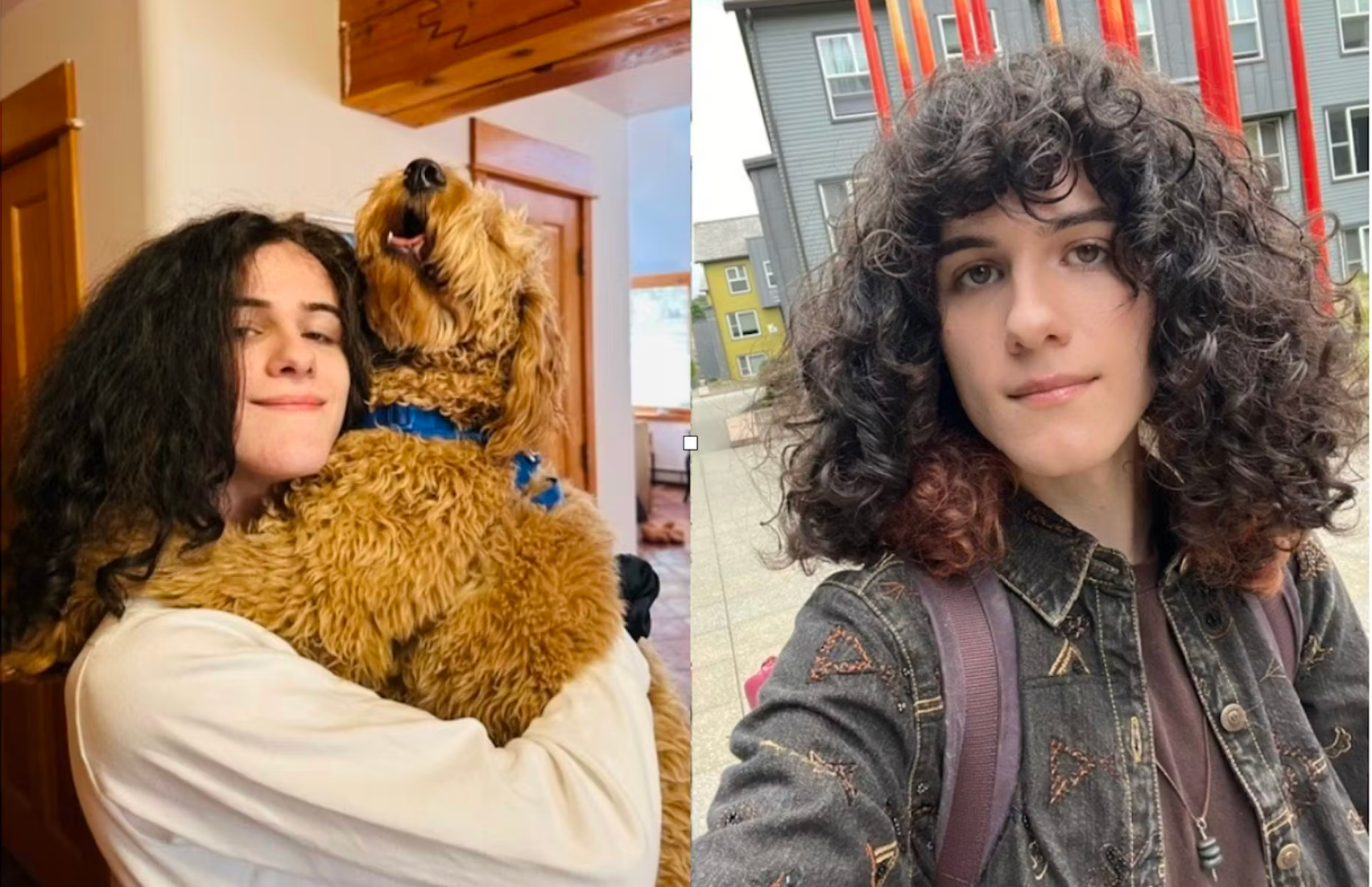
Victoria Scott joins us today to write about Juniper Blessing, a University of Washington student who was murdered last week, and worries about the loss of the better future for young trans people she always hoped was coming.
Please join me in donating to the Lambert House, an LGBTQ home for youth in Seattle, in Juniper's memory.
by Victoria Scott
TW: This article deals with a violent murder of a trans girl.
When I was a kid I always found it kind of strange the way my grandparents used every last thing in their home until it was fully exhausted. This despite being retired homeowners with comfortable enough pensions to live on. My grandfather would construct elaborate high-tension pylons and trestles and gas stations for my model railroad out of popsicle sticks and cardboard boxes and discarded scraps of wood he’d dumpster-dive for. My grandmother’s kitchen cabinets constantly overflowed with disintegrating reused grocery bags and stacks of old bins from takeout places. The woman could wring more life out of a single tissue than anyone I’ve ever met in my life, folding it into new dimensions every time it was needed. When I’d question these things, my mom explained that my grandparents’ generation was just like that.
It took until I was a bit older to realize that these peculiarities were probably heavily influenced by the experience of being the children of first generation Greek immigrants in the midst of the Great Depression. They were born right on the heels of Black Monday and their parents barely spoke any English. Over time as I’ve put these memories together alongside seemingly unrelated stories from my grandfather—about how he used to see a man down the street to pull out his rotted teeth with pliers, or how the neighborhood he grew up in is still mostly empty lots nowadays, his childhood home bulldozed during the Robert Moses-inspired era of impoverished neighborhood evisceration—my image of my grandparents’ youth has become much darker. Their habits stemmed from a traumatic upbringing with harsher material realities and more scarcity than I could imagine as a kid, or even can imagine now really.
As I got older I dreamed of the ways that the world would change and make my own behavior inexplicable as I aged, much in the same way that the instantaneous ease and plenty of modern America made my grandparents’ precious treatment of everyday resources feel out of place when I was a child. Perhaps it would be my stubborn fondness for old combustion engine cars, or endless references to long lost Dril tweets well after anyone alive really remembered an era of shitposting.
After coming out during the height of the pandemic, and then diving headlong into existence in America as a trans woman, this daydreaming took on a different tenor. I began to fantasize about the ways my behavior would feel antiquated to trans kids of the future, kids I was ostensibly helping build a future for by being out and trying to exist and live in the world openly and proudly. I thought about the myriad habits I had picked up in just a few short years, habits that I knew I’d carry well past my need of them, because they were forged under the pressure of close calls and adrenaline rushes.
My palpable anxiety when driving through rural places for example. The way I learned to walk down the street, swinging my neck around to check the back window of every all-black Ram truck that drove past to make sure it didn’t have fascist shit on display. How I sat with my back to the wall in bars, lest I upset anyone by being there, so I’d see them coming from as far away as possible. My adoption of color correctors as armor, mindful that every second I was visible in public with a five o’clock shadow was an unnecessary vulnerability.
So too my dogged defense of Seattle, a city that institutionally did not love me back, but nevertheless a rare island of safety in a country that was more overtly and viciously hostile.
I thought about how the kids of the future would find me strange for all of my hyperaware survival instincts that had been rendered moot by living in a kinder world. I thought about living in a future where the average kid came out in, like, middle school and their teachers called them their new name the next day with a little fanfare before class and everyone politely clapped and then they went to lunch later and their friends were like hey cool name, did you see the big game last night? The game was probably Overwatch or something. To these kids of the future, the old trans lady whose purse was full of tourniquets and who ran her eyes up and down the silhouette of every guy with an American flag on his t-shirt looking for the bulge of a gun or a menacing tattoo on his forearm, like she was Jason Bourne walking into a diner, would probably seem really alien and strange.
I imagined these kids would probably tolerate my strange behaviors as idiosyncrasies of another era, same as I did with my grandparents. They’d say to each other, oh, she’s from a time when things were a lot scarier and trans people were a lot more unusual, so her generation picked up some weird habits. When these kids got older and went to college and studied our era and the circumstances of the America we came out in, I figure they’d put the pieces together. They’d feel bad we had to go through it in the same way I did about my grandparents and the Great Depression—a bit abstractly, without a real reference point, but with a realization that we were formed in a crucible. They would be thankful they never experienced it. And then they would go about their lives in the modern world again.
All I could think as I heard her friends and professors eulogizing her the other day was that Juniper Blessing was supposed to be one of those kids. She was born in 2007, I think. Her internet friends mostly came from Roblox and, like, Discord, from the sounds of their speeches at her vigil. She was a choral singer who was talented enough to be a soloist in the University of Washington Chorale while she studied atmospheric science. There are videos of Juniper performing as a high schooler, where she sang in front of crowds of people who clapped for her as the wildly talented singer she was, not as A Transgender Singer (How Brave). She seemed recognized by her professors and peers at UW for being hard working and clever. Her parents have spoken lovingly about how close they were with their daughter, who they seemed to support. She loved Pokemon. She chose her name for Professor Juniper from Pokemon Black and White.
She was an exceptional person according to essentially everyone that ever met her, but she was also a normal kid, in the sense that she was living a life she wanted to and not one where she was artificially hemmed in and trapped by being transgender. Until she was brutally, horrifically murdered by a stranger. Then in death I saw as she was misgendered by the press, many of whom previously had credulously reported lies that made her childhood and her short life sound much more fraught than it needed to be. I read the already familiar arguments that this was simply an isolated incident, something that Just Happens, rather than a set of circumstances intentionally fomented by the worst people on this fucking planet. Cause and effect are just theories, after all.
Then I flipped to the next page of the news and read that Texas had forced its largest children’s hospital to start a taxpayer-funded conversion camp for trans kids. Then I flipped to the next page of the news after that and read that the feds are apparently subpoenaing one of the biggest providers of youth trans care in New York City, one of the last safe havens for trans people, to get a list of trans kids’ names. Presumably to charge their doctors with crimes. I kept flipping through pages of the news and it never stopped – it never stops – just one attack after another, day in and day out, on children.
These horrible fucking people building the world that kills trans children have institutional power, mass media reach, and more money than God. And yet they seem to be determined to ensure that the trans people of the future are just as scared as the ones of today. Juniper’s tragic loss is a mission accomplished moment for their project, and they know it.
While these horrible fucking people run victory laps, my community is rightly shattered by the death of a wonderful girl. I just cannot accept a future where all the trans kids of today and tomorrow have to live like this, walking on eggshells, uncertain if the next morning will be even more hostile. I never want to walk past another Pokemon-covered memorial for a murdered child from my community.
When I went to Juniper’s vigil, I did so with the goal that I might learn about her life and celebrate it, instead of just knowing her through headlines. What I learned is that she was too wonderful, truly, to fully grasp the scale of our collective loss. She should be studying hurricanes and watching Hadestown right now. Burying her at nineteen is a crime beyond words. We are so much poorer as a community with her death.
We can’t keep doing this. We can’t let this keep happening to trans kids. This pain has to become foreign and unknowable to future generations or we will have failed Juniper and everyone like her. I don't know how we build that future but we must.
Victoria Scott is an author, photographer, and host of Tran Girlismo. She lives in the heart of Seattle with her wife and their cat Burt.
Support this newsletter with a free or paid subscription if you can. Thanks for being here.
Check out my latest piece for Flaming Hydra.
 Luke O’Neil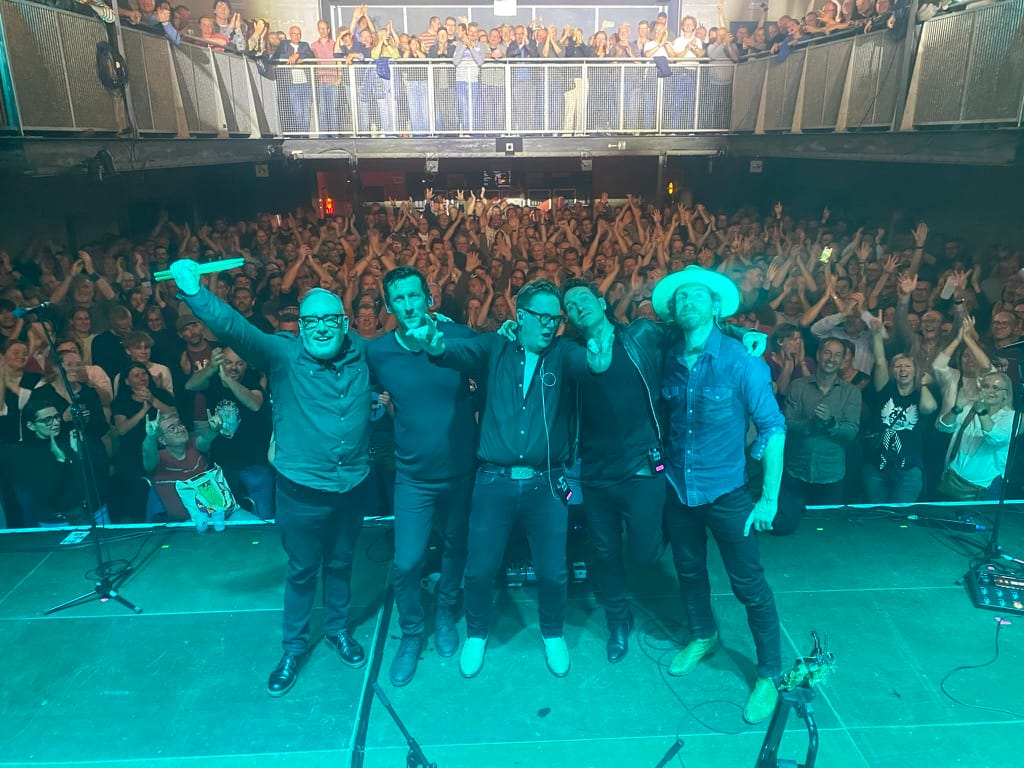
I think it’s fair to say that The Sheila Divine is my favorite band of all time. Now hold on a second Luke, those of you who follow me online might be thinking, don’t you never shut the fuck up about Weezer? And for people who know me a little better, what about The Smiths or R.E.M., or Deftones, or maybe Elliott Smith or Jason Molina, or any number of ’90s emo bands? Yes that is true those are also my favorite bands, but The Sheila Divine is, nevertheless, my favorite band of all time. Favorite indie band certainly. Favorite Boston band hands down. (Although now that the weather has finally turned I cannot recommend putting on the Modern Lovers enough if you haven’t in a while).
This has been true since I first heard the Buffalo-by-way-of-Boston band’s 1999 debut New Parade, a perfect 10/10—maybe not better than the The Blue Album, the system by which I judge most things, but in the vicinity—and one I have yet to grow sick of all these years later after hundreds of listens and, I don’t know, roughly 100 concerts (including another one coming up this Friday at Brighton Music Hall in Allston, MA).
Some recent Hell Worlds you may also appreciate.
 Luke O’Neil
Receiving gender-affirming care was like pulling teeth. My doctors grew visibly chagrined at my mother pointing out various flaws with my too-feminine yet too-masculine body, and her discussing with them how if I received the treatment I needed, I would never have a “normal” body again. We tried hormonal treatments for the first time when I tested for abnormally low estrogen, much to my frustration. To my mother’s disappointment, my identity did not change.
When she took me to a “shaman” – a white man named Steve, who rented a portion of an office building for his “healing services” – to connect me with my “feminine side,” I realized that what I was experiencing was some kind of fucked up, faux-kindly attempt at conversion therapy without my mom being branded as a parent who took their child to conversion therapy. I was assured that if Steve’s attempts to make me whole again did not work, my mother would finally meet me with acceptance.
During those services I sat in silence for hours while Steve prayed over me. I was told to clear my mind and focus on my inner “feminine energy.”
Instead I seethed. All the while taking occasional peeks to make sure he wasn’t doing anything fucking weird. It was all pretty fucking weird!
Luke O’Neil
This is an industry now. There are jobs, salaries, speaker bureaus, and career tracks. The right is always looking for new faces to put on this movement — young, photogenic people who can be positioned as victims of trans overreach. The detransitioner who regrets her surgery. The swimmer who tied with a trans woman. The Christian student whose essay got a bad grade.
Samantha Fulnecky fits the profile. She’s a college student. She’s Christian. She wrote about her faith and got a bad grade from a trans instructor. It doesn’t matter that the essay was genuinely bad, that two instructors agreed on the assessment, that the feedback was professional and patient, or that the grading rubric supports the decision. The narrative writes itself: trans professor fails Christian student for quoting Bible.