The Bizarre History of the Service Monkey
An excerpt from Ape Sh*t: The Zine for Primates
by Carrie McLaren
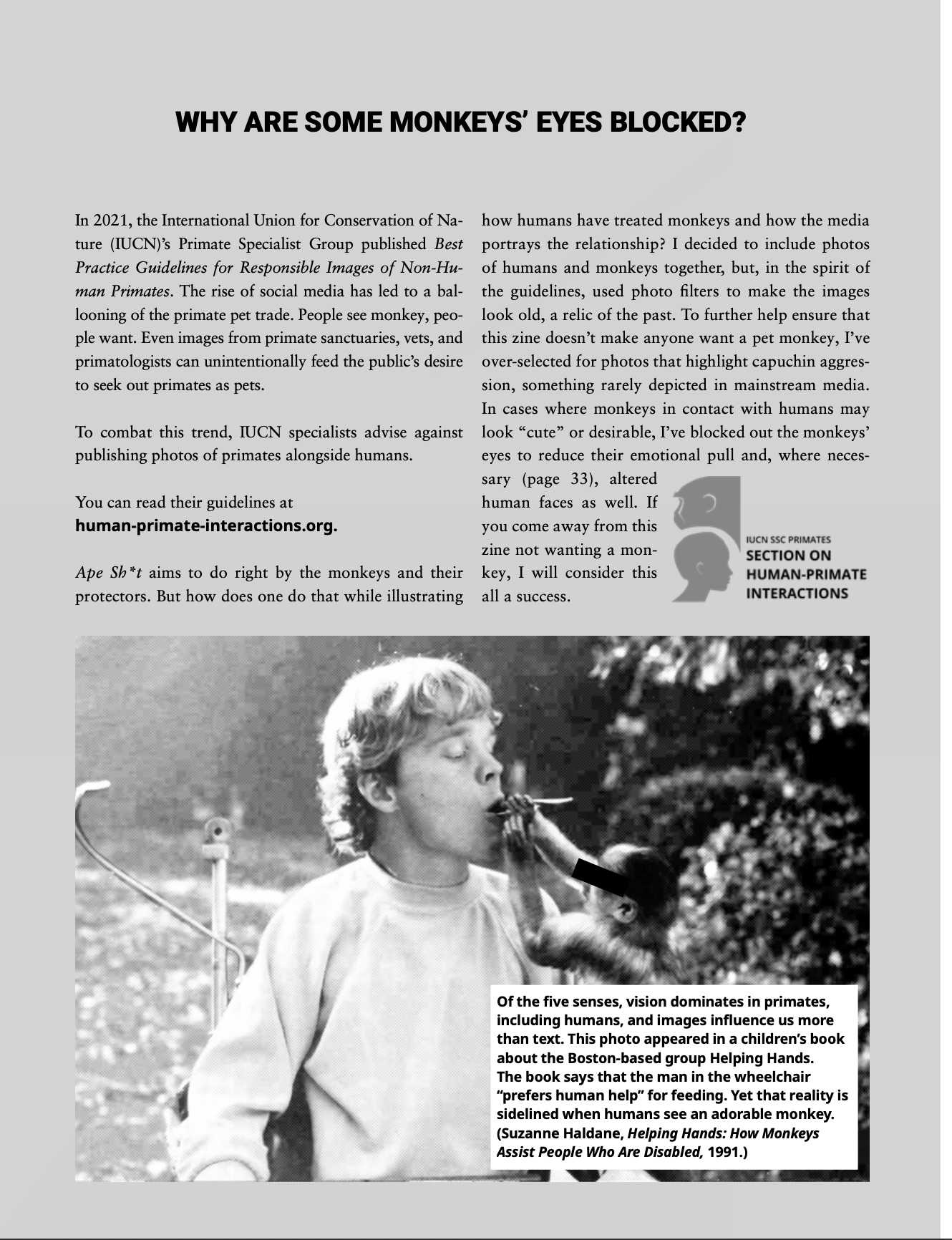
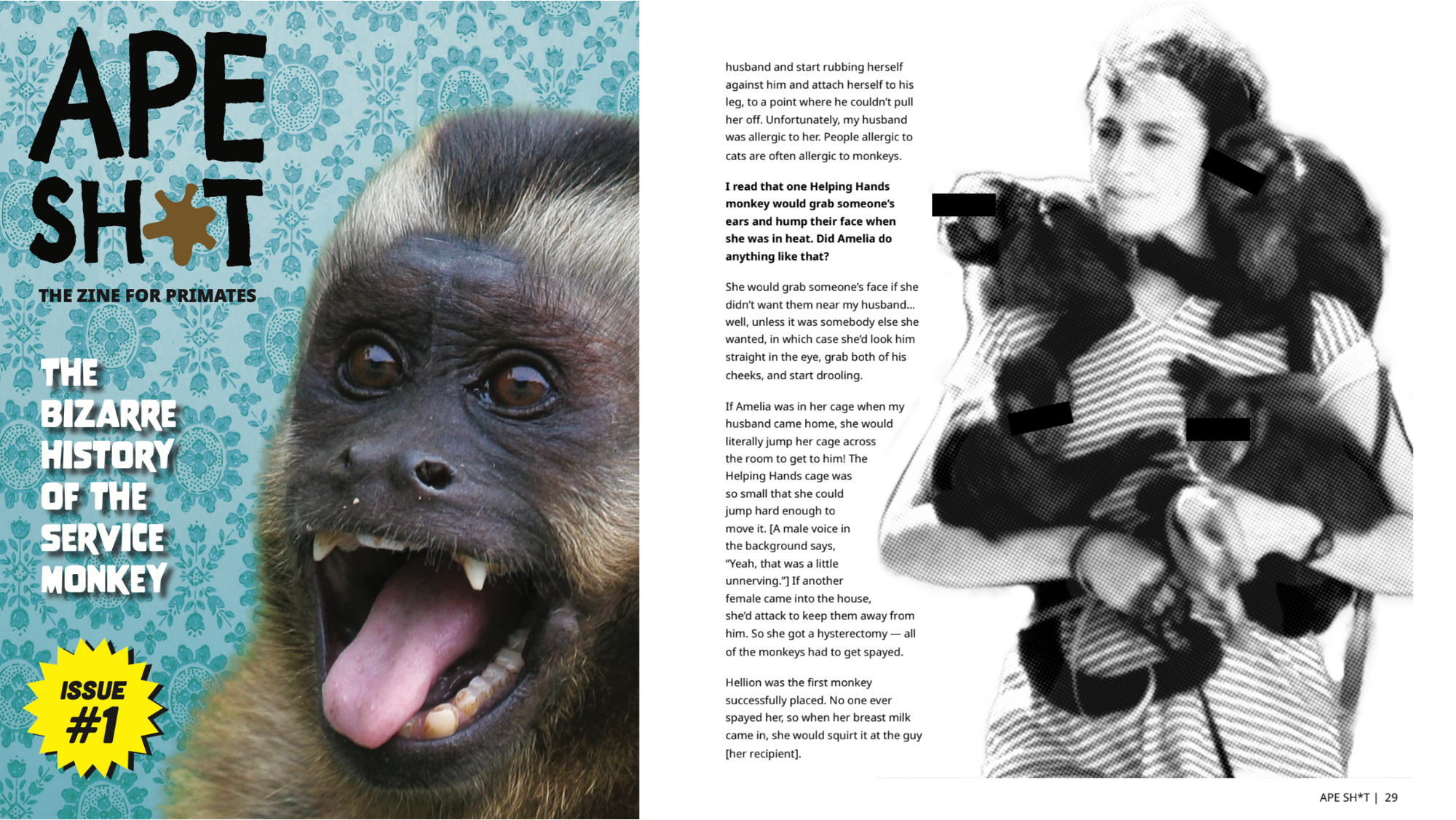
Starting in the late 1970s, a small nonprofit called Helping Hands promoted an impossible scheme: Training capuchin monkeys to serve as caregivers for people with quadriplegia.
Alison Pascoe was the group’s head trainer from 1980 to 1986, when it operated out of the Albert Einstein College of Medicine in New York. As part of that work, Pascoe housed one of the more fragile monkeys, Amelia, in her New York City apartment. It was not uncommon for Helping Hands staff to bring monkeys home: doing so saved space at the facility and kept the animals engaged with humans.
The following interview is reprinted from Ape Sh*t (apesht.org), a new print zine about primates. The inaugural issue takes a deep dive into how Helping Hands and mainstream media peddled nonsense about “helper monkeys” for over 40 years, ending only when the COVID-19 pandemic hit.
When did you first get involved with Helping Hands?
I worked there for six years, starting about a year after the founding. I didn’t know anything about monkeys, but I had zoology training. I was shocked that the monkeys had total tooth extractions, but I figured these monkeys didn’t have any better options. They were all adults who had been surrendered as pets for attacking their owners. Monkeys will attack you and be your best friend five minutes later. A lot of people take out their canines, which doesn’t do anything to protect you.
Removing canines doesn’t help?
No, because if they still have their molars and front teeth, they are going to bite hard.
Later on, Helping Hands said that they only extracted the front teeth and left the molars. Do you know if that’s true?
I don’t, but I find it impossible that they could place any monkey with any teeth anywhere. The monkeys would clamp down on you like a pit bull. I can’t imagine placing a monkey with any teeth safely. Even with no teeth, a monkey bite hurts! They know where to get you — they target the space between your thumb and forefinger, or hit your Achilles heel. I never met a monkey that didn’t bite. And it wasn’t predictable. If you take something away, they’d attack you.
I was the only trainer at Helping Hands when I was there, so they got used to me. If one of MJ [Willard]’s Fordham students went in, they would attack.
At one point, Helping Hands said they only used females. What happened to the males?
Well, the males would masturbate and ejaculate at you. And they have a really long penis that looks like a plunger. They are also more aggressive and pee everywhere.
Were they castrated?
Not while I was there. We only used one male while I was there. The problem with females is that they would go into heat every 30 days, so they had to have hysterectomies. We put a cast around their stomach so they wouldn’t rip out their stitches. Amelia, the monkey who stayed with me, would hand me scissors to try to get me to cut off the cast. When she went into heat, she’d run over to my husband and start rubbing herself against him and attach herself to his leg, to a point where he couldn’t pull her off. Unfortunately, my husband was allergic to her. People allergic to cats are often allergic to monkeys.
I read that one Helping Hands monkey would grab someone’s ears and hump their face when she was in heat. Did Amelia do anything like that?
She would grab someone’s face if she didn’t want them near my husband… well, unless it was somebody else she wanted, in which case she’d look him straight in the eye, grab both of his cheeks, and start drooling.
If Amelia was in her cage when my husband came home, she would literally jump her cage across the room to get to him! The Helping Hands cage was so small that she could jump hard enough to move it. [A male voice in the background says, “Yeah, that was a little unnerving.”] If another female came into the house, she’d attack to keep them away from him. So she got a hysterectomy — all of the monkeys had to get spayed.
Hellion was the first monkey successfully placed. No one ever spayed her, so when her breast milk came in, she would squirt it at the guy [her recipient].
Do you know when they stopped administering shocks to monkeys?
I don’t know exactly, but I was on Inside Edition talking about it, so it was after that. [The Inside Edition episode apparently aired in May 1991.]
We’d train monkeys by putting sticky white dots on things they weren’t allowed to touch. If they touched it, they’d get a warning, and if they kept touching it, they’d get a shock. That shock system actually worked in getting them to avoid certain behaviors. But if they were shocked, they’d have diarrhea. The monkeys were supposed to go back into their cages when they needed to go, but they didn’t always do so. When startled, they’d just go.
How do you think Helping Hands managed after they stopped using the shock treatment?
I have no idea. You can’t have a monkey not touch something. It’s IMPOSSIBLE.
While I was there, we had six successful placements, but they didn’t stay successful. Helping Hands would say they placed, say, five monkeys, but they wouldn’t mention that some of the monkeys needed to be placed 4 or 5 times because most of them didn’t work. There were cases when monkeys would put their fingers down the person’s trach tube and unplug the bladder bags.
Some monkeys became diabetic and couldn’t be placed because they had so many health issues. And a lot of monkeys became obese because they weren’t moving.
Some monkeys may be good in the house, but open a window and they’re gone. Henrietta was the first monkey I placed. She was a great monkey with a relatively low activity level, but she was on the 23rd floor of a New York City apartment building and once jumped across to another building. We had to go get her.
Quadriplegics had a tube that they could blow into, and a little treat would come out the bottom of the wheelchair. Judi Zazula and her husband designed the equipment. Henri learned how to grab [her recipient] Sue’s hair and pull it toward the straw so she could get extra treats. Sue was strong enough to thwart her, so we thought it was hilarious. Henri was a beautiful placement, really. Sue had a hard time finding caregivers, though. People getting paid minimum wage for that position don’t want to be cleaning up monkey shit.
I don’t mean to be so negative. Some of the placements were truly beautiful, and that was what kept me there for years. Some of the recipients formed a real bond with their monkey. The monkeys would groom the person and lick their cheek. It was life-changing and wonderful to see. If I were a quadriplegic, I’d want one too!
Tell me more about Amelia. If she couldn’t be placed, how was she used?
When media came to the office, Amelia was the monkey we used. The issue with her is that she’d attack women she didn’t like.
So you used the same monkey in a lot of media stories?
Yes. Whenever they came to look at our program, we’d use the same one. But no one besides me could handle her, which was the problem.
What led you to become upset with the program and decide to leave?
When I started, we were using unwanted and confiscated pets. MJ wanted to start a breeding colony, and that bothered me. She got a lot of foster homes from a Ladies’ Home Journal article. She would fly the monkeys out to people, and they’d have to sign a contract saying they would give the monkey up after 2.5 years. But they had to bring the baby monkey everywhere — like a guide dog — so everyone who was friends with these people would say, “I want a monkey!” And it sparked a fad for pet monkeys. We had two foster families disappear with monkeys. I started feeling that this wasn’t something I wanted to be involved in.
When I first started, we didn’t have the electronics that we have today. There weren’t remote controls and iPads then. The one really useful thing the monkeys did was pick up a mouth stick on the floor and pick it in the person’s mouth, but a dog could do that.
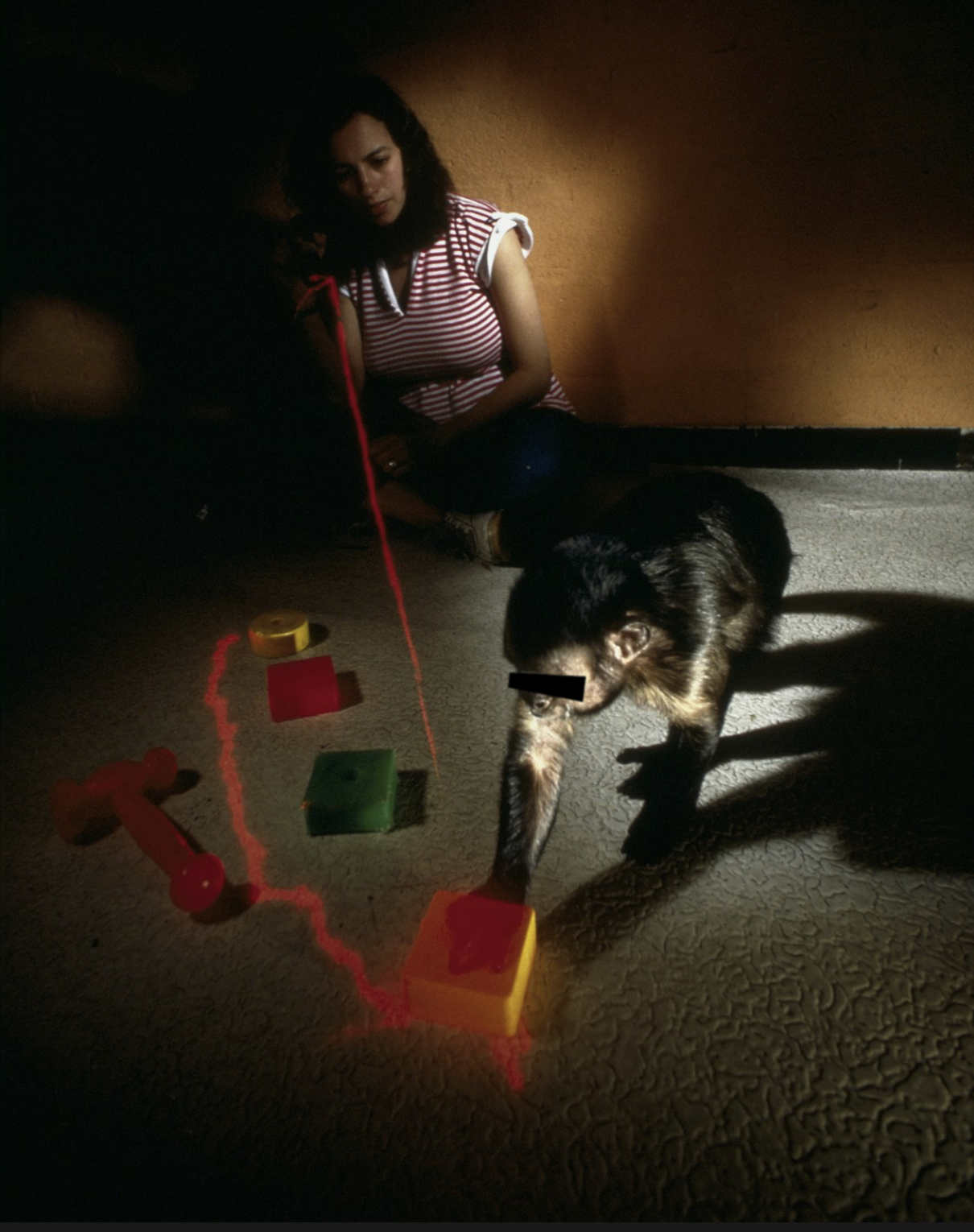
Back then, the laser pointers we used to train monkeys were the size of huge flashlights, with eight batteries. They were not like the ones you use with cats. Monkeys would either fetch whatever you pointed the laser at or destroy it.
What was your take on MJ? Early on, she was fairly candid about problems she faced. What kept her going?
She was getting a lot of grants and publicity. She believed in this program, but she was not an animal person. She didn’t care about these monkeys like I did. She didn’t live with them or get to know them. They were a tool for her.
How did you start unwinding your work with them?
I was very attached to the program because I was so close to the monkeys. I got pregnant, and MJ lost her funding from Einstein Medical School and was moving to Boston, so it was an easy out for me.
Around this time, someone who had seen a lot of the media about monkey helpers contacted us about making a movie.
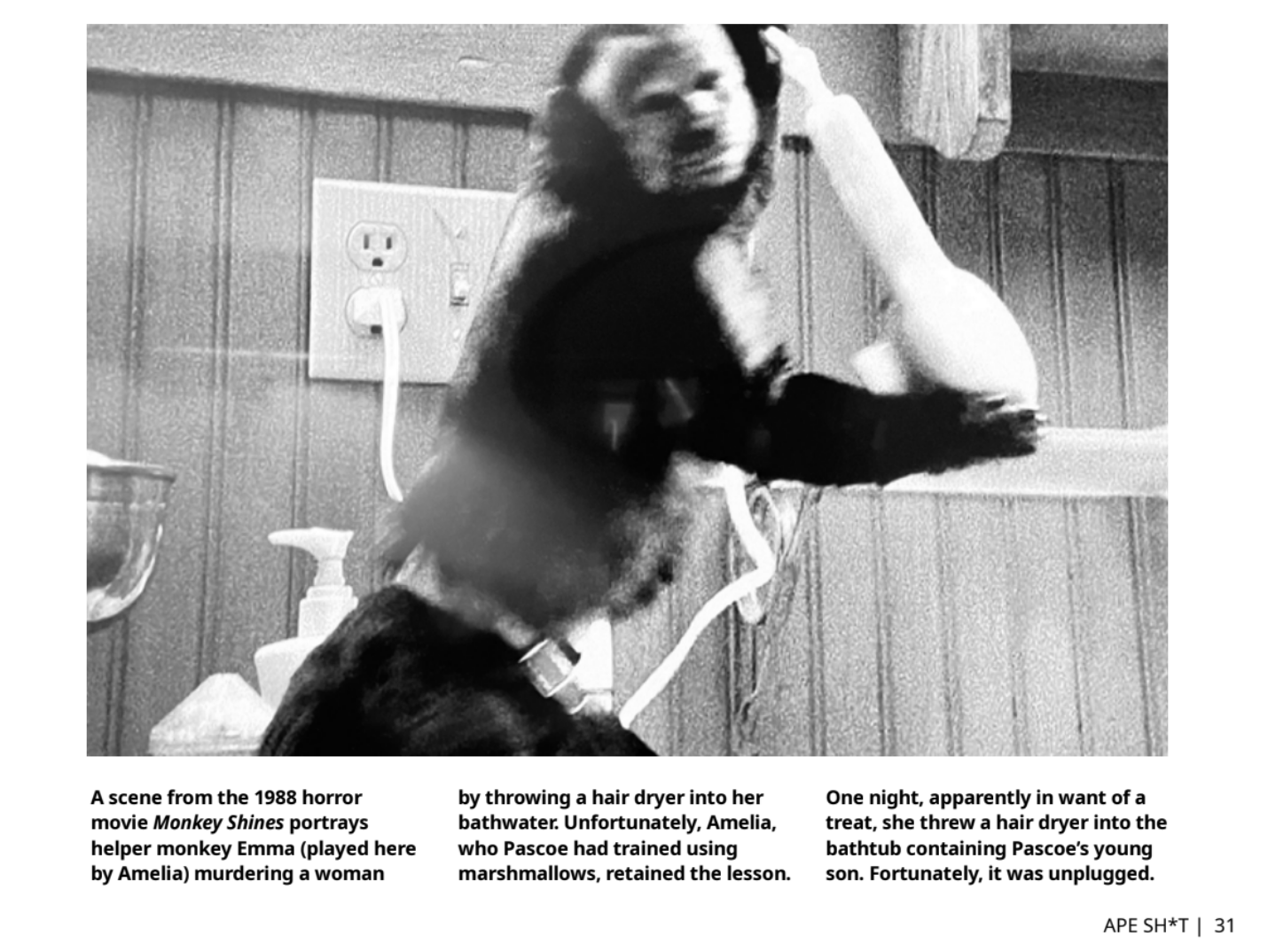
That was Monkey Shines, right? About a murderous helper monkey. This must have been around 1986.
Yes, the movie people contacted MJ and asked her to consult for the movie, but she said Absolutely not! and threatened to sue them. I told MJ, “I’ll do it.” I said they were going to do the movie whether she wanted them to or not, and she can keep her name off of it. “Lend me some monkeys,” I said.
I told her I’d pay her $20,000 [to borrow monkeys]. I’d train them and return them to her. And so that’s what ended up happening. I trained the monkeys used in Monkey Shines. I had the Humane Society on set to oversee things… When MJ found out how much money I made, she lost her mind. She told me I owed her more of it. I said, “You had a chance to take the job, but you didn’t want it.”
She threatened to sue me and was making my life miserable. So that’s when I decided I was done ignoring the serious failings of this program. Also, I kept Amelia. Amelia didn’t know anyone besides me and had been ill. She was losing weight and turned out to be diabetic.
Anyway, MJ wouldn’t speak to me. I felt bad about it because we had a good working relationship. It was very emotional for me. But I was done with the program. I loved working at the program until I didn’t. It was such a stupid program! [laughs]
Have you been in touch with anyone who has worked there since?
No, no one would talk to me. After I left, people who could use their hands started getting monkeys.
Do you know why?
I assume it’s because they were running out of quadriplegic people who wanted monkeys. I’d say 50% of the people we approached offering a monkey were, like, Hell no! We approached the soul singer Teddy Pendergast, who had a bad spinal cord injury. Man, did he yell at us! [laughs]
When I worked at Guiding Eyes for the Blind, I saw the same thing. People who weren’t really blind were getting dogs so that the organization could say, “We placed X many dogs this year” and have the numbers for fundraising. And then the dog became a footrest.
Why do you think Helping Hands lasted so long?
I think because they were sequestered at Boston University. They were part of a university where there were no animal rights people and no people who knew about monkeys. Anyone who actually knew about animals, anyone working in a sanctuary, thought this was crazy.
You helped some people with Helping Hands monkeys find homes for them. Where did they go?
Primarily Primates, Chimp Haven… I became very active in placing monkeys for years after I left.
I’ve read that capuchins in the wild vomit a lot. Was that something you experienced?
No. But in the wild, capuchins will take ants that have some sort of acid, mash them up, and rub them all over bodies. It’s thought to act like an insecticide. So in captivity, they’ll rip cigarettes out of your mouth and rub the tobacco all over their bodies. Onions, too. If you’re eating an onion, they’ll grab it and rub it. You can’t smoke a cigarette around a monkey.
Carrie McLaren is a longtime zinester and media critic who published Stay Free! from 1993 to 2008. A few issues continue to exist at archive.org. Her book with collaborator Jason Torchinsky, Ad Nauseam: A Survivor’s Guide to American Consumer Culture, collected highlights from the zine. She lives in Brooklyn with two human and one nonhuman animals, and posts erratically on Bluesky @monkeywire.bsky.social.