Hope is a dangerous thing for a voter like me to have
Josh Caress considers the brief window of hope we are living through after the midterm elections, The Red Sox and the Cubs, Tolkien, and a dream of a better world.
He recently wrote about the myth of "America."
 Luke O'Neil
There has never been a time in American history when our country was not mythologizing itself to cover atrocities.
More than any other nation, America is an idea. And that idea is a phantasm, a collective dream, or—more plainly—a fantasy.
And about how they want us dead.
 Luke O'Neil
I keep thinking of the image of the Uvalde school shooting, with the shooter as the Republicans, the Democrats as the useless cops in the hallway, and all of us trapped in the classroom.
Support our work here with a subscription if you can thank you.
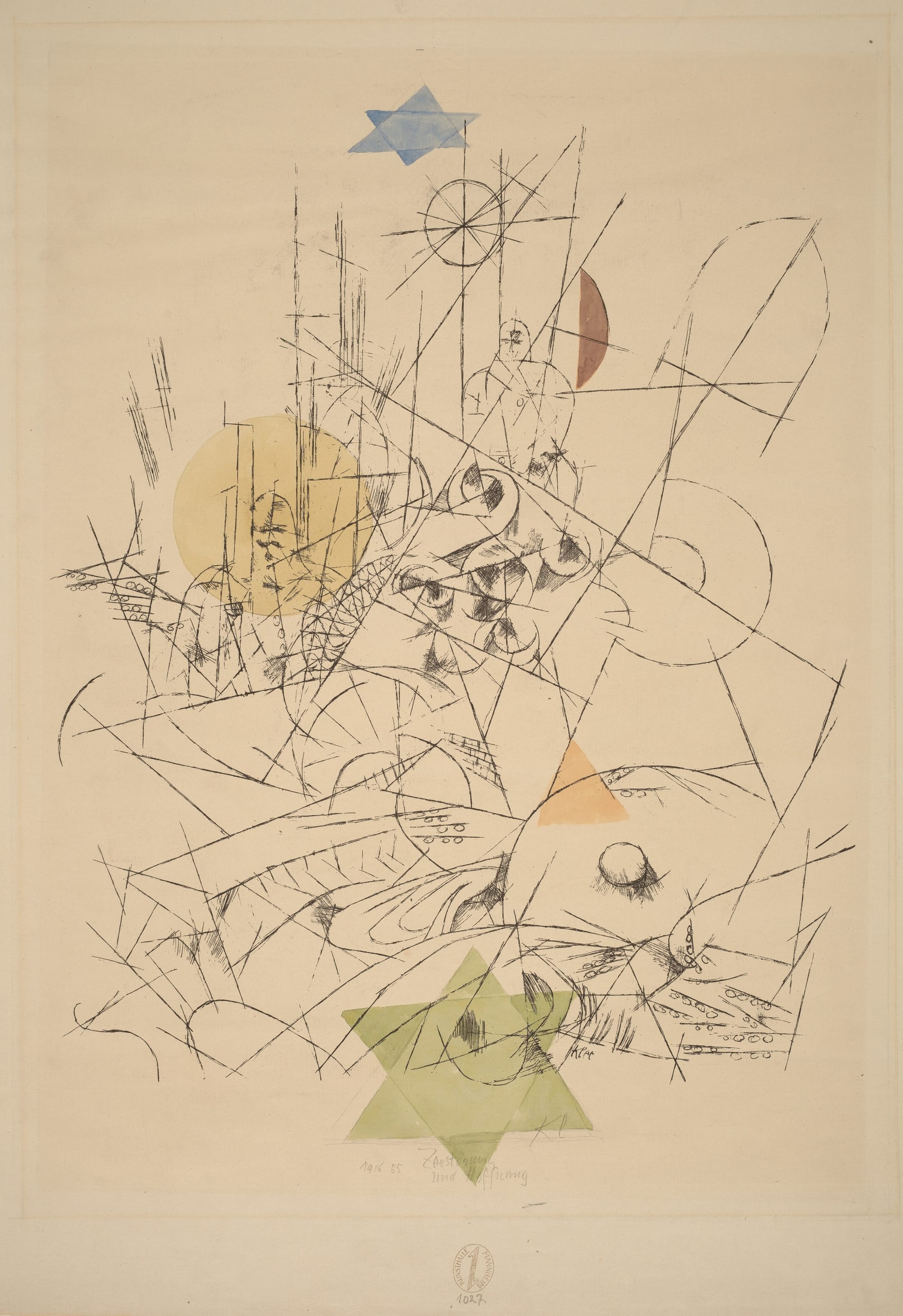
The Hope Beyond the Hope
by Josh Caress
Hope is a powerful and dangerous thing. It can be so easily manipulated by others, not to mention the way we use it ourselves to bypass uncomfortable truths. At its best, hope can inspire us to act, sustain us through suffering, and offer a blueprint for a better future. At its worst, it can be an excuse not to act, not to engage, and not to see what’s right in front of our faces.
To even bring up hope in these times is to raise the spectre of a deep and abiding cynicism—and for good reason. Everything has been getting worse at such a pace that sometimes it’s hard to even keep up. At what point does cynicism become realism? At what point do we acknowledge that our future was stolen from us while we were grinding it out with our heads down, consumed with the day-to-day work of trying to keep from drowning?
In the aftermath of November 3’s overwhelming “Blue Wave,” the discourse of hope has been a fraught one. There is so much baggage. From the campaign slogans of 2008 to the rush of excitement when Biden stepped aside in 2024, voters have had their hopes raised again and again for a better world. And each time, in one way or another, those hopes have been dampened, disappointed, or hopelessly dashed. Trump’s return from the dead to wage a zombie war on the American people has made the last two years feel like a nightmare we will never wake up from. We already voted him out once, with promises to dismantle what he’d done and put him away for good, but then he returned anyway—and no one with any power has seemed willing or able to stop his wrecking ball of destruction.
At the very least, I think what the Blue Wave has meant to people is a tangible sign that the era of Trump is coming to a close. This is no small thing. It’s been hard to imagine it over the past decade—especially in the last two years—and it really is something to celebrate. I know that I felt it in my body, like muscles unclenching that I didn’t know I had clenched. So it’s understandable that so many people are reveling in that feeling. We did it Joe! We showed that we could say no to him in an undeniable way, and we should enjoy that.
Also undeniable and inspiring is the record-breaking turnout of Black voters across the South, who managed to flip seats and states considered unthinkable before the election. Mississippi elected its first Black Senator since Reconstruction, while Black candidates came surprisingly close in both Louisiana and Florida.
Under the surface of this bigger picture, however, there’s a whole mess of conflicting feelings. The sheer scale of the damage that’s been done carries a moral requirement of redress, restitution, and reparations, while Democratic leadership has gone out of their way to make clear that we shouldn’t get our hopes up about that. There is also the plight of trans Americans, who watched in horror as Democratic candidate after candidate came out publicly against their basic rights, only to then be included in the high-fives of the Blue Wave jubilation. I can only imagine how much those high-fives felt more like a slap in the face, especially as even “blue state” voters passed vile ballot measures targeting trans children.
A lot of us have been here before, often multiple times, our hearts broken and hardened by each disappointment from the Democratic Party. Others have long ago learned that the Democratic Party is never going to adequately address the needs of the people, and has no intention to. Still others see this way of thinking as raining on their parade or “stealing their joy.” Can’t we just celebrate a positive thing without pointing out all the flaws? After everything we’ve been through the last couple years, can’t we just feel good about something for once?
There isn’t an easy answer to all this. I’m sure there are people who would love to spend their time judging who is and isn’t arguing in good faith here, but I am not one of them. Instead, I’d like to talk about baseball.
When I was a kid I played a lot of baseball. It was kind of my whole thing until I found music. I watched a lot of baseball too. The Chicago Cubs specifically. I became a die-hard fan at the age of six when the Cubs made a run for their first postseason in forty years. When Ryne Sandberg hit his two home runs in a row off Bruce Sutter I was all in. When the Cubs clinched the division, my parents cracked open a bottle of sparkling apple cider so we could drink it like champagne.
I was too young to really process anything beyond the pure joy of watching the team I loved win. Though I could have told you all the rules and explained each team’s place in the standings, the experience of baseball to me was primarily visceral. Like Shoeless Joe, I loved the smell of the glove and the grass, the feeling of the wax as I opened a pack of baseball cards, the colors of the uniforms as they came through that cathode-ray TV on a WGN day game at Wrigley Field. When I took the mound in my Little League games, I felt the magic of possibility, holding the ball in my hand like I could control fate.
Being a baseball fan changed as I got older. First came ESPN and the daily thrum of Sportscenter news. Then came the internet and the explosion of fantasy leagues. Right at the cusp of all that—right as Moneyball was published, as ESPN was becoming the 24-hour news cycle of sports, but while sportswriters were still writers more than personalities—came the unlikely League Championship Series of 2003.
On one side stood the Boston Red Sox, on the verge of defeating the New York Yankees and undoing decades of heartbreak. On the other stood the Cubs, who hadn’t even been to a World Series since 1945. Both teams were only five outs away from meeting in a fated championship that would bring untold joy to one fan base or the other.
Of course it all fell apart for both teams within a 48-hour time frame (a tragedy captured beautifully by Tom Verducci in a Sports Illustrated feature now lost to enshittification). I was twenty-five at the time, and that moment affected me deeply as a fan of both teams (I moved to the Boston area when I was eighteen). I’d been immersed in the culture of stats and analysis and the fantasy mindset of thinking like a general manager. But what I experienced in the hope and heartbreak of those games was something more akin to the feeling I’d had as a kid.
It wasn’t the hope of a GM awaiting a return on an investment, it was something far deeper than that—something I didn’t even realize had been in there, tied up with baseball and childhood and everything else. It was the glimpse of a hope that, against all odds, something truly good could happen, a joy you could barely imagine. There was something lying out there, just over the rise, something you’d be embarrassed to confess you believed in. Something impossible. A hope beyond the hope.
The taste of that hope was infectious, and those series drew unprecedented national attention. Fans were profiled by major news outlets, talking about how they could “die happy” if they finally saw their team win. It’s possible that team owners saw only dollar signs in this, but I’d like to think they were moved as well.
The Red Sox new ownership group took over in 2002, following years of the club fielding competitive teams but blaming a lack of funds for not matching the Yankees. After the heartbreak of 2003, the new owners and their young GM put their money where their mouth was, trying unsuccessfully to trade for the game’s best hitter before signing the best pitcher instead. The Sox famously went on to win in 2004, their first World Series since 1918, proving that “competitive” had never been enough. The fans wanted to win.
In Chicago new owners took over in 2009, led by a man who’d grown up with that 1984 team and wanted to see that hope realized. They hired the winning Red Sox GM as their new President of Baseball Operations in 2011, and began building a team to fulfill that wish. The Cubs won the Series in 2016, their first since 1908, and I admit that I cried when Ryne Sandberg spoke at the celebration.
I’m telling you all this to make a point. During those years of baseball fandom, it had become very popular for fans to analyze team decisions, to evaluate trades and acquisitions based on “pragmatic” considerations about some billionaire’s money. People made excuses for owners who couldn’t care less what fans thought, as long as they kept buying tickets and paying for the cable TV package. Does this remind you of anything?
Outside of those moments where it broke through, when we couldn’t hide the emotions of true joy or heartbreak, we didn’t talk about the hope beyond the hope. Some of us channeled our energy into the nuts and bolts, the trades and the stats, the “pragmatic” solutions. The hope was always there, but saying it out loud felt like asking for too much. Letting ourselves indulge that hope felt like inviting a gut punch, which is what Red Sox and Cubs fans often got.
Once again, sports isn’t the only place this happens.
We have a lot of proxies for our deepest hopes. Sublimating our true desires is an expected part of being an American, but what is it we’re really hoping for? In retrospect, though it was a joyful release, winning the World Series obviously didn’t solve all the problems of Cubs or Red Sox fans. But it represented something deeper, something that shows up in other parts of our lives. What is this really all about?
J.R.R. Tolkien coined the term “eucatastrophe” to describe a happy turn of events right at the moment where such a turn seems most impossible. In Tolkien’s view, this turn represents the true nature of reality, “a sudden glimpse of Truth” that “comes from the place where Joy and Sorrow are at one, reconciled, as selfishness and altruism are lost in Love.”
I think “eucatastrophe” is a great way of describing the feeling of the Blue Wave. It was a glimpse of some kind of truth, but not in itself the reconciliation of all things. And so it is with all of these moments. Like the Cubs winning the World Series, what we’re really connecting with goes beyond the thing itself. The actual events may have been brought about by the decisions of the front office and the performance of the players on the field, but what it meant to me had almost nothing to do with them.
The same is true of our politicians. The nice thing about a midterm election is that it makes this more clear. Without a presidential candidate to project everything onto, we can see more clearly that what unites us is not the candidates themselves, but the deep hope of the people that things can actually get better. That’s the glimpse of truth.
This is also why the discourse is so fraught. When someone talks about people “stealing their joy,” I’d like to think their reaction comes from a protectiveness of this hope rather than a defense of dubious politicians. When a trans person expresses their pain and frustration, I think this is because they want to feel that hope—they just also want to be included in that better future, and it shouldn’t be hard for so-called “allies” to say so.
Beyond all the important policy proposals, party loyalties, and individual candidates, I believe what most of us want is a life built around the things we actually care about—the things that bring us joy, the people we love. And the current ordering of our extractive, capitalist society makes that kind of life difficult to impossible.
The hope beyond the hope is that it doesn’t have to be this way, that we can imagine a better world. That better world might seem impossible, but in those rare moments where entrenched power cracks and the light gets in, we can see it.
Over the coming months, we will be forced to pay attention to the machinations of our floundering democracy. Many of us will be disappointed or disgusted with the politicians we just voted into office. Others will defend them like they would the greedy owner of the baseball team they love. But, as important as they are, the politicians are not where our hope lies. However much we may wish they did, they will never truly care about us. The dream of a better world will never come from them. It comes from us, and we must force them to act on our behalf.
What do you hope for? I don’t think most of us dream of world domination or a lifestyle that requires the oppression of others. I think most of us would be happy to let other people live in peace as long as we had our needs met and didn’t have to check the bank account before taking the kids for a spontaneous ice cream. Maybe that’s just me.
For the majority of Americans, such a world would be a dramatic change, a genuine “eucatastrophe.” Most of us are overworked, underpaid, drowning in debt, unable to pay medical bills, and just trying to find the will to keep going. So few of us have the luxury of spending deep time with the people we love, creating art, making a slow-cooked homemade meal, or enjoying a day out in the natural world.
A life made of simple joys like that, without the constant crushing worry, seems practically impossible. But what if we built a society that put those things at the center? One where those were the actual goals instead of whatever the fuck this is?
God knows I don’t want to minimize the callous hearts and homicidal aspirations of those who would do us harm. We currently have a culture that rewards those people, and I want to believe the Blue Wave was a collective rejection of that. I want to believe most of us are ready for real change, and that this is a window—a rare glimpse—where that change seems possible. What we do with this moment matters.
I’m not arguing that we should ignore the details of politics. In fact, most of us could stand to pay more attention than we do. But we need to remember what it’s about, what we’re fighting for, and what we’re fighting against. Because the politicians are going to do everything they can to make you forget how you felt on the night of November 3. They’re going to try to steal your joy and sell it back to you as something else, something “pragmatic.”
Don’t let them do this, and god forbid you help them do it to others. Don’t let anyone tell you what you hope for is “impractical” or “impossible.” It’s not my dream against your dream, or trans rights against student loan relief. No one is offering you these deals. They are only trying to see how little you will accept and how willing you are to sell each other out.
But when we see that our government can drop billions on detention centers overnight and pull tens of billions out of nowhere to wage a pointless war that destroys our economy, we should all understand that the money is there. The wealth of the top 100 Americans could fund practically anything we can dream of. Don’t let anyone tell you what can’t be done. There’s only what they won’t do.
Think about the kind of life you’d like to have, the kind of world you’d like to live in. Now dig a little deeper. Dream a little bigger. What does that world look like? And why shouldn’t we have it? Why shouldn’t everyone have that? This is where we need to start from. Everything else is a negotiation. Why would we talk ourselves out of our deepest hopes before we even start?
No one we elect is going to hand us the life we want for each other. Every cog in our political system exists to keep regular people out of the process. It’s time to break those walls down. Remember that feeling as the Blue Wave washed over us? The fog lifting, the horizon expanding, all the things we forgot we could even wish for? Those are our demands. That’s our fucking World Series. It’s not enough to put it in the hands of our politicians and hope for the best. We need to fight for the hope beyond the hope.
Josh Caress is a writer and musician with a day job who lives in Western Massachusetts with his family. He is currently querying his unpublished first novel, The Arrow: An American Myth. You can find more of his writing and original music at www.joshcaress.com.