A nation that never has to pay
Jeb Lund on war with Iran and war with Iran and war with Iran and Florida
I'm excited to have the great Jeb Lund back writing for Hell World. It's a striking and elegiac and wending piece about memory and education and mothers and war and Florida and California and the warring parts of both states and this entire warmongering country of ours.
If prolonging, fomenting or enabling war by interfering in foreign policy is no crime, if failing at war is not failure, and if preparation is immaterial because cost is invisible, then there's hardly any need left to have a purpose for it either. We are currently in a war for which we have done no planning, have no communications strategy, no military strategy beyond the words "cut off the head" followed by "and pray for rain," and no fixed or plausible casus belli or an achievable objective, and soon we won't even have the bullets for it. You could be forgiven for asking if there's any part of war left to even bother having, but then you might ask something stupid like what we're spending one billion dollars a day on, besides making sure that we're hurting the right people, people whose deaths run the value spectrum from "fine, I guess" to "necessary," deaths whose justification began at their birth.
Jeb wrote two of my favorites for Hell World a few years back.
 Luke O’Neil
On our last day there, I remember looking up at the sky I grew up under and realizing, for the first time, how truly barren it was of clouds—not just compared to the monumental nimbuses of the Florida I'm now used to, but completely, at all. And I remember thinking, Oh, God, we're all alone, aren't we? and feeling as if I could sense how fast the ground underneath me spun in outer space, and suddenly my lapsed deadline seemed to come pouring over the treetops and wash all over me.
 Luke O’Neil
I really can't tell if I feel more anger than sadness at the fact that those who were meant to encourage us in safety, to serve us by offering difficult guidance, wasted our sacrifice and our trust. They squandered the patience given by a beggared and exhausted people. All they had to do was the right thing, and if they weren't sure what that was, they could have erred on the side of saving people’s lives and hoping it counted, and they failed.
And more recently about R.E.M.
 Luke O’Neil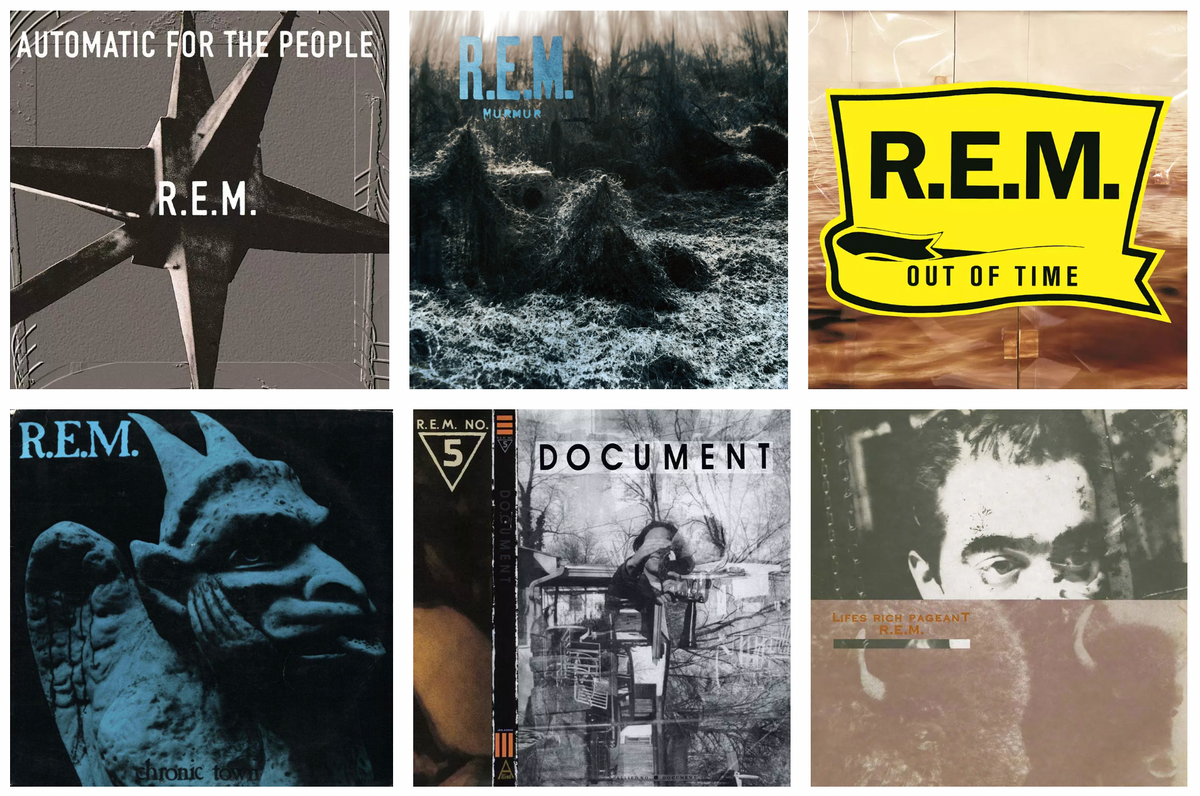
Please be sure to also see this recent Hell World by Rax King on reading Milton Mayer’s 1955 book They Thought They Were Free: The Germans 1933-1945 in the age of ICE.
 Luke O’Neil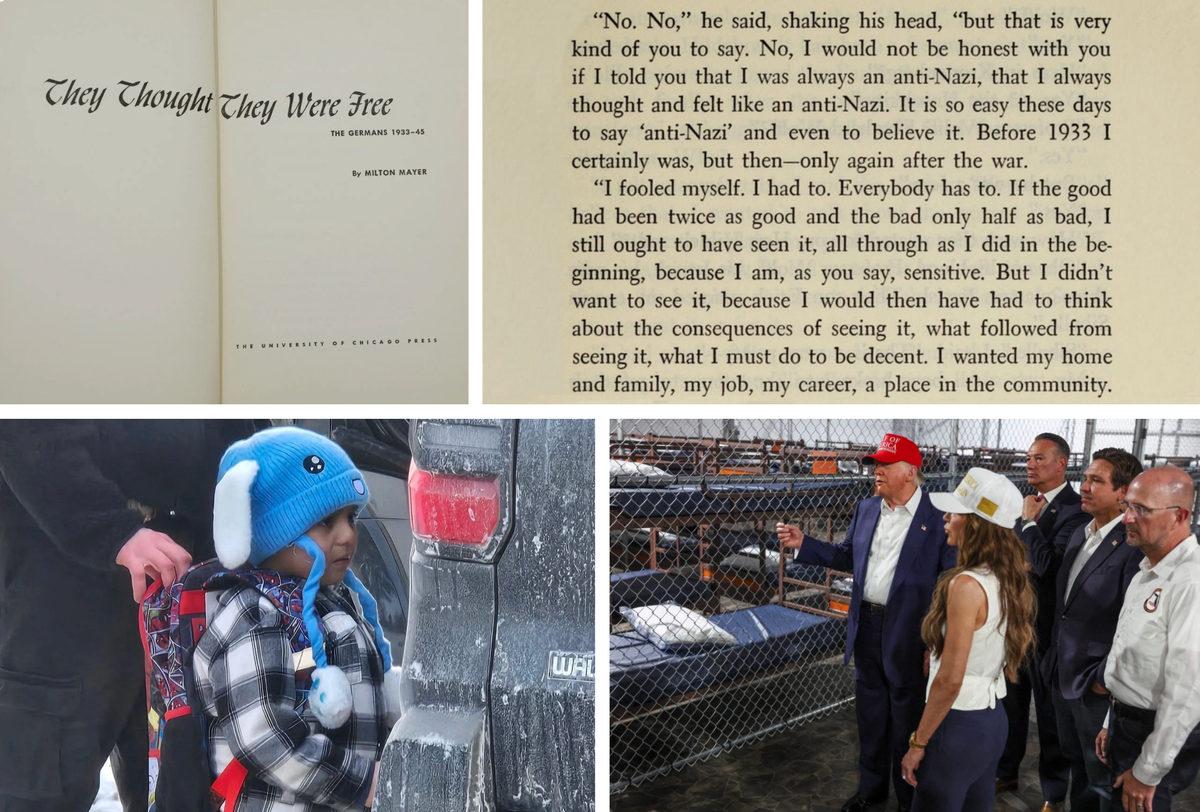
You'll need to be a paid subscriber to read this piece in full. It will be sent out in the next edition of the newsletter. Thank you as always for your support. Here is a handsome discount.
None of the sacrifices a moral universe demands
by Jeb Lund
I don't know what you do when we declare war but I called my mom. It helps. Mom also raised me on her own while going ABD in history, and it's nice to talk shop still, even if it's not as much fun as making her recite the declarations of war from WWI, in order, at the dinner table. This time I told her I didn't think we'd still be doing the exact same stupid thing, depending on how you score it, for the third or fourth or fifth time in my lifetime. She told me "Just wait 'til your 50s and 60s."
I'll keep waiting, if you don't mind, not least because she's right. We were talking about the United States bombing Iran for the second time in two years, as if correcting for the failure of our first insane provocation. If America were a child, we'd looked out the back window, watched it take a swing with a whiffle ball bat at a hornet's nest, see nothing happen, walk to the opposite end of the yard, wind up the bat and take a running, bellowing charge at it. We're all so proud. Our son Donnie has the aptitude of a five year old, but his suicidality is testing at the gothest end of the 10th grade spectrum.
Mom wasn't old enough to watch America and England snuff out fledgling Iranian democracy in 1953 and understand what was happening, and I wasn't old enough to watch and understand the Iranian Revolution of 1979, its most obvious consequence. I've already had the pleasure of explaining to my own son what a JCPOA was and then the wonderful chain extenuating from Donald Trump's seethingly racist and jealous need to make it a wasn't. Of all things it all keeps reminding me of seventh grade.
When I was twelve and growing up in the San Francisco Bay Area, an enterprising English teacher gave us a classic English teacher assignment. She leveraged our pre-teen self-absorption against us and bundled "using persuasive language to link and evaluate two ideas" with "guaranteeing an assignment would be turned in by getting our parents involved." Namely, she told us to ask ourselves what we were currently going through, then go ask our parents what they were going through at that age and see what we had in common. I'm not sure whether the prospect of introspection and familial bridge-building or the guarantee of completion was her biggest ambition, but I understand either way.
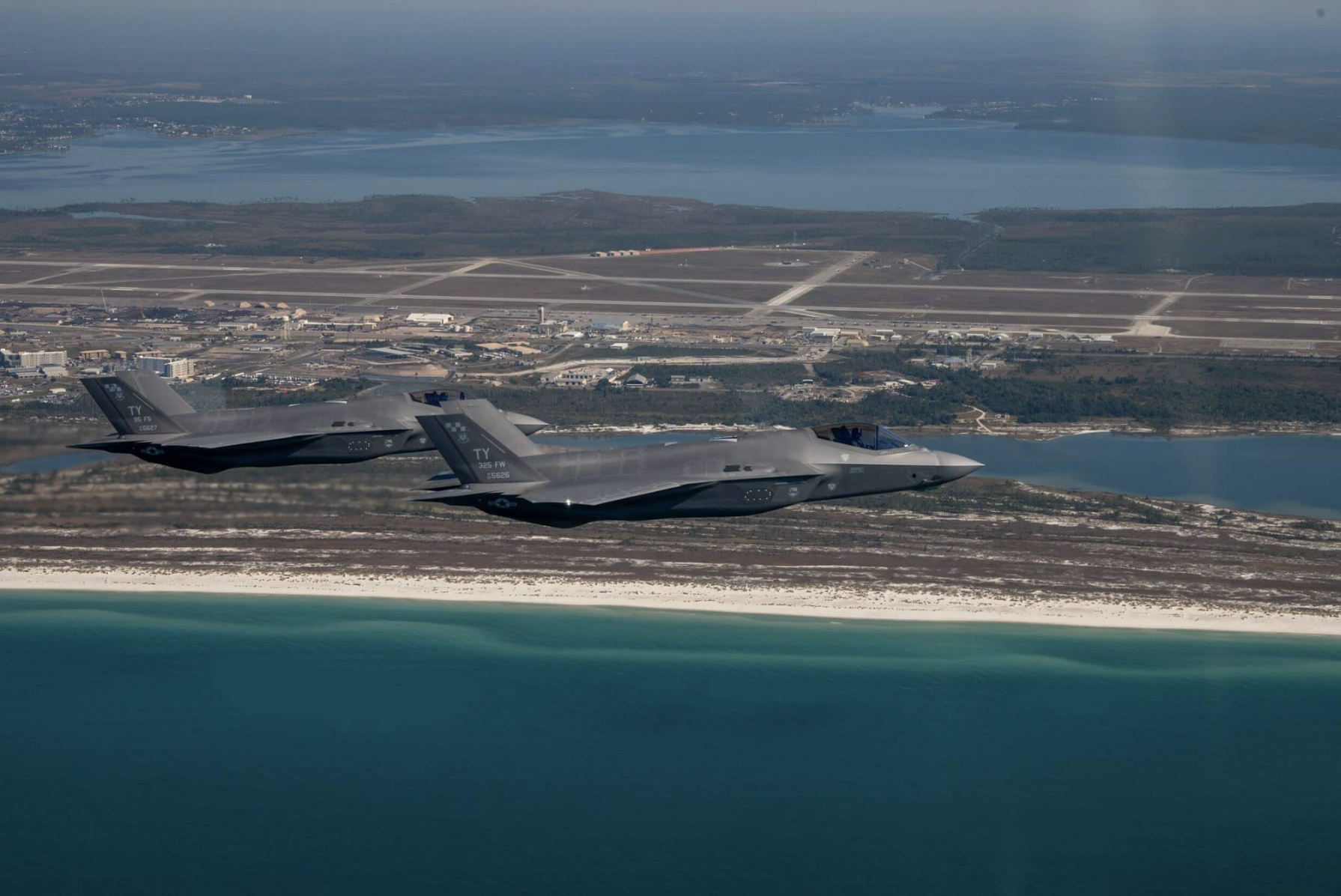
Finding common ground was going to be difficult. At twelve, mom lived next to "the largest Air Force Base in the Free World," about 50 miles east of the Pensacola Naval Air Station and about 80 miles west of Tyndall Air Force Base. (You might recognize the former as the home of Pensacola: Wings of Gold and the latter for getting shut down by Hurricane Michael, whose aftermath provided the money quote of the Trump era: "I thought he was going to do good things. He’s not hurting the people he needs to be hurting.")
But those disasters were still decades away in 1962, and the standout event of mom's seventh-grade year was the Cuban Missile Crisis. One day, the flight line was full, and all was normal. The next day, all her friends' dads and hers were gone, and no one knew when they would be back, if they would be back, or if there would be anything left to come back to.