The logical consequences

Congress gave Trump a free pass for bombing Iran – his attack on Venezuela is the logical consequence
by Alex Rikleen
As a teacher, part of my job was responding when a student answered a phone call in class. Not only was that behavior disruptive, but, if unaddressed, it invited worse disruptions in the future. How could I ask Jimmy to stop talking in class if I wouldn’t even stop David from taking a phone call? And what would David feel empowered to try next time?
As a teacher, managing classroom behavior is part of the job.
As a member of Congress, managing presidential behavior is part of the job.
And we’re dealing with the consequences of Congress letting President Trump answer the phone in class.
Congress made no effort to discipline Trump after his unconstitutional bombing of Iran over the summer. With that precedent set, Saturday morning’s attack on Venezuelan territory and capture of its head of state is entirely predictable.
There is an urge in American discourse to take a defeatist approach toward some of Trump’s actions, preemptively giving up with a meek “well what could have been done about it?” But, to put on my history teacher hat for a moment, the Constitution provides a clear answer.
Most Americans know that the US government is constructed of “three co-equal branches,” which limit each other through a system of “checks and balances.” However, those phrases have become such common tropes that it’s easy to lose sight of their meaning and purpose. While it may sound flippant to say that “managing presidential behavior” is a core job of Congress, it is literally what our framers had in mind.
In high school history classes, we usually simplify the complex system of checks and balances to focus on how the branches of government interact with one another. The three branches each have affirmative powers (the things they do), and restrictive powers (the way they limit each other).
The framers assumed that both the legislators and the executive branch would want to claim as much power as possible for themselves, so they wrote the Constitution to give each branch powers that could limit the other in cases of overreach. James Madison, a key author of the Constitution and our country’s fourth president, described the need for checks and balances and how they would work by saying, “ambition must be made to counteract ambition.” The founders believed that checks and balances were critical to keeping the government functioning.
Managing executive behavior through the threat of impeachment is one of Congress’ main restrictive powers. Elbridge Gerry – a Massachusetts governor who was also a vice president, signer of the Declaration of Independence, and delegate to the Constitutional Convention – said that presidents “ought to be kept in fear” of impeachment to decrease the risk of abuse of power. And as Founding Father Alexander Hamilton explained, the threshold for impeachment is not a specific legal standard, but rather “misconduct of public men, or in other words from the abuse or violation of some public trust.”
When Trump ordered an attack on Iran in June, it was an obvious abuse of power on the gravest of all topics: war. The official House Democrats social media accounts called the attack “unconstitutional” – and rightly so. Only Congress has the authority to declare war. Our founders were clear about what to do in the case of such grievous executive overreach. But instead of doing their own jobs, most Democrats joined all Republicans in preventing the possibility of impeachment. When Texas Democrat Al Green took advantage of a rarely-used maneuver to force an impeachment vote after the Iran attack, 128 House Democrats and all Republicans voted against proceeding on the measure.
We are now dealing with the consequences of that failure of Congress to do its Constitutional duty and enforce the restriction of the President’s power.
Just like with a misbehaving student, the result of trying to ignore Trump’s abuses is entirely predictable.
A few months after the Iran strike, the Trump administration began agitating for war in Venezuela. In early September, it began a bombing campaign targeting boats in the Caribbean Sea, and then it expanded that campaign into the Pacific Ocean in late October. These bombings are probably illegal – even the senior military lawyer overseeing the strikes said so.
Last week, we learned about another escalation. According to reporting by CNN, the United States bombed a “port facility” along the “Venezuelan coast”. This is the first report of an attack inside Venezuelan territory. This should have elicited immediate repudiation from Congress, including renewed calls for impeachment. Instead, few members of Congress made public comments on the revelation at all.
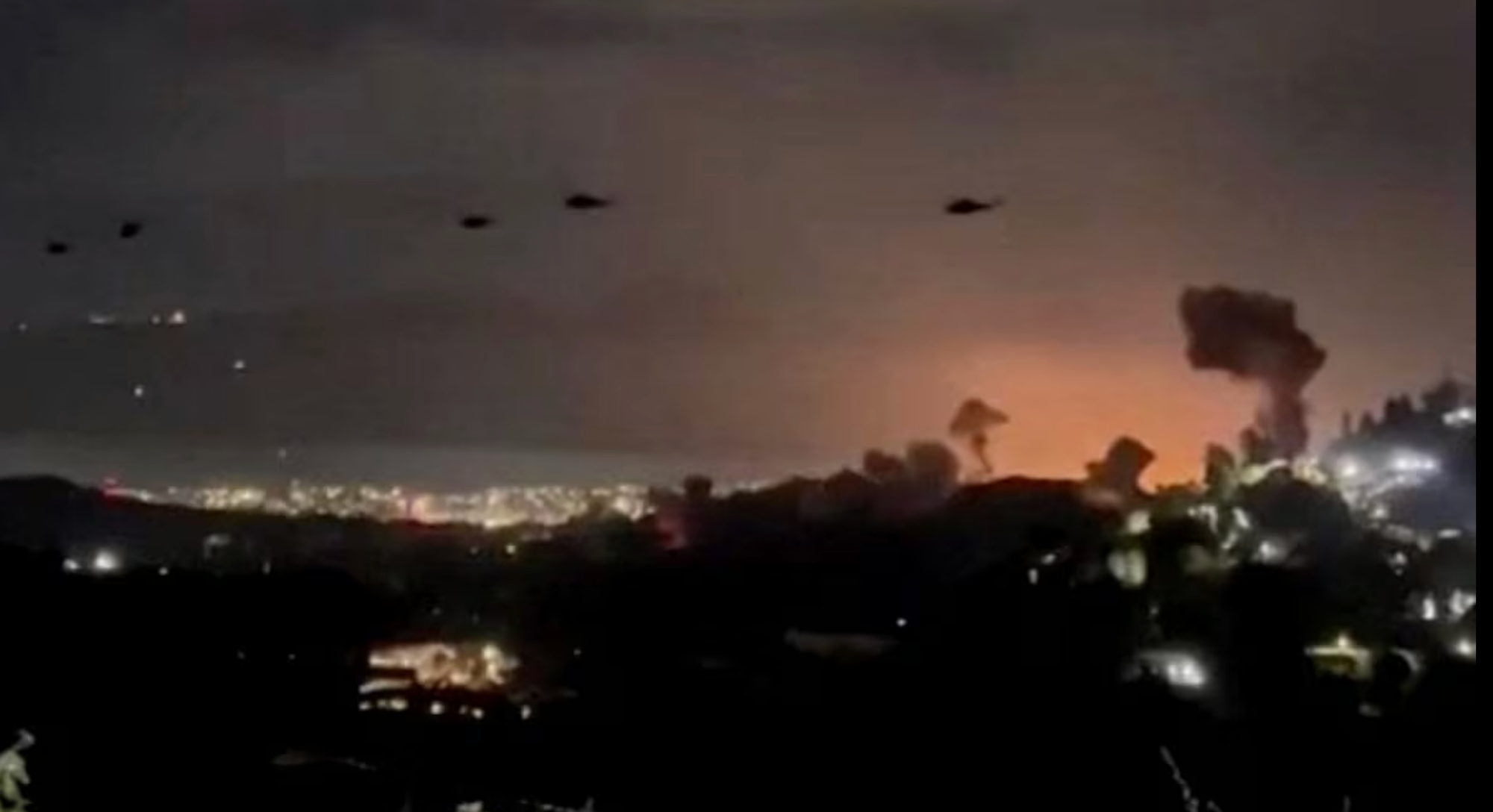
Then, early Saturday morning, the Trump administration launched a full-scale attack inside Venezuela. They struck at least four different regions of the country. Venezuelan president, Nicolas Maduro, and his wife, were captured and removed from the country. This act of war was conducted without congressional approval.
It is, of course, unconstitutional for the Trump administration to attack countries without Congressional approval. But laws are not self-enforcing. When Congress neglected to do its duty – declining to begin impeachment proceedings after the first unconstitutional act of war – it was an implicit invitation to the Trump administration. The Trump administration accepted the invitation.
There is no reason to believe it will stop here. Friday morning, roughly 24 hours before the attack on Venezuela, Trump was issuing 3:00 AM threats on Truth Social to re-engage with Iran.
Congress must learn from this summer’s abdication of responsibility. It must do its duty, and begin an impeachment investigation in response to the administration’s attacks in Iran and Venezuela. A failure to do so only reinforces the anti-constitutional message that President Trump no longer requires Congressional authorization for war.
Alex Rikleen is a former high school history teacher running for U.S. Senate in Massachusetts.
This will go out in the next issue of the Hell World newsletter. Thanks for reading. Here's a poem from my new book We Had It Coming you might appreciate.