It is mortifying to be seen
An excerpt from The Third Beat by Lauren Lavín

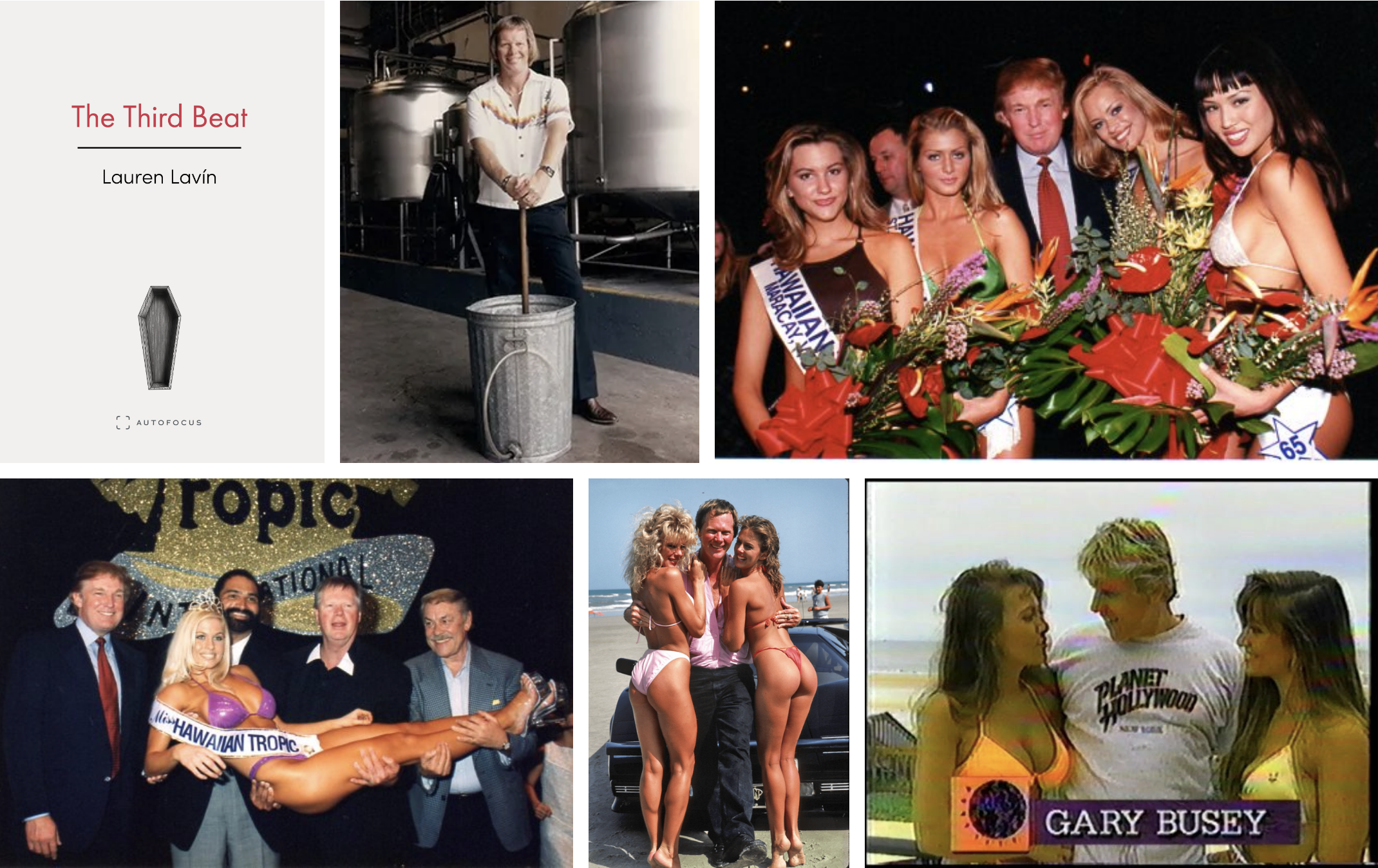
Oh man I am stoked about this piece I have to share today. It's an essay from Lauren Lavín's forthcoming book The Third Beat about beauty and desire and love and the power or lack thereof in all three and the death of Ron Rice and Hawaiian Tropic's toddler and adult swimsuit pageants. It's moving and gut-punching and I sincerely laughed out loud a few times.
The book will be out February 3 via Autofocus and Lavín will be reading from it on February 10 at Grand Gesture Books in Portland, OR for Pool Party Mag's one-year anniversary event.
Some early praise for the book:
“Lavín’s essays are an intoxicating brew of honesty and heart. This is a collection to read when you’re lost and return to after you find your way. Sharp and furious, gentle and understanding, the way Lavín writes life will make you forget to breathe. The Third Beat seduced me from page one.”
—LJ Pemberton, author of Still Alive
“Lauren Lavín's debut essay collection is a phenomenal work of full-bodied honesty. The Third Beat is a book for anyone who's found it hard to see or be themselves in a world that demands we carry the weight of its constant and, often erroneous, perceptions, i.e. everyone. The best non-fiction I've read this year.”
—Jillian Luft, author of Scumbag Summer
Lavín previously wrote for Hell World about her favorite Jason Molina songs.
 Luke O’Neil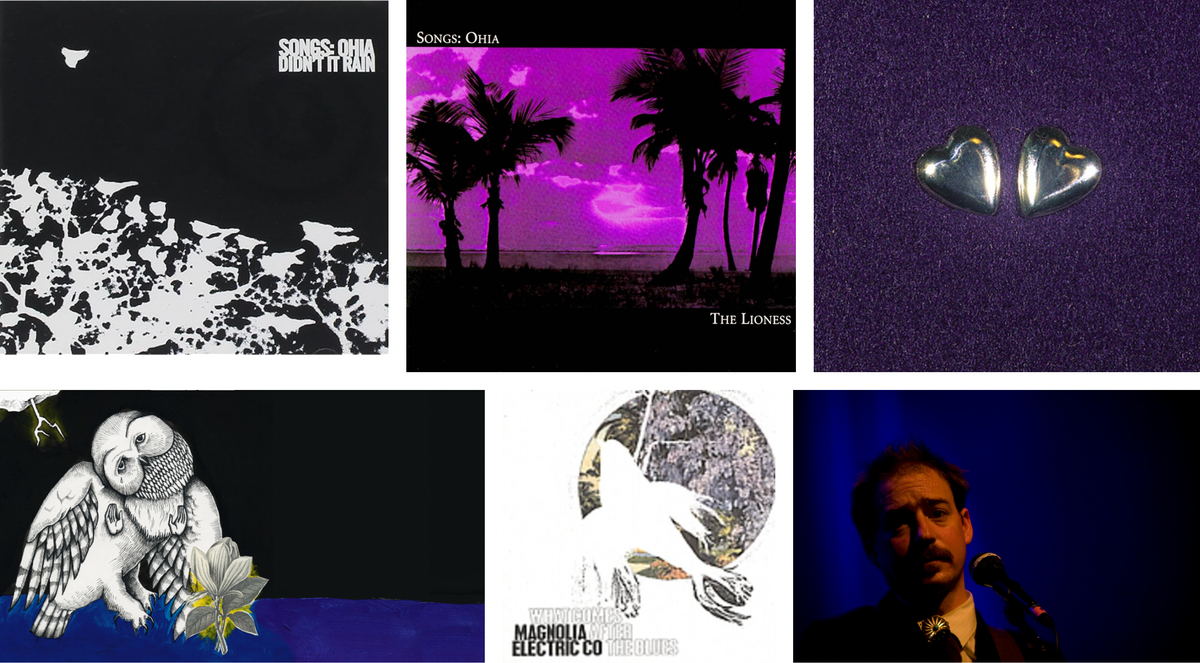
And her husband Mike Sparks, who appears in the piece below, wrote about his favorite Chris Cornell songs.
 Luke O’Neil
More after that including a new poem by me and for paid subscribers the latest edition of my bi-weekly (?) playlists.
Support our work here with a free or paid subscription if you can.
For more about good books read this one including the best of Hell World 2025 in book interviews, excerpts, and reviews.
 Luke O’Neil

Best Eyes
by Lauren Lavín
I don’t know what came first: the sexualizing or the sex. My mom says I was boy crazy since I was born, that I flirted with my pediatrician before I could speak very well, batted my eyes and said, Dot Obeeskee, are gonna gimme shot?
When I was three, she put me in a tiny swimsuit, gave me a pile of chemical cloud curls and a wet cherry pout, and entered me into a swimsuit pageant for children sponsored by Hawaiian Tropic suntan oil. I think I remember parts of it. The view of the seated crowd from the stage and the hiss of their murmuring, programs fluttering, and cameras flashing. My mother took home three trophies that the judges awarded to my body, one bigger than me and with a gold plastic disc that said Best Eyes.
I imagine walking up to the moms and grandmas in the crowd, in my three-year-old shape, to tell them this display of soft, newly formed children is sick, sexual, but the moms and grandmas balk and snort. They think we’re cute and our youth extends their own. They think that I’m the one sexualizing it, being weird. Maybe I am. Even this made-up version of me doesn’t have the language to tell them she’ll always feel exposed, doesn’t know the difference between being consumed and being seen.

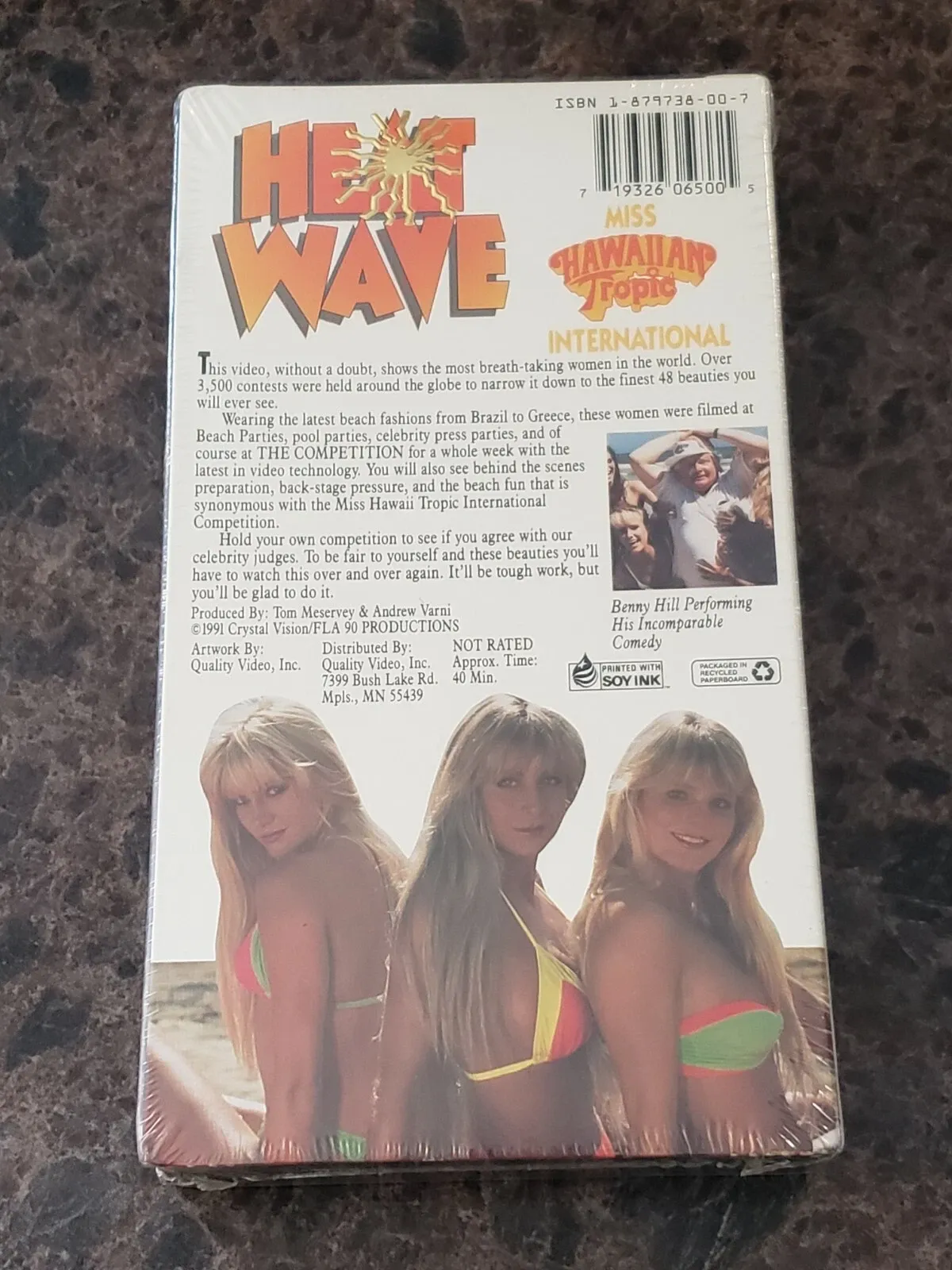
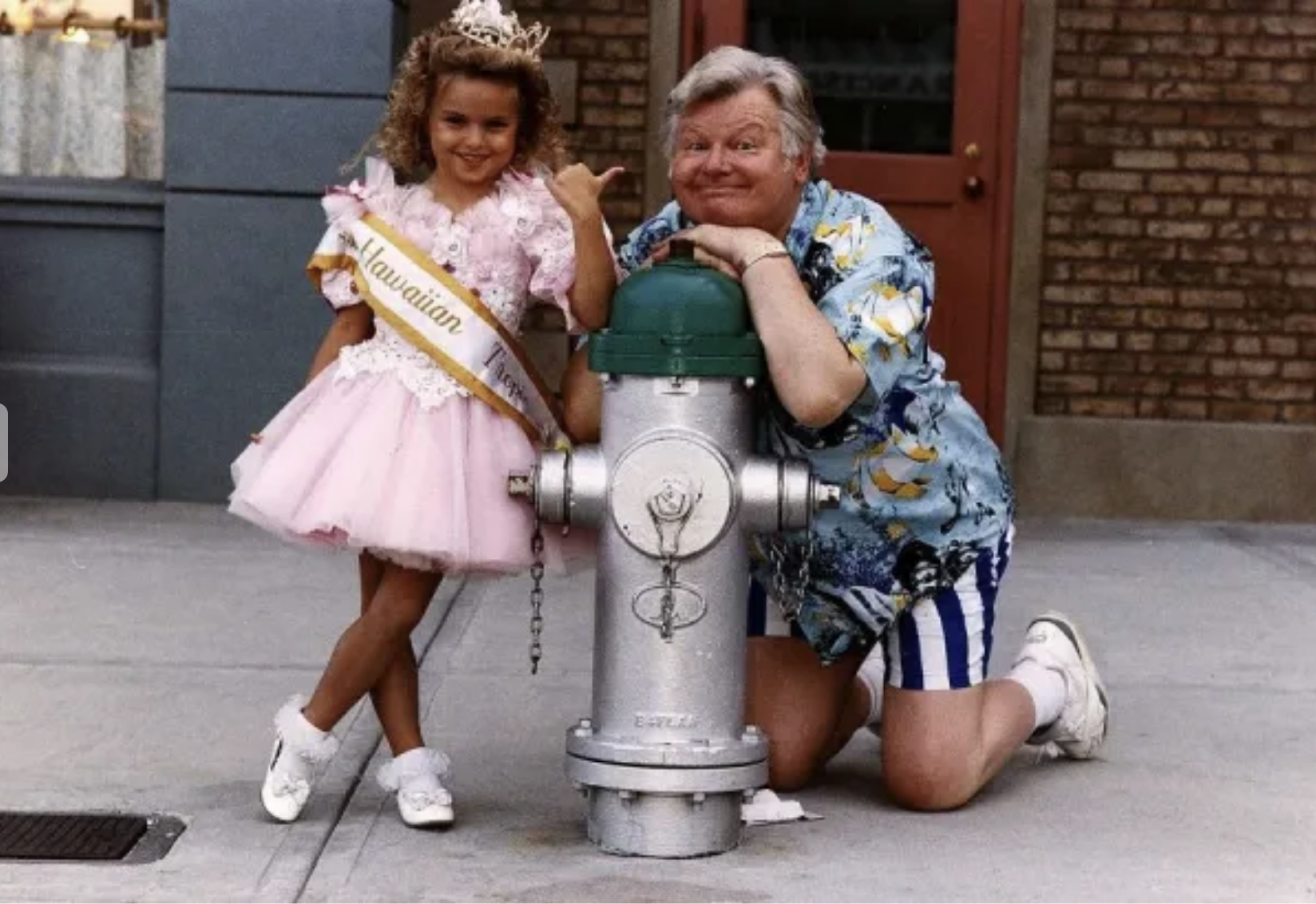
Hawaiian Tropic doesn’t do children’s swimsuit competitions anymore, or adult ones. Evidence of the way things used to be seems to disappear more quickly and more utterly with the internet. It’s funny because, growing up, adults kept telling us that everything was forever on the internet, and now we’re buried in a pile of refuse that never stops growing, impossible to wade through. On eBay, a collector had the flier for the exact pageant I competed in: June 20th, 1993 at the Mariott Hotel in San Ramon!!! with a blue photo of the previous year’s winners. GIRLS - BOYS - BABIES - TEENS. Round crowns for girls. I wonder if the collector was there. I showed it to my friend Rick because it creeped me out, and he sent me ten bucks so I could buy it. If you want something like MISS HAWAIIAN TROPIC INTERNATIONAL BEAUTY PAGEANT 1993 BUSTY MIXED CARD SET, or a rare videotape (only $80) from 1991 called Heat Wave featuring Benny Hill Performing His Incomparable Comedy, the seller’s got those, too.
The back of the VHS sleeve says, This video, without a doubt, shows the most breath-taking women in the world. Over 3,500 contests were held around the globe to narrow it down to the 48 finest beauties you will ever see. Wearing the latest beach fashions from Brazil to Greece, these women were filmed with the latest in video technology during a week of beach parties, pool parties, celebrity press parties and of course at THE COMPETION (misspelling and all).
You will also see behind the scenes preparation, back-stage pressure, and the beach fun that is synonymous with the Miss Hawaiian Tropic International Beauty Competition. See if you agree with our celebrity judges. To be fair to yourself and these beauties you’ll have to watch this over and over again. It’ll be tough work, but you’ll be glad to do it.
The founder of Hawaiian Tropic died in Daytona Beach not too long ago. I’m not sure what killed him. According to his Washington Post obituary—Ron Rice, ‘Suntan King’ who Founded Hawaiian Tropic, dies at 81—he invented Hawaiian Tropic suntan oil in his garage. In Florida, he saw beautiful women in swimsuits and dreamed of selling them something to cover their bodies in. He dumped a number of liquids, random ingredients, and coconut fragrance oils into a twenty-gallon garbage can, stirring it all together with a broom handle.
His story has a carnival barker echo, not unlike the bootstrapped red-blooded American male success stories you hear from politicians or CEOs. Before all the sex and suntans, he was a folksy Carolina mountain boy, and with a $500 loan from dad, he started selling his oil in 1969. I suppose his story and his success are no more or less real than each other, or the beautiful young women on whose bodies he grew rich.
The real gush of Ron Rice’s wealth came when he started promoting his suntan oil with beauty pageants. The first Miss Hawaiian Tropic swimsuit competition was held in 1983. It was absolutely magic, Ron Rice said. I had never seen anything like it. We had every horn dog in the world come in and see the pageant.
They call Ron Rice the Hugh Hefner of Florida. He was a man with Lamborghinis to spare for friends like Burt Reynolds. The New Yorker obituary, written by Susan Orlean, says, Curiously, Ron Rice was not a tan man, but, with Hawaiian Tropic, he became the king of tan. Orlean devotes just two sentences to the Miss Hawaiian Tropic pageants. It feels conspicuously bland. He’s always just described as fun. He looked like shit. Why did a guy who looked like him have so many young gorgeous women under his sway? Perhaps the girls didn’t diminish themselves in power the way I seem to be doing by asking that, by calling them girls (it’s not their problem that I always felt discomfort with the title of woman, or that the avenue for recognition, for contrast, I most frequently stalked was occupied mostly by men). To some of them, he must have been just another mild annoyance to be tolerated for a paycheck, or at least, for the exposure.
Maybe I’m projecting self-doubt onto these beauty contestants the way others project their fantasies. Or in some absurd way, there is a taint of jealousy. . . no, worse, entitlement—the feeling of having missed a monkey bar. I briefly had proximity to this big confirmational kind of beauty, but I was only three, which is one of those humbling thoughts that gives you the relief of laughing at yourself. I grew up hearing more kind than unkind things about my appearance, but viewed both with suspicion and believed neither. Even as a hypothetical, beauty’s touch lingered and became an ever tightening chokehold, a reminder that you don’t look right and that means something.
There’s no mention of the Little Miss Hawaiian Tropic contests on the Hawaiian Tropic Wikipedia or website. My dad still talks about how angry he was that my mom entered me. Even she realized something was off when a member of the audience waved a twenty-dollar bill at us, the pre-schoolers on stage. There’s a video from 2008 on YouTube. The girls look the same age as I was, some with neon colored swimsuit bottoms stretched tight over diapers whose white edges peek out like lace frills.
Marla Maples, the second wife of President and former Miss Hawaiian Tropic celebrity judge Donald Trump, was once a Miss Hawaiian Tropic contestant. There are women who collect beauty titles from among many categories of beauty queen, some I’ve never heard of before. In addition to Miss Hawaiian Tropics, they are also Miss Hooters, Maxim cover models, Playboy centerfolds, MMA ring girls, WWE Divas, Miss International Israels and Miss Suprainternational Israels, and contestants on a British reality TV show where American porn stars take acting classes and perform classic English drama in the West End.
I wonder if drawing money through the image or idea of one’s beauty feels like power, the way that the performance of any labor may confer some kind of power. Collective power, certainly. But the other kind, that draws itself from exploitation rather than work, fills the negative space like noxious gas. So many beauty queens seem to die in their thirties and forties. Half Ron Rice’s life or less. Suicides. Overdoses. Murdered by husbands. Bodies broken for what? Trying to earn a living?
Maybe we want it to be for something beyond that. An aesthetic ideal. A confirmation of the sense and symmetry in our artificial systems, against which our deep animal bones thrash, that their bodies can bestow upon us supplicants. Maybe the root of this jealousy is in the fear that my body isn’t a material resource in the same way, that I lack the kind of body or, really, commitment to the body, that can make me money or make someone else wealthy in this particular line of work. All we have in this life are our bodies, for others to make money off of. I know this. So where did this lack-shaped hole come from?
Again and again, from the pediatrician to classmates and teachers and older guys in bands and boyfriends and their best friends and girl-strangers and my friends, I fumbled blind for understanding expressed as desire or vice versa. Anyone who looked in my direction must be a trophy-bearer. We must either give or receive. We must exist in transactions.
I leapt off a barn roof when I was sixteen for a movie some guys at my high school were making. One of them showed me once how to fall, turned his body to land on the plastic-coated mattress below and bounced back up with long cowboy boot strides. I had no fucking idea what I was doing. I just went for it, stepped off, and felt like I was floating. The fall was nice. The mattress slid out under me and my ankle took most of the weight as I hit the ground. Tingling sharp numbness masked it, but there had to be pain, because I felt like I was going to throw up. Embarrassed and confused, I shot up and limped around. No I’m fine. I’m fine. I couldn’t see what I was looking at. The guy’s parents gave me horse ibuprofen and horse tranquilizers. I was so ashamed of getting it wrong. They weren’t filming when I fell, so it’s like nobody saw.
My hair was always in my face. Long black and brown bushy curtains. I needed a haircut for that same never-completed movie, and asked my younger sibling Chayo, who cut it too short on accident. I told them it was no big deal because I could hear them crying through our shared bedroom wall, and I tried to get it fixed at a Supercuts and left with a bowl cut and bangs. My skinny goth boyfriend came over and yelled about my hair until I cried. I kinda liked the cut, though, later. It felt like I could have been a member of the Buzzcocks in an alternate universe, and I told myself that meant something.
It was a relief when, later that year, I had to start wearing glasses. I loved having something to hide behind.
I was on a date with someone else when I met Michael. He wanted to see Michael’s band on their tour from Seattle because Michael was one of his favorite artists. As soon as Michael entered the bar, we were pulled to each other. He slammed a beer on the table, sat down, and that was it. To be so easily beheld and opened up there with my date watching was intense and unsettling. He said, What’s your story? Irresistibly, I emptied myself to him.
He came back a couple months after that, stayed for a week. The first night we spent together, I lay on top of him, fixated on the patch of hair nested in his clavicle. He lifted my face to his and said, You’re the kind of person I could develop real feelings for, in a sort of heavy, troubled voice. I wrinkled my nose and said, What does that mean? He answered, I was interested in you right away. Because of the way your eyeballs look. I knew he didn’t mean it the way the toddler bikini contest judges did. He meant how I peer through them. I knew it because I saw him, too, in the way his sad Paul McCartney eyes did their looking.
The second night I spent with Michael, I purposely left my face and hair undone, wore leggings and a long old purple flannel shirt. I wanted him to want me for anything but my body, my appearance, but it’s bullshit because I also wore a delicate lace thong, peachy and sand-colored, and the idea entered me from everywhere and nowhere while I undressed. Actually, will you take my panties off?
It thrilled me. I’d never asked anyone to do this before. He looked at me like he was praying, like he had understood a sound from heaven’s frequency, and said Yes with a capital Y. He took the lace in his big hands and slid the underwear down my thighs, his fingertips skimming the surfaces of my knees, the contours of my long calves. Hovering between Michael and my bed as if on a cloud, between being touched and being undressed, I felt bodiless and beautiful.
After that week we spent splashing in the mess of our big love, Michael went back to Seattle. We struggled to make sense of the parting. What if this is real? he asked before I drove him through rain to the airport. What am I supposed to do? I told him, It’s real, and told myself, It’s so real that I bet most people go their whole lives never feeling it. Holy shit I’m so lucky I got that for even a week. I can do anything, now. As long as I live I’ll be happy because someone saw me, once.
Michael and I saw other people and didn’t see each other for five years. We were far apart, then, in more than physical distance. By the time we reconnected, we were living even further apart than before, but other distances between us had closed. I twisted and pleaded my body into pitiful but earnest imitations of centerfold poses and sent Michael photo after poorly lit photo. I begged for videos of him making himself come, with sound. I wanted him to know I saw him, and heard him, too.
Now I believe the trick is not so much to see, but to look, first. I look at him, still. I press play. I keep looking. I train my eyes on him, and the small vision of his body begins to alter my breath. I occupy my body, fill and expand beyond it.
A problem I have with being an individual is the difference between perceiving and looking: what are we actually seeing? Bodies or dollar signs? Desire or conditioning? It is mortifying to be seen, as anyone who’s sick to death of how we talk when we talk on the internet has heard. Do I assume too much when I say we must all want it in some way? Maybe we don’t really know what it is we want, or what it is we are winning when some other human body takes us in, or if we’d still want it, if we knew.
Several women sued Ron Rice for sexual harassment. You might be thinking, Oh, shocking. Rice denied everything, settled out of court with one woman and dragged another for six more years until the judge decided he wasn’t liable for damages. He sold Hawaiian Tropic to Playtex in 2007, made over eighty million, and then someone else got it from Playtex when they bought Playtex, or another group bought it from the next guy. You know how it is.
After divorcing his first wife, Ron Rice married a former Hawaiian Tropic beauty queen twenty-five years younger than him named Darcy LaPier. At their wedding, they had a carriage drawn by a spotted Appaloosa whose mane and tail were dyed vibrant pink. They drank champagne from what was supposed to be that same goddamned garbage can he mixed all the coconut shit in. This man loved his garbage can.
Within two years, Darcy left him for Jean-Claude Van Damme, who broke it off with his bodybuilder wife for her, and it turned out she never divorced her first husband, so Ron annulled their marriage but raised a daughter with her anyway (child support, no alimony). Then she left JCVD for the founder of Herbalife and JCVD remarried his first wife, and Darcy’s Herbalife guy OD’d and died a year later. Now Darcy has another husband and all these children of successful men, and she lives on a ranch in Oregon where she has made herself over into a star rodeo barrel racer. I sort of smile, imagining her.
Not long after Hawaiian Tropic’s Hooters-esque restaurant venture launched and crashed in sexual assault lawsuits, the suits running the brand realized that, since women were their target market and primary consumers, they should appeal to those women instead of appealing to increasingly dated projections of American straight male fantasies. With their new website featuring unretouched models, Hawaiian Tropic sells wellness, a contemporary spin on desirability that is attainable for every body (as long as that body carries money).
I wonder what the company refers to when they describe making products in the spirit of the islands. Something about freedom from restriction or responsibility, I guess (so free that they freely associate with islands that appear nowhere in Rice’s history). They still claim to be in pursuit of beauty, only now it is the beauty and joy in all things: our skin, ourselves, our communities, our planet. This is why they proudly make products that are free from oxybenzone and octinoxate. Those things bleach and kill coral reefs. Hawaiian Tropic even rejects bleach now. Gone, disposed of, are the luminescent bottle blondes who once bore their beauty for the brand.
Ron Rice founded another skincare company before he died. Habana Brisa, or Havana Breeze. The company launched recently and their About Us mentions the trash can and exotic ingredients. Then their man’s whole history is boiled down to Ron founded Hawaiian Tropic and grew it to become an $8B global brand - #2 in the world, which was sold in 2007 to big industry. The rest of it is a cloud of feel-good messaging like reef-friendly. Environment. Locally owned. Trust. Integrity.
Above it all a banner blares, Developed by Ron Rice, legendary founder of Hawaiian Tropic. No mention of beauty queens, the golden bodies that carried his product, or of the small stumbling child bodies following in their wake, or of the lives cut short by big business. His body never sold a single bottle of suntan oil.
Lauren Lavín is a writer and musician with work in Triangle House Review, Rejection Letters, Farewell Transmission, and elsewhere. Her first essay collection, The Third Beat (Autofocus Books) will be published in 2026. She was made in Mexico, born in Oakland, and currently lives in Seattle.
Here's a newish one from me.
Erosion
At a church service in Chicago they had set up cardboard cutouts in the pews to represent the worshippers who would have attended mass if not for fear of being disappeared. Not far away I saw a laborer’s lunch had been left uneaten and spilled over onto the sidewalk outside of a home he must have just been working on. Laboring on. There’s a dumpster out front and a red white and blue flag themed porta-potty from a company called Patriot Portables. Three ladders still leaning up against the building.
It looks like it would have been a pretty good lunch. Even tossed aside like that. Wasted now. A smear of orange hot sauce on the cracked styrofoam container. Not yet taken away by the wind. Such a beautiful seeming neighborhood too. I imagine it’s a very nice place to live. They say that Chicago is still surprisingly affordable.
It shows me home listings when I scroll now because I clicked on one or two at some point and so the computer believes that this is an integral datapoint that explains who I am. I just saw one hanging ten off of a bluff that has been pummeled by centuries of waves and so will not exist for much longer. Neither house nor bluff. Overlooking the water on Cape Cod. You could squeeze a couple of good years out of it still I thought. Until one awful night. I can’t afford it even now despite the implication but it’s a nice little nightmare to have.
I thought of a friend who was recently diagnosed with a terrible albeit not yet terminal disease but maybe that’s a bad analogy. A house is worth so much more than a person.
I don’t know how much longer it will sit there. Either the house or the guy’s lunch. Maybe everyone passing by assumes another worker is going to arrive soon to take care of it but it could be he’s already been disappeared himself.
Who will clean any of this up?
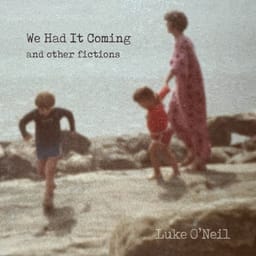
If you liked that one please consider checking out my book We Had It Coming – which is still only two months old by the way.
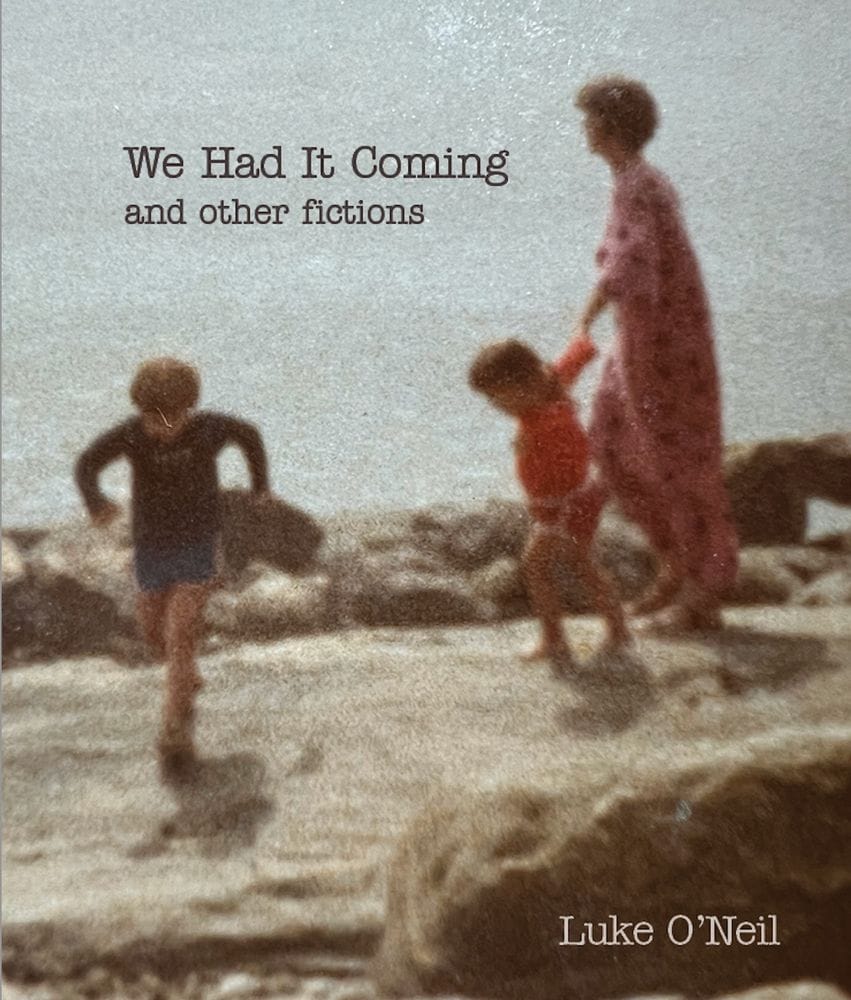
Here's a nice new review of it I just read.


It goes in part like so:
Rather than belabour the syntax, it’s easier to say O’Neil says what he wants to say. There’s a refreshing bluntness that suits the head-on acknowledgment of contemporary self-reflection. Once familiar, the voice is rather comforting, although it tries hard not to be: the perfect clarity of “facedown and clenching the sheets like the napes of two cat necks” is prefaced by the seemingly deliberate difficulty of lines like “Or what it will have always had to have been that you will have always had to have done to me.”
There are very personal themes here, from addiction to self-harm to the small betrayals of habit, when, for example, “not knowing anything better to do in that pocket of time where each spoken sentence was a struck gavel he made everything worse by looking down at his phone.” The narrator seems to frequently pause to look us straight in the eye, for a mid-narrative confession: “I have had this strange tension inside of me for a while now that I can’t relieve myself of by turning it into words which is the course of care that I typically prescribe myself.”
There’s a strong sense of place throughout the collection, but with the shading of resigned desperation, almost as keen as describing a memory while it is still being formed. O’Neil often points to the small tortures of acknowledging the sharpness of reality alongside and our shared passivity: “Being lied to isn’t so bad sometimes compared to being aware of how things actually are. You wouldn’t want to go around like that for very long. No one wants to know all the secrets.” There’s humour as well, even in when reflecting on the destitute, as if watching disaster rolling in and not knowing if it’s staged or not. The tension of waiting for a punchline is soft but unwavering: heat that never breaks; a storm that never settles.
While the collection is very much rooted in the present, the struggles we witness here could have been passed through generations like the seemingly-discarded communities O’Neil let us loiter in. Filled with personal and inter-personal observations and interactions that are deeply perceptive in their quiet moments, We Had it Coming may feel ominous, but its quiet beauty is what the reader is most compellingly left with.
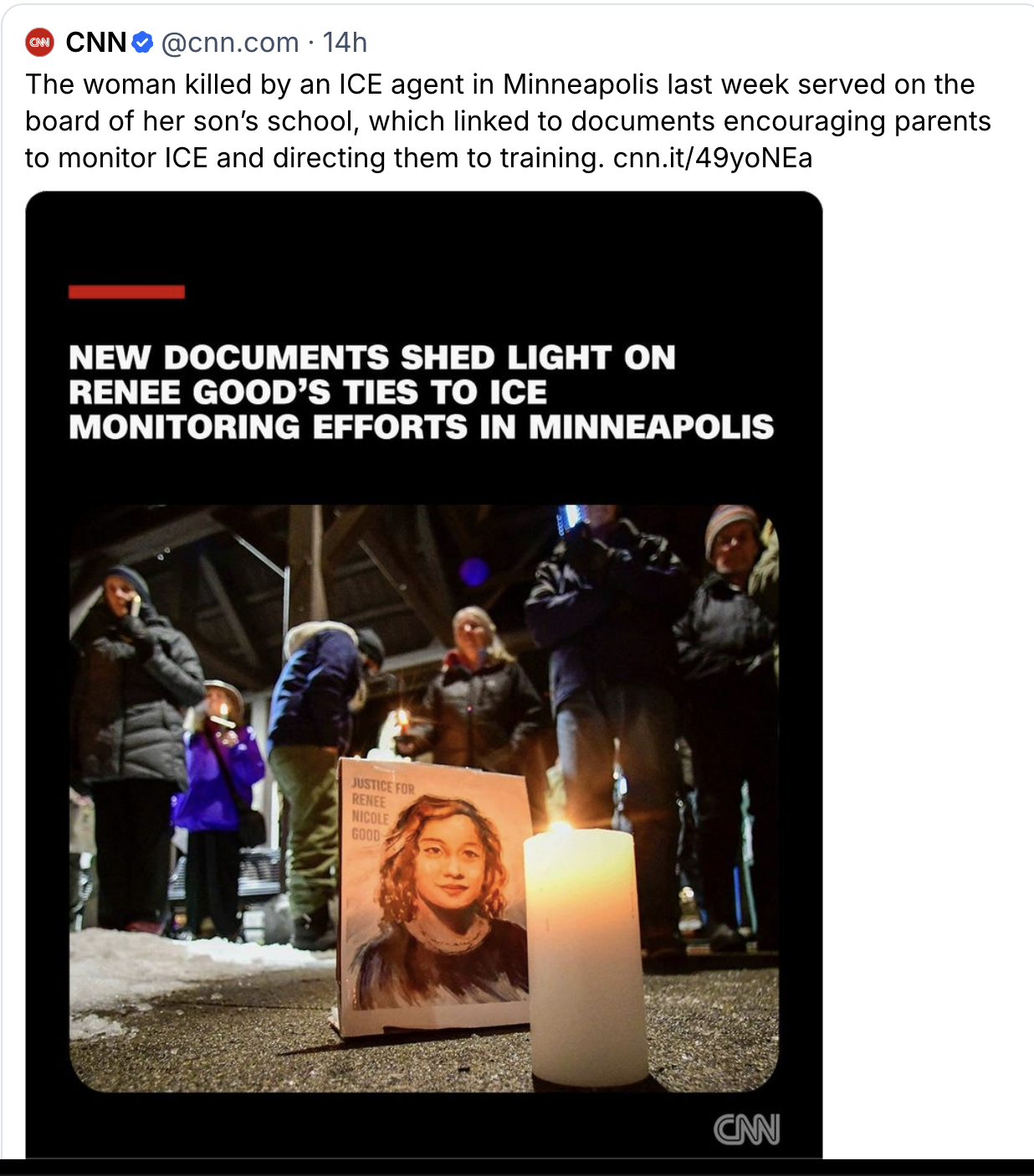
🤔
— Luke O'Neil (@lukeoneil47.bsky.social) 2026-01-13T01:51:16.655Z
You don't say! They're trying to prosecute the murder victim? To figure out why she's guilty of her own death? Hmm.
Fuck this evil article too and anyone who had anything to do with it.
Alright. Alright. Paid subscribers can stick around for the latest playlist emo en español plus the best things I read this week and some funny posts I liked and whatever else it is I end up putting in here. Thank you for being here.
Here's a nice photo for the road of my reading crew in Philly from back in December I hadn't seen until Sadie just shared it. What a nice time.