The kids are protecting us from ourselves

Now I know I’m not supposed to say this as a poet but there are entirely too many easy metaphors at play in real life of late. Cut the shit with all the big dangling meatball over the plate metaphors. They're gonna put me out of work at this rate.
Today I'm happy to welcome back Evan Greer of the digital rights nonprofit Fight for the Future to write about some scary proposed social media legislation in Massachusetts and attempts to "keep children safe" from the internet around the country. Greer wrote for Hell World a couple years back about a slew of harmful internet censorship bills that were being considered by Congress.
 Luke O’Neil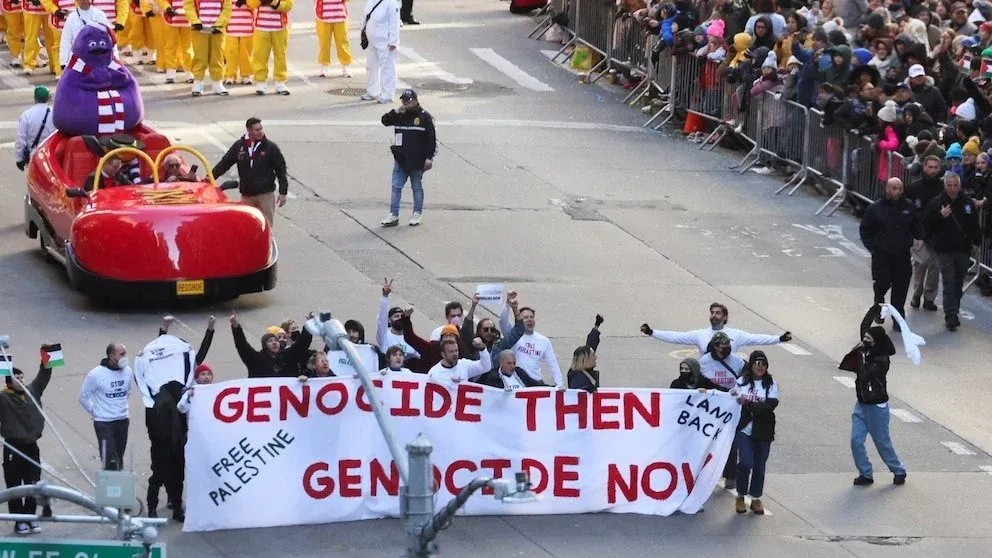
She also wrote with a bunch of others about her favorite Oasis songs.
Luke O’Neil
The kids are protecting us from ourselves
by Evan Greer
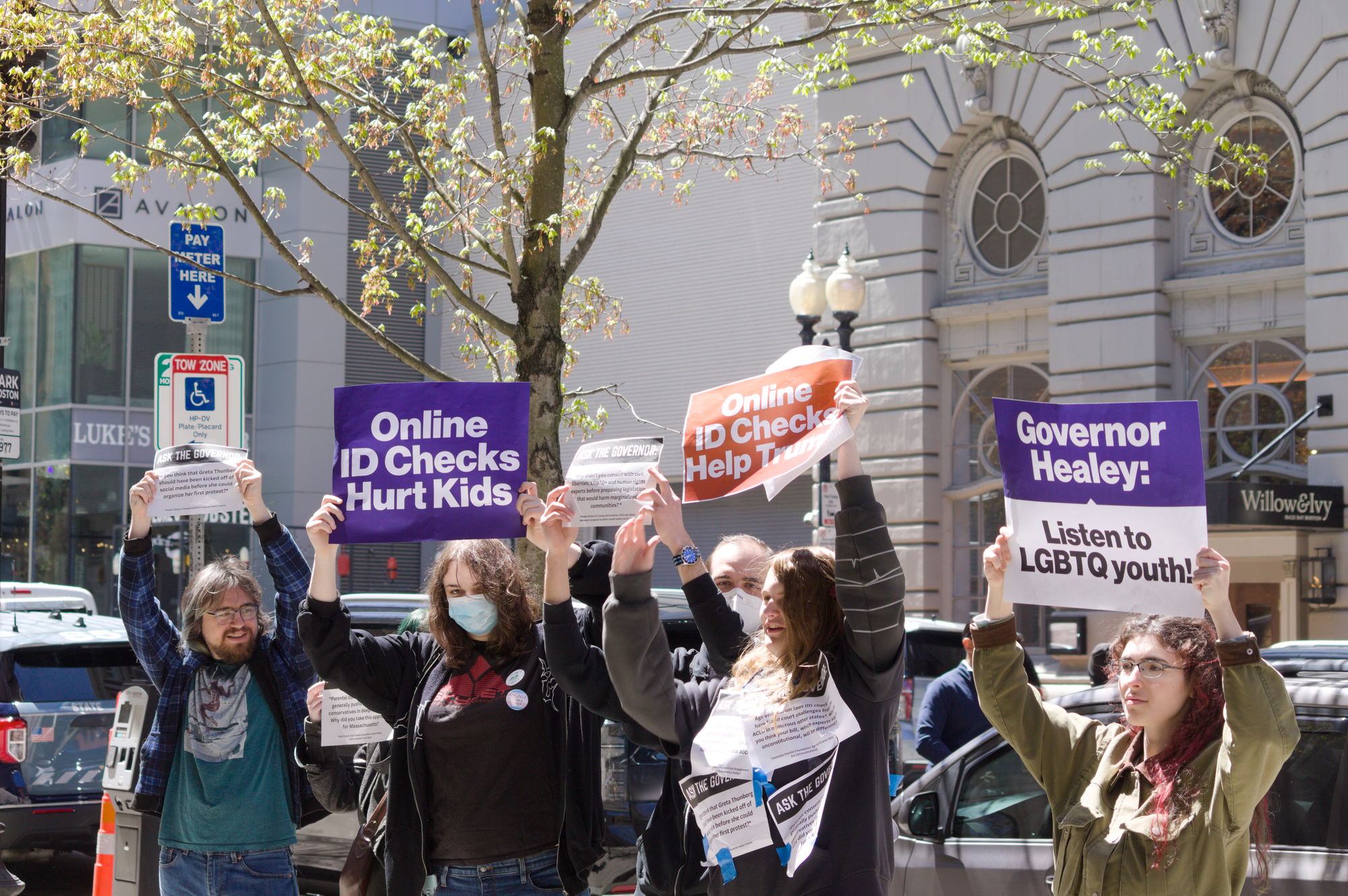
Luke asked me to write a piece about a frightening turning point in Massachusetts: Governor Maura Healey and her legislature are rushing to pass dangerous social media surveillance legislation that would force everyone in the state to upload a government ID to post online. You can read my Boston Globe op-ed about why this would hurt kids and help Trump target undocumented folks and LGBTQ+ youth. Hit up my organization Fight for the Future if you want to help fight the nationwide spread of bills like these.
I don’t know if you can imagine such a thing, but when I was a high school student near Boston a couple decades ago, my government launched an illegal war in the Middle East.
I had a magenta flip phone at the time, one of those Samsung things with the little alphanumeric keypad. It was awesome.
I used that phone to help organize a walkout with other high school students across the city that ended up being part of some of the largest protests in Boston since the Vietnam War.
Elder millennials will remember: being an anti-war teenager at that time was a lot like wearing a Yankees hat at Fenway. For the younger readers, it’s hard to describe how popular the invasion and the slaughter of Iraqis was among white Americans, even in “liberal” Boston. People came at us with all the classics: “Get a job,” “Commie fags,” “Love it or leave it!” The pundits on CNN and in the New York Times were more sophisticated when belittling and dismissing us, but the message was basically the same: “You naive kids don’t know what you’re talking about.”
Twenty years and hundreds of thousands of dead civilians later, there is a broad consensus that “the kids” were right all along. Even our boomer parents who cheered the march to war––after they were mocked and derided by their parents for growing out their hair and dodging the Vietnam draft––admit this now.
My generation, politicized in post-9/11 America, are now around the same age our parents were in 2003. We’re becoming bosses and mayors and senators and TV pundits. And our kids are old enough to have their own phones.
The cell phone I had in high school is very different from the cell phone that my teenager has now. There were no apps on it built by techo-fascist billionaires explicitly trying to bring about the apocalypse. It did not track my location data or connect me to algorithmically curated content feeds powered by my teenage impulses and preoccupations.
Kids these days indeed have very different phones, and they’re growing up on a very different internet. While the data is significantly more nuanced than breathless headlines like “social media is this generation’s cigarettes” suggest, you don’t have to be a social scientist to see that surveillance-driven corporate social media platforms designed to “maximize engagement” are terrible for humans of all ages. The incentives simply do not align.
Even before the Cambridge Analytica scandal, human rights activists and organizations like mine had been fighting for years to take down these abusive Big Tech giants—to structurally limit their power to control what we see and how we engage with the world. We’ve come very close to passing strict privacy and antitrust laws that would topple some of the pillars propping up Silicon Valley’s empire.
But in recent years, almost all the political will around tech regulation has been hoovered up by politicians who don’t actually care about fighting Big Tech or addressing corporate harm. With the help of technology lobbying groups and right-wing strategists, they’ve found that “protect the kids from the evil internet” is a messaging trump card for white suburban voters.
This move—the shift in attention from the malfeasance of the powerful, to the fallibilities of the weak—should be familiar to us. The New Right perfected this dark art, merging evangelical Christianity with white reaction to the civil rights movement in order to deconstruct the green shoots of a welfare state that sprouted during the New Deal. Moral panics give the masses something to rally behind so they don’t notice the strip-mining of institutions that benefit the commons. What sounds sexier and easier to sell, corporate consolidation in the music industry or the idea that cassette tapes are turning model suburban kids into Satan-worshipers? What’s more incendiary, the death rattle of the Department of Education or immigrants “eating the cats and the dogs”?
Today’s moral panic about kids and their damn phones has a direct link to the evangelical New Rightists who have rallied against “immorality” on the radio and on newsstands since the reactionary 1970s. Bills like the Kids Online Safety Act are supported by the Heritage Foundation because they’d provide a shortcut for removing information about race, gender identity, and sexual health from the internet. Support for age verification mandates is whipped up by NCOSE, formerly known as Morality in Media, famous for their loathing of hip hop, Robert Mapplethorpe, and the female nipple.
These bills (what we term the Bad Internet Bills) won’t truly hurt Big Tech. As long as these too-big-to-fail companies maintain their marketplace dominance, Washington relationships, and defense contracts, they could care less about an uptick in their legal expenses. And the morality police’s position is buttressed by a cottage industry of podcasters and pundits who locate the root of all evil in screen time. If your source for information on the digital world is NYU social psychologist Jonathan Haidt, you might learn that touchscreens are turning people into zombies, triggering latent mental illnesses, and sucking, parasite-like, at our children, leaving behind only a husk known as the iPad Kid. Haidt has also promoted widely debunked transphobic conspiracy theories, agreeing with the Heritage Foundation that “Big Tech is turning kids trans.”
Like all successful moral panics this one contains a grain of truth. Big Tech companies are truly capable of manipulating the media ecosystem. They do knowingly design addictive products, and there is an urgent need for thoughtful and rights-preserving regulation. But at its core, the movement to kick young people off the internet is rooted in puritanical ideas that kids should be seen and not heard. We like to joke about memes and brain rot, but by convincing ourselves that “the kids” are all just mindlessly scrolling, suffering from “addictions” that distort their perspective and short-circuit their agency, we give ourselves license to ignore them completely. We can tell ourselves it’s a good thing that “the adults” are in charge.
Top Democratic pundits have explicitly claimed that teens oppose the genocide in Gaza only because they’ve been brainwashed by a Chinese TikTok psy-op. Somehow this seems more plausible than the idea that “the kids” came to their own conclusions after watching an endless stream of videos and news reports about other children being bombed and burned and maimed.
Just like with jazz, rock and roll, Vietnam, Iraq, LGBTQ+ acceptance, climate change, video games, and Gaza, adults will twist themselves into knots and place blame on a mysterious malevolent force that has brainwashed our kids, rather than face the reality that the kids might be right and we might be wrong.
Greta Thunberg was fifteen when she launched a global youth-led movement demanding climate action (stymied by adults). Students at the Marjory Stoneman Douglas High School in Parkland moved through unimaginable tragedy and a hateful conspiracist backlash to organize a national movement against gun violence (again, stymied by adults). In these instances, the divide between the young and the old is clear. Kids notice problems in the world, and with few resources, oftentimes without political representation, they try to do something about it. In response, adults hide their heads in the sand.
Our responsibility for well, Hell World, is a difficult thing to face. Instead, maybe those kids should quiet down. Maybe we should take away their tools, their digital window to the world, their online relationships—after all, it’s “for their own good!”
The “protect the kids” movement is rooted in the same misguided thinking as abstinence-only sex education. Keeping kids ignorant doesn’t make them safer.
The best way to protect kids is to arm them with knowledge, critical thinking skills, and the confidence to set healthy boundaries, question authority and communicate about their struggles. Protecting kids without empowering them usually just means silencing and controlling them.
If politicians actually wanted to protect kids, the first things they’d do would have nothing to do with the internet or social media. They might instead try abolishing child prisons, or making sure every kid has a safe place to sleep at night, healthy food to eat, and access to good medical care. Perhaps they could fund community centers, parks, and “third spaces” where teenagers can hang out without getting harassed by cops and Karens.
These are all things that would do exponentially more to improve teen mental health than anything you could do to TikTok or Instagram. (Other than tax the shit out of them to fund all the stuff above.)
There are also real things that can be done to crack down on the predatory and abusive business practices of Big Tech social media firms. Privacy and algorithmic justice legislation strike at the root of Big Tech harm. We can force these companies to make their platforms safer for everyone, rather than kicking kids off of them and letting Big Tech do whatever it wants to the rest of us. Antitrust laws could make it easier to ditch monopolies like Google and Instagram and switch to alternatives like Mastodon and Bluesky.
I’m meeting with Governor Healey’s team next week. At my most optimistic, I hope they’ll listen to the concerns raised by human rights experts, LGBTQ+ youth, and ordinary massholes. They have a chance to show actual leadership by advancing thoughtful and progressive policies that rein in Big Tech without throwing trans kids and privacy under the bus.

The stakes are high. If one of these “kick the kids off and spy on everyone” bills passes in a state like Massachusetts, these draconian bills will be copied and pasted to every other blue state in the country faster than activists can fight them. We have to make our stand here.
Kids and teens are not property. They are whole ass human beings with their own thoughts, ideas, and dreams for the future. And if history has taught us anything, it’s that they’re almost always right, and have moral clarity when adults are telling ourselves lies about the world we have wrought.
Protecting kids is and always will be the best political talking point of all time. But if we take an honest look at history, most of the time “the kids” are protecting us from ourselves.
Evan Greer is a punk musician, parent, writer, and activist based in Boston. She’s the director of Fight for the Future. Anna Bonesteel from Fight for the Future helped edit and contribute to this piece. Follow our work on your favorite surveillance capitalist social media platform or at www.fightforthefuture.org
Help us keep fighting the good fight with a subscription.
Paid subscribers stick around for a lot more from me including thoughts on the recent what-have-you in D.C., the Hell World News Quiz, a look at the latest NYT Trump-voter geniuses roundtable, and some bits on trophy hunting, Lincoln's 1860 Cooper Union address, the dying wishes of two politicians on their way out the door, Bill Maher, Jimmy Fallon and smoking cigarettes. Plus the best new shit I read, listened to, and watched this week.
Thanks as always for being here.