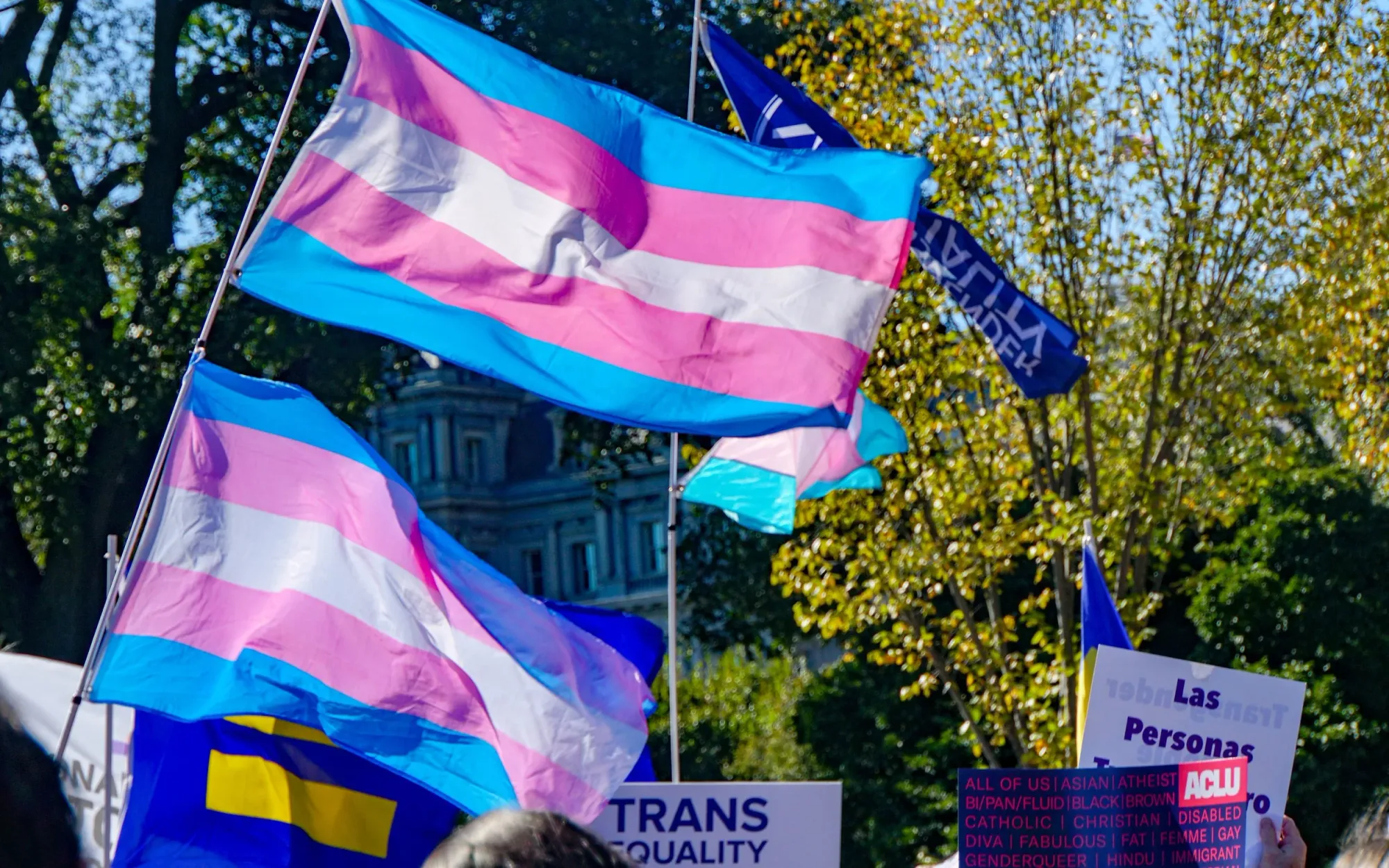
A coordinated campaign to drive trans people out of public life
Parker Molloy on the latest Oklahoma anti-trans work
First Trump hung the extrajudicial murders of fishermen in waters near Venezuela on Pete Hegseth then Hegseth pivoted immediately to blame it on Admiral Mitch Bradley and now the entire chain of command might be held accountable.
And that’s why fascism is also funny.
Before anyone feels bad for this specific admiral remember that anyone can get a job that isn’t killing people. Never mind being one of the top guys doing it. It's very easy to do!
Just to be clear by the way this was not a war crime. Because we are not at war. These were not combatants. This was murder. Plain and clear.
Who knows if anything will come of this. Probably not!
One thing I do know though is that if Democrats are ever in power again what is going to happen is that the idea of holding the Trump administration accountable for breaking the law every single fucking day is immediately going to be made out by politicians and the media as the far greater breach of decorum and the rules than all the law breaking in the first place. Time to look forward etc. Sounds wild but I know this because I have been alive for greater than zero years.
We've got a really good one by Parker Molloy today. I usually could not give a single shit about what is happening on college campuses but this latest thing is awful and emblematic of the constant efforts from the right – and plenty of centrist liberals for that matter – toward preventing trans people from existing in public.
One thing I really love to do is pay writers whose work I admire to write for you good people. Maybe you'd like to get a paid subscription to help me continue to do that?
Parker previously wrote for Hell World about her favorite Weezer songs.
It's About Making Trans People Unemployable
by Parker Molloy
By now you may have seen the story making the rounds. It’s about a University of Oklahoma student named Samantha Fulnecky who received a zero on a psychology essay, filed a discrimination complaint, and got her trans graduate instructor placed on administrative leave. Conservative media has framed this as religious persecution: a brave Christian student punished for citing the Bible. The governor of Oklahoma has weighed in. Libs of TikTok has amplified it to hundreds of thousands of people. Turning Point USA is demanding the instructor be fired.
But if you actually read the essay — which TPUSA helpfully published — you’ll find something different than what’s being advertised.
The assignment asked students to write a 650-word reaction paper responding to an article about “Gender Typicality, Peer Relations, and Mental Health.” The rubric was straightforward: 10 points for showing a clear tie to the assigned article, 10 points for providing a thoughtful reaction rather than a summary, and 5 points for clarity of writing. Students were given suggested approaches like discussing whether the topic was worthy of study, applying the findings to their own experiences, or offering alternate interpretations of the researchers’ conclusions.
Fulnecky’s essay mentions the article exactly once: “The article discussed peers using teasing as a way to enforce gender norms.” That’s it. The remaining words are a sermon about what God wants for gender roles, culminating in the claim that “society pushing the lie that there are multiple genders and everyone should be whatever they want to be is demonic and severely harms American youth.”
She also calls her classmates “cowardly” for not sharing her views.
This is not a good essay. Not because of the religious content — you can absolutely bring religious perspectives into academic work — but because she just… didn’t do the assignment. A reaction paper is supposed to react to something. Fulnecky barely acknowledged the source material existed before launching into a position statement that would have worked just as well (or poorly) for any article tangentially related to gender.
The graduate instructor, Mel Curth, gave remarkably patient feedback. “Please note that I am not deducting points because you have certain beliefs,” Curth wrote, “but instead I am deducting point[s] for you posting a reaction paper that does not answer the questions for this assignment, contradicts itself, heavily uses personal ideology over empirical evidence in a scientific class, and is at times offensive.”
Curth explicitly told Fulnecky that it’s “perfectly fine to believe” normative gender roles are beneficial. The problem was the logical contradictions (arguing people aren’t pressured into gender roles while simultaneously arguing religious pressure to conform is good), the lack of engagement with actual course material, and, yes, calling a group of people “demonic” in an academic paper.
“I encourage all students to question or challenge the course material with other empirical findings or testable hypotheses,” Curth wrote, “but using your own personal beliefs to argue against the findings of not only this article, but the findings of countless articles across psychology, biology, sociology, etc. is not best practice.”
Another instructor, Megan Waldron, who teaches a different section of the same course, backed the grade. She found it “concerning” that Fulnecky didn’t view bullying or teasing as a bad thing, and noted that “your paper directly and harshly criticizes your peers and their opinions.”
None of this matters to the people amplifying this story. The essay is a prop. The point is that Curth is trans.
The Quiet Part Out Loud
Fulnecky’s mother, Kristi Fulnecky, a lawyer who defended a number of January 6 rioters, has been busy on social media. She’s been retweeting posts that say things like “If you claim to be a transgender — you should be banned from working in any school. Transgenderism is a mental illness” and “Individuals who identify as trans should be automatically disqualified from holding any position as teacher or professor.”
To that last one—a post explicitly calling for employment discrimination against all trans people—Kristi Fulnecky replied: “Agreed! Proud of my daughter!”
This is the tell. The family isn’t arguing that this particular grading decision was wrong. They’re celebrating their daughter’s role in a broader campaign to make trans people unemployable. The discrimination complaint, the media tour, the outrage — it’s all in service of the goal stated plainly in the posts Kristi Fulnecky is boosting: trans people should not be allowed to work in education.
Chloe Cole, a detransitioner who’s built a lucrative career as an anti-trans activist, demanded the university be defunded until Curth is fired. TPUSA’s post about the incident included the line: “We should not be letting mentally ill professors around students.”
The playbook here is familiar. Find a trans person in a position of minor institutional authority. Manufacture or amplify a confrontation. Blast it through the conservative media ecosystem until it becomes national news. Watch as institutions capitulate.
It works. Curth — who, by the way, had reportedly just received an Outstanding Graduate Teaching Award from OU’s Department of Psychology — is now on administrative leave. The university’s statement emphasized its commitment to “protecting every student’s right to express sincerely held religious beliefs,” which is a fascinating way to describe giving a bad grade to a bad essay.
The Targeting System
The throughline in all of these cases is Libs of TikTok, an account run by Chaya Raichik that has become a kind of targeting system for the anti-trans movement. Raichik reposts content from LGBTQ people and their allies, often with mocking commentary, and her millions of followers do the rest.
Schools, children’s hospitals, and libraries featured on the account have reported receiving bomb threats. Teachers have resigned or been fired. Medical providers have faced death threats. The pattern is consistent enough that critics have called Raichik a “stochastic terrorist” — someone who publicly demonizes people in ways that predictably inspire supporters to commit violence, while maintaining plausible deniability about any specific act.
The case studies are piling up.
Remember Dylan Mulvaney? In April 2023, she posted a single sponsored Instagram video featuring a personalized Bud Light can. That was it. That was the whole controversy — a trans woman appeared in a beer ad… to her own audience. The resulting harassment campaign left her scared to leave her house, ridiculed in public, and followed. Kid Rock filmed himself shooting cases of Bud Light with a rifle. The company’s sales tanked, and Bud Light never publicly stood by her.
“For a company to hire a trans person and then not publicly stand by them is worse, in my opinion, than not hiring a trans person at all,” Mulvaney said. “It gives customers permission to be as transphobic and hateful as they want.”
Or take what happened at Texas A&M just a few months ago. In September, a Republican state representative named Brian Harrison posted a 23-part social media thread with the headline: “CAUGHT ON TAPE. TEXAS A&M STUDENT KICKED OUT OF CLASS AFTER OBJECTING TO TRANSGENDER INDOCTRINATION.” The post got millions of views. Within days, the professor — Melissa McCoul, who had taught the same children’s literature course at A&M at least 12 times since 2018 — was fired. The dean and department head were removed from their positions. And then the university president resigned.
A faculty committee later unanimously ruled that “the summary dismissal of Dr. McCoul was not justified” and that the university failed to follow proper procedures. But by then the damage was done. The message had been sent.
This Is Oklahoma
It’s worth noting that this is all happening in Oklahoma, a state that has become something of a laboratory for anti-trans policy. Governor Kevin Stitt has signed bills barring trans students from using bathrooms consistent with their gender identity, banning gender-affirming care for minors, prohibiting nonbinary gender markers on IDs, and blocking trans girls from girls’ sports.
In January 2024, the state’s then-Superintendent of Public Instruction, Ryan Walters, appointed Raichik, who has no connection to the state and does not live there, to the Oklahoma Department of Education’s Library Media Advisory Committee — giving the person behind Libs of TikTok an official role in deciding what books Oklahoma students can read.
A month later a 16-year-old nonbinary student named Nex Benedict died. Just one day after being beaten in a school bathroom at Owasso High School — the same district where, in 2022, a teacher “greatly admired” by Nex had resigned after being targeted by a Libs of TikTok post. According to Nex’s mother, the bullying had started after Stitt signed the bathroom bill.
Nex’s death was ultimately ruled a suicide. The climate in which Nex lived — a climate shaped by the very people now celebrating Samantha Fulnecky as a “warrior of Christ” — is not incidental to this story.
What This Is Actually About
There’s a reason Riley Gaines, a middling college swimmer who once tied for fifth place in an NCAA championship, now has a full-time career as an anti-trans activist with a nonprofit, speaking fees, and congressional testimony.
In 2023, the Leadership Institute — a nearly 50-year-old nonprofit that trains conservative activists and counts Mitch McConnell and Mike Pence among its alumni — launched the Riley Gaines Center with the goal of “protecting women's sports.” The organization is funded by the Charles Koch Foundation and serves as a member of Project 2025's advisory board. The Dick & Betsy DeVos Family Foundation donated $100,000 to the center in 2023. In the first five months of its existence, the Leadership Institute paid Gaines more than $126,000 as director.
She now has a podcast on Fox Nation, a merchandise line, two book deals, and has testified in or appeared with politicians in at least 21 states. Ron DeSantis's presidential campaign paid her nearly $12,000 for travel and consulting. She stood next to Donald Trump when he signed his executive order banning trans women from sports. This is what a fifth-place finish buys you if you're willing to make hating trans people your full-time job.
And it's not just Gaines. The infrastructure is growing. The Independent Council on Women's Sports (ICONS), a nonprofit that describes itself as "not political," went from about $100,000 in revenue in 2022 to over $1 million by 2024. ICONS is now funding three major lawsuits against the NCAA arguing that trans athletes should be banned from women's sports entirely. Chloe Cole, the 20-year-old detransitioner who demanded OU defund itself over the Fulnecky essay, testified in court that she earns upwards of $200,000 annually for opposing gender-affirming care — money that flows through speaking engagements, donations, and her employment with the far-right organization Do No Harm.
This is an industry now. There are jobs, salaries, speaker bureaus, and career tracks. The right is always looking for new faces to put on this movement — young, photogenic people who can be positioned as victims of trans overreach. The detransitioner who regrets her surgery. The swimmer who tied with a trans woman. The Christian student whose essay got a bad grade.
Samantha Fulnecky fits the profile. She’s a college student. She’s Christian. She wrote about her faith and got a bad grade from a trans instructor. It doesn’t matter that the essay was genuinely bad, that two instructors agreed on the assessment, that the feedback was professional and patient, or that the grading rubric supports the decision. The narrative writes itself: trans professor fails Christian student for quoting Bible.
What Fulnecky’s mother is saying out loud — that trans people shouldn’t be allowed to teach at all — is what this movement actually wants. The individual controversies are just vehicles to get there. Each one is designed to make an example of a trans person, to signal to every other trans person in education or healthcare or any public-facing role: this could happen to you. Keep your head down. Better yet, leave.
The Next One
Here's what's going to happen next.
Somewhere, right now, a trans person is teaching a class, or coaching a team, or working at a library, or providing healthcare. They're doing their job. They're probably good at it. And at some point, someone is going to have a problem with them. Maybe a parent, maybe a student, maybe a coworker. The problem won't really be about job performance. The problem will be that they're trans.
That person, or someone connected to them, will take their grievance to social media. If they're lucky, Libs of TikTok will pick it up. Or Turning Point. Or one of the other accounts that have built massive followings by turning trans people into content. The post will frame the trans person as a predator, or a groomer, or a bully, or a tyrant. It won't matter what actually happened. The framing is the point.
Then the calls will start. To the school board, to the administration, to the HR department. Local news will cover the “controversy.” A state legislator will demand an investigation. The institution, desperate to make the problem go away, will put the trans person on leave. Maybe they'll be fired outright. Maybe they'll resign because the harassment makes it impossible to do their job. Either way they're gone.
And then the person who started it all will go on Fox News. They'll get a GoFundMe. Maybe a speaking gig at a conservative conference. If the story is big enough, if it goes viral enough, they might get something more. A podcast. A book deal. A center with their name on it.
This is not a guess. This is a pattern. We've watched it happen over and over again, and we will keep watching it happen until the institutions that capitulate to these campaigns start recognizing them for what they are: coordinated attempts to purge trans people from public life, dressed up as individual controversies.
Oklahoma University had a choice. They could have looked at the essay, looked at the rubric, looked at the feedback, and said: this grade was justified. They could have noted that two instructors independently reached the same conclusion. They could have pointed out that Curth had just won a teaching award. They could have said, simply, that they don't put instructors on leave for doing their jobs.
Instead, they folded. They issued a statement about protecting religious expression, as if the issue were ever about that. They gave the machine exactly what it wanted: another trans person removed from a position of authority, another signal sent to every other trans person watching.
The next time this happens, and there will be a next time, the institution will face the same choice. Most of them will make the same decision Oklahoma did. They'll calculate that the cost of standing firm is higher than the cost of sacrificing one employee. They'll tell themselves it's just one case, one person, one controversy. They won't see, or won't admit, that each capitulation makes the next one easier.
Mel Curth did nothing wrong. They graded a bad essay honestly and gave thoughtful feedback that any reasonable educator would recognize as fair. For that, she’s on administrative leave, her name is circulating through right-wing media as the latest villain, and her career may never recover.
The essay isn’t the point. Curth is the point. And the point after Curth will be someone else — another trans teacher, another trans healthcare provider, another trans person who made the mistake of existing in public while the machine was looking for a new target.
That's what this has always been about.
Parker Molloy is the writer of The Present Age newsletter.
Our man David Roth has another good piece on this affair in Defector today. If all goes well the next Hell World will be a Roth joint – likely paid only – so make sure your subscription is up to date if you want to read that one.
Ned Raggett dug up an old largely unread Kaleb Horton piece the other day. It was "done for an attempted revival of _Liberty_ magazine on old Hollywood landmarks, from 2015," he posted. I'm gonna share it here because it's so characteristically good and I want people to keep reading his work.
If you didn't see my piece about Horton when he passed back in September please read it. He is greatly missed.

A look at forgotten Hollywood landmarks
By Kaleb Horton
Let's say you come in from down south, and you're looking for an unsung movie landmark.
So you fly in to LAX, rent a car, blow right past Hollywood, leave Los Angeles county heading north, go over the Grapevine, gape at the monumental hills and, wow, there really is a Smokey Bear Road, then you turn off the air conditioner when the sign tells you. Once you come down the grade too fast and see the world's loneliest Denny's, you're well on your way to what you're looking for – the middle of nowhere.
You're going to Kern County to find the spot where Alfred Hitchcock filmed one of the greatest scenes in movie history, the crop duster sequence from "North by Northwest." It takes place in Indiana, of course, but the Indiana road sign and the imported corn field can't deceive this Bakersfield native. The parched and desolate heat of the scene feels too much like Kern County.
The scene people know off-hand — Cary Grant running from an airplane — isn't why "North by Northwest" is a classic. The film's greatness, as was often the case for Hitchcock, lies in its build-up, its suspense, its mood. The plane moment is almost anticlimax. It is those five minutes before Grant's desperate escape that constitute a mathematically perfect suspense scene. So expert is Hitchcock's hand that he creates suspense, a slow burning dread, with no camera tricks and no music in broad daylight.
Grant's character is a prototypical James Bond. His perfect suit, fast wit, high-alcohol tolerance and effortless charisma have got him out of every predicament so far. In the city, among people, he has powers. Take him away from people, put him nowhere, and he's just like us — totally helpless. He has no powers: His suit is no good out here; his million-dollar tailoring and perfect haircut is just vanity now. No amount of pretending can provide escape. Here, is the one place where he can die, and he gets by on the grace of God. All he can do is wait for what's coming.
So when you seek the lost landmark of this scene, you're looking for an idea as much as a place. You're on Highway 99 now, going 30 miles north of Bakersfield, looking for an unassuming patch of dirt that carries spiritual weight. The scene was filmed neart Garces Highway to the west of Delano. You'll think there's a handy exit for it. There's not. You'll probably get lost in Delano, counting on a connection. You're at once a million miles from Hollywood and a hundred miles away. It's lonely. The horizon sprawls forever like there's nothing past it. There are broken down trucks on the side of the road, plumes of smoke from faraway fires. You'll find Garces eventually.
You'll pass a bar called Rosy's Place, abandoned houses, an oil field, a prison, a cemetery, a sign that says "we clean headstones," and a whole lot of gold-on-brown punctuated by an occasional trailer or car going faster than you. You're looking for where Garces meets Corcoran Road. That's where this "North by Northwest" scene was filmed. You'll get a vague idea where it is but you'll never be exactly sure, since there's little impetus for clear signage 10 miles from a prison. Maybe Corcoran Road is unlabeled. Besides, that Indiana sign and the prop cornfield haven't been there in 56 years.
If you're anything like me, you'll lose the light and call it a day, unsatisfied with the route you took. You return to I-5 northbound. From the 5, you'll meet Route 46, and go through a place called Lost Hills, then back in to the location from Corcoran Road instead. That's how Hitchcock probably did it. More intuitive.
Still in the middle of nowhere, but on your way to Corcoran Road, you're right next to another Hollywood landmark: Blackwells Corner, James Dean's last stop. It's a glorified Texaco, and gas is 50 cents a gallon more than it should be. They sell Jelly Bellys and '50s kitsch artifacts — plates with Marilyn Monroe's face on them, and so forth. They really figured out how to cash in on death. You don't want to stop here.
But I stopped. I asked the kid at the Blackwells Corner counter how to get to Corcoran Road. He gave me a look that said "there's no reason to go there," and then wearily told me where to go anyway. I was about 8 miles from the destination.
Going there is a meditative experience. You're not just going to the middle of nowhere. You're going to the perfect nowhere. Going alone, in the hypnotic heat of the Central Calfiornia Valley, you might even forget what year it is. There is no reason to believe the road would be so well preserved for half a century, intimately tied to the career of an actor born in Bristol 111 years ago, but it has been.
There's an abandoned house. A barn with a cross on it. But almost nothing has changed in 56 years. At some point new lines were added on the road. There's overgrowth where there didn't used to be overgrowth. A couple discarded Budweiser cans from who knows when, but mostly it's identical. This is the same sleepy loneliness that Alfred Hitchcock used to make great art in 1959. And that may sound dull, but tranquility is the point. You stand on that dirt and there's no distraction from what's in your soul. It's an inner destination, not an outer one.
I told my grandma about it when I got back to Bakersfield. She told me her Uncle Harold thought it was the prettiest road in America. And she showed me a picture of a Corcoran grade school class posing in the dirt with Grant and Hitchcock. It's just a field trip picture. The kids are fidgeting, many with arms folded, some shielding their eyes from the sun, all with obedient smiles. They'd all be in their sixties now, but they'd remember where this road is.
It emphasized the ugliness of James Dean's last stop becoming a place to sell T-shirts. It's about what we preserve, and what we don't, and what we remember, and what we don't. It's easy to find shrines to morbidity and hard to find meaningful places. For those, you have to go looking.
Here are some interviews I did and mentions of We Had It Coming in the media you may have missed and may want to read if you enjoyed the book. Feel free to tell all your friends about it if you did. Hell you could even write an article about it in a publication large or small.
Literary Hub
Bookshop.org
Oakland Review of Books
Reactor
Arts Fuse
Zero Cred
Unpaid Bills
Typebar Magazine

And a few excerpts published in a number of fine publications.


Be back soon. Here's your song of the week. Goodbye.